
Adult ADHD Management in Roseville with Telehealth and Follow-Up Care

A screen doesn’t have to make ADHD care less personal. Therapy for adult ADHD management in Roseville can include telehealth sessions, with follow-up conversations helping address what’s working and where support may need to shift. Some parts of ADHD care, including certain assessments or treatments, may still require in-person attention.
It’s understandable to wonder whether virtual appointments can offer enough continuity when focus, time management, or everyday responsibilities already feel difficult to manage. Telehealth can be one way to access psychotherapy and work on practical strategies, while the right approach depends on a person’s needs and the type of care involved.
This article explains how telehealth may fit into adult ADHD care, what follow-up adjustments can involve, and how simple organizational strategies can make daily tasks feel more manageable. It also considers how psychotherapy in Roseville can support adults seeking steadier routines and a more compassionate understanding of their challenges.
Table of Contents
Can adults receive ADHD treatment through telehealth?
Yes. Telehealth can support psychotherapy, skills practice, and follow-up for adults with attention-deficit/hyperactivity disorder. A comprehensive ADHD diagnosis typically involves a licensed professional, such as a psychiatrist or psychologist. Some treatments and medications still require in-person care, so virtual appointments may not cover every part of treatment planning.
Assessment draws on a person’s symptom history, current concerns, and medical and family history. The American Psychiatric Association states that adult ADHD symptoms start before age 12 and continue into adulthood. No single test confirms ADHD; clinicians may use rating scales or psychological tests to assess symptoms. A physical exam may help rule out other causes, since medical conditions and medications can produce similar difficulties.
Cognitive behavioral therapy (CBT) builds behavior-management skills and helps you examine unhelpful thinking patterns. Dialectical behavioral therapy (DBT) can support emotional regulation and coping with everyday challenges. These approaches can help you work on concerns such as missed deadlines, stress, or relationship conflict through practical strategies. Psychotherapy supports coping and wellbeing, but does not establish an ADHD diagnosis.
ADHD coaching generally focuses on practical goals, such as planning a workday or organizing tasks. Therapy can also explore emotional distress, thought patterns, and relationship concerns. The distinction is the focus: coaching emphasizes daily execution, while therapy addresses broader psychological needs and coping skills.
To choose a therapist, ask about their experience supporting adults with ADHD and how they structure treatment goals. Verify a stated professional credential through the relevant licensing body’s public directory, then discuss whether telehealth fits your needs. For therapy for adult ADHD management in Roseville, a clear conversation about assessment, goals, and follow-up can help establish a useful plan.
Therapy does not cure ADHD, and progress depends on how well the approach fits your needs. ADHD care may involve therapy alongside education, skills training, or medication management. Tell your therapist when strategies feel ineffective or difficulties continue to interfere with work, daily routines, or relationships, so you can review your goals and approach together.
A comprehensive diagnosis typically requires a licensed professional, including a neurologist or certain pediatricians. Before an appointment, adults can list symptoms and the problems they have caused.
Follow-up care and treatment adjustments
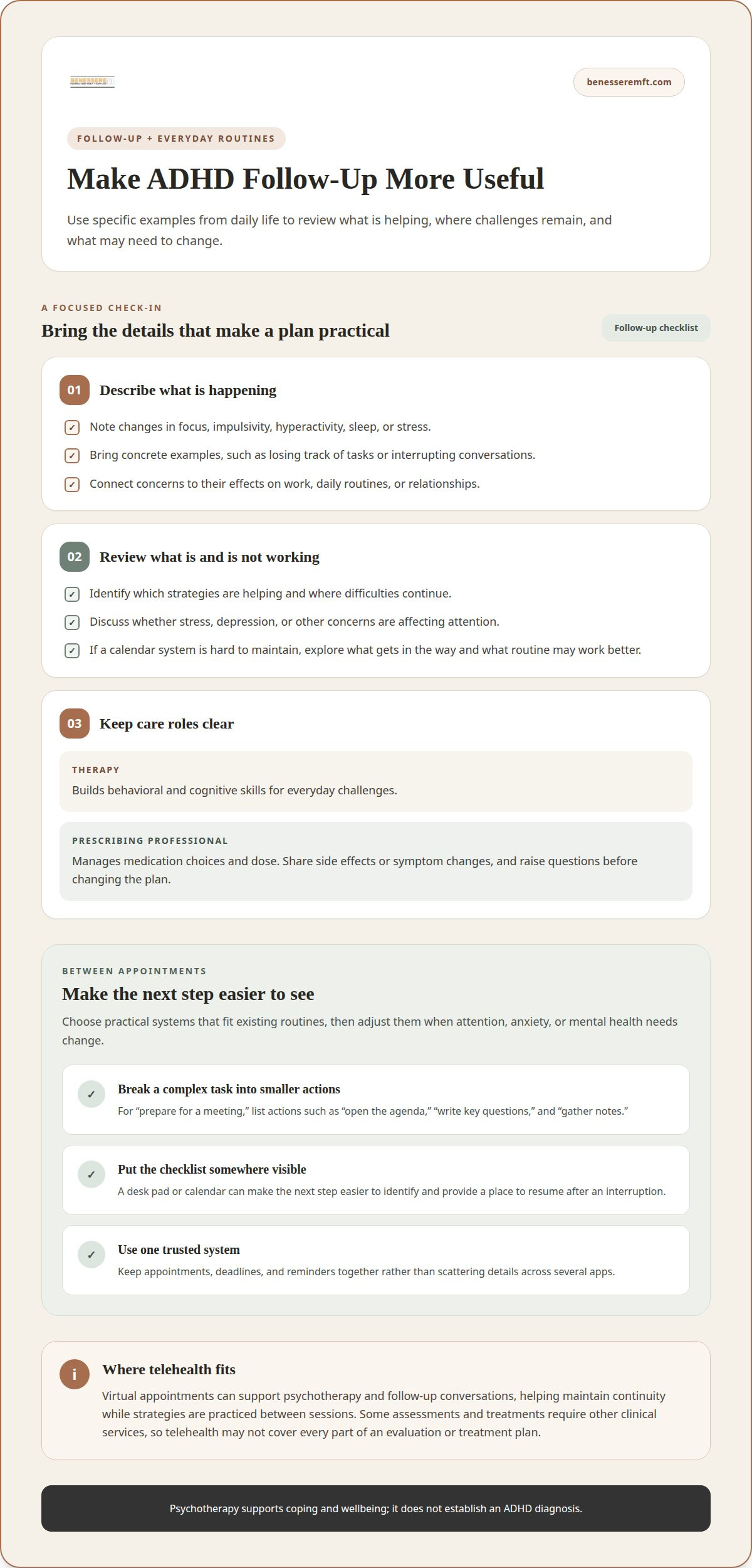
Follow-up appointments help you assess whether a therapy plan fits daily life. You can discuss focus, impulsivity, hyperactivity, sleep, stress, and effects on work or relationships. Concrete examples, such as losing track of tasks or interrupting conversations, help connect concerns with practical goals. As your needs become clearer, you and your therapist can review the approach.
Medication and psychiatric care can work alongside therapy, but they serve different roles. A prescribing professional manages medication choices and dose, while therapy builds behavioral and cognitive skills for everyday challenges. The right medication and dose vary among individuals, and finding a suitable option may take time. Tell the prescribing professional about side effects or changes in symptoms.
Online ADHD care can include psychotherapy and follow-up conversations from a remote setting. Virtual appointments may help maintain continuity as you practice strategies between sessions. However, some assessments and treatments require other clinical services, so telehealth may not address every part of an evaluation or treatment plan.
Progress reviews can make adjustments specific: note which strategies are helping, where difficulties persist, and whether stress, depression, or other concerns affect attention. Cognitive behavioral therapy can help you identify unhelpful thought patterns and practice alternative responses. If a calendar system is hard to maintain, for example, therapy can explore barriers and help you develop a more workable routine.
Trauma-informed treatment recognizes that past experiences can shape a person’s sense of safety, attention, and emotional responses. A careful pace and attention to personal needs can help keep therapy supportive. When trauma or PTSD is part of the picture, trauma and PTSD treatment may address those concerns alongside other mental health needs. Follow-up conversations can revisit goals as circumstances change.
If you take medication, tell your prescribing professional about side effects. During follow-up, explain what you have experienced and raise any concerns directly. Be clear about changes since medication began or was adjusted, and ask the prescriber about anything that remains unclear before making changes to the treatment plan.
Organization and time-management strategies
Practical systems can reduce the effort needed to start, sequence, and finish daily tasks. Choose tools that fit your existing routines, then adjust them when your attention, anxiety, or mental health needs change.
Planning and Organization
Break a complex task into smaller actions and record each on a checklist. For example, “prepare for a meeting” can become “open the agenda,” “write key questions,” and “gather notes.” Keep the list somewhere visible, such as a desk pad or calendar. This makes the next step easier to identify and gives you a clear place to resume after an interruption.
Use one trusted system for appointments, deadlines, and reminders rather than scattering details across several apps. A weekly review can help you identify conflicts and move unfinished items forward. Check whether the system is simple enough to maintain on busy days. If a digital calendar is easy to overlook, a paper planner near a frequently used workspace may be more useful.
Time Management
Estimate how long a task may take, then reserve a specific calendar block for it. Add a transition reminder before appointments or work periods, especially when changing activities is difficult. For instance, a reminder to gather materials can reduce last-minute searching before leaving home. A visible clock or timer can also make the passage of time easier to track.
Build short pauses between demanding tasks instead of planning every moment tightly. Use a pause to reset materials, review the next checklist item, or take a brief walk. If a task repeatedly overruns, divide it further or remove distractions during its scheduled block. These adjustments make time management a flexible skill, not a test of willpower.
Self-care supports organization because sleep routines, meals, and movement can affect your capacity to focus. Pair a helpful habit with an existing cue, such as preparing tomorrow’s checklist after dinner. Medication decisions belong with a prescribing professional, while therapy can help you identify behavioral barriers and practice strategies. A mental health professional can also help explore how concerns such as anxiety relate to your attention and broader needs.
ADHD management in Roseville, Sacramento, and Folsom
For adults in Roseville, useful ADHD care connects symptom management with everyday demands. A treatment plan can combine psychological counseling, education, skills training, and medication management, with services proudly serving clients throughout the local Roseville community.
Finding an ADHD Therapist in Roseville
Look for a therapist who works with adults and can connect cognitive behavioral therapy to specific goals, such as managing missed deadlines or improving routines. Ask how sessions support skill development and how progress informs the treatment plan. You can also bring an existing diagnosis or evaluation history to help shape therapy around current attention-related concerns and daily needs.
Therapy supports management rather than curing ADHD. Cognitive behavioral therapy can help adults address symptoms and quality of life, while medication decisions belong in psychiatric care. A combination of behavioral therapy and medication can improve symptoms, and the balance depends on the person’s needs and treatment response.
Adult ADHD Therapists Accepting New Patients
Appointment openings change over time, so focus on the match between the therapist’s adult ADHD experience, treatment approach, and your goals. Clarify whether the work centers on coping skills, emotional concerns, or the effects of ADHD on relationships. For adults seeking therapy for adult ADHD management Roseville, telehealth may make ongoing appointments easier to fit around work and home responsibilities.
To develop a focused plan, identify the difficulties that most disrupt daily life, such as incomplete tasks, disorganization, or conflict at home. Share these examples during an initial conversation and note which outcomes matter most. A clinician can use those priorities to guide therapy, while psychiatry can address medication as part of coordinated care.
ADHD treatment can help manage symptoms, though it does not remove the disorder. For support with emotional or relationship concerns that complicate daily functioning through Benessere Marriage and Family Therapy, Inc, explore therapy options.
Benessere Marriage and Family Therapy
Benessere Marriage and Family Therapy, Inc provides psychotherapy that can help adults explore how attention-related challenges affect daily routines, stress, and relationships. Individual therapy offers space to understand personal concerns and develop coping strategies suited to your needs. When ADHD-related strain affects home life, family or couples therapy can help loved ones understand its impact and communicate more constructively. Trauma and PTSD treatment is also available when those experiences are part of your mental health needs.
Consider psychotherapy when organization difficulties, emotional strain, or relationship concerns remain hard to manage and you want support understanding them. Treatment is tailored to your story and goals, rather than assuming one approach fits everyone.
To take a thoughtful next step, contact Benessere Marriage and Family Therapy, Inc to discuss your concerns and whether psychotherapy aligns with your needs.
Choose a next step that fits your needs
Progress can begin by identifying one recurring challenge you want to approach differently, such as sustaining attention during work or reducing tension at home. Therapy for adult ADHD management in Roseville can provide space to explore that goal and consider what support may fit your circumstances. If ADHD-related difficulties affect close relationships, family or couples therapy may also be relevant.
Benessere Marriage and Family Therapy, Inc offers individual therapy, family therapy, and couples therapy. Its therapists tailor interventions to each person’s story and needs, creating an opportunity to discuss personal goals and build a thoughtful path forward.
Contact Benessere Marriage and Family Therapy to begin a conversation about your needs. Taking that step can help you move toward a more workable, compassionate approach to daily life.
Frequently Asked Questions
Can adults in Roseville get ADHD therapy through telehealth?
Telehealth can provide a way to participate in psychotherapy for ADHD-related concerns from home in Roseville. Virtual therapy can focus on emotional wellbeing, coping skills, and challenges such as staying engaged in conversations. A comprehensive ADHD evaluation or particular treatments may involve other clinical services, so telehealth is one possible part of care rather than a substitute for every service.
What should adults expect at their first ADHD therapy appointment?
Expect a conversation about what brings you to therapy and what you hope will change. You might describe a recent situation, such as difficulty shifting from work tasks to household responsibilities, and how it affected your mood or relationships. The discussion can help clarify priorities and possible therapy goals. You can also mention existing mental health care or concerns that feel important to address.



Comments