
CBT for Anxiety in Roseville: A Restorative Path to Reclaiming Your Peace

Updated: Aug 21
What if the persistent hum of worry in your mind isn't a permanent fixture of your personality, but a physiological signal that your nervous system is seeking a way back to balance? Many residents seeking CBT for anxiety Roseville find themselves trapped in a cycle where overthinking leads to physical tension and restless nights. It's a frustrating experience when generic self-help tips fail to provide lasting relief, leaving you feeling stuck in a state of high alert. You deserve a space where your struggles are validated and addressed with both scientific precision and human warmth.
This article explores how evidence-based Cognitive Behavioral Therapy and restorative clinical skillsets can help you move from persistent worry to a state of calm agency. You'll gain a deeper understanding of your nervous system and discover practical skills to manage the triggers that disrupt your daily life. We'll outline a path toward reclaiming your peace by working with a local therapist who views mental health as a collaborative, restorative process. By focusing on these proven methods, it's possible to rewrite your narrative and find a steady sense of stability once again.
Table of Contents
Understanding Anxiety: A Path to Restorative Mental Health
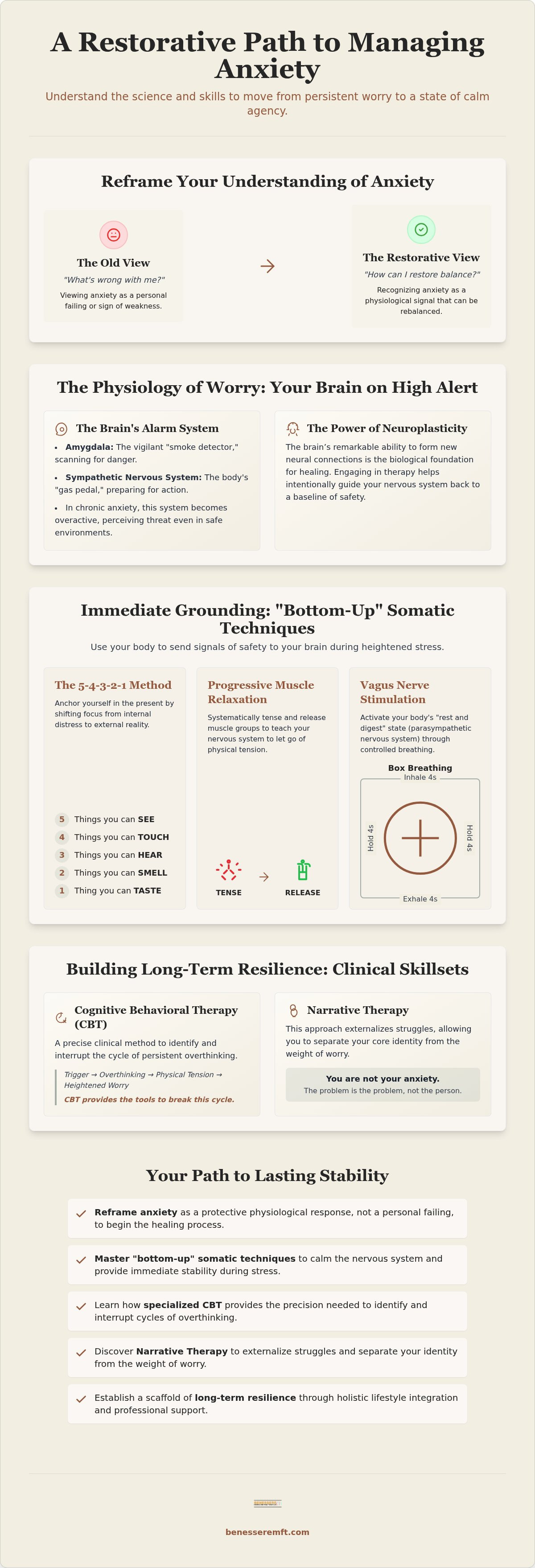
Anxiety is often misunderstood as a personal failure or a sign of weakness. In reality, it's a sophisticated, protective physiological response that has simply become overactive. While situational stress might arise from a looming deadline or a difficult conversation, clinical anxiety disorders are characterized by a persistent state of alarm that lingers long after the immediate threat has passed. For those seeking Cognitive Behavioral Therapy to address these challenges, the goal isn't just to "calm down," but to restore a system that has lost its way. Telling someone with chronic worry to "just relax" is like asking a car with a stuck accelerator to stop by simply wishing it so; it ignores the mechanical reality of the situation. The Benessere Marriage and Family Therapy, Inc approach shifts the focus from asking "What is wrong with me?" to "How can I restore balance?" This restorative framework provides the stability needed to reclaim agency over your life.
The Physiology of Worry: Your Brain on High Alert
The experience of anxiety is deeply rooted in the brain's architecture. The amygdala acts as a vigilant smoke detector, scanning for danger, while the sympathetic nervous system serves as the body's gas pedal, preparing you for action. When anxiety becomes chronic, it effectively rewires the brain to perceive threat in environments that are objectively safe. This state of constant high alert can lead to physical exhaustion and mental fog. Neuroplasticity is the remarkable ability of the brain to form new neural connections, serving as the biological foundation for clinical healing. By engaging in CBT for anxiety Roseville, you're participating in a process that uses this plasticity to guide your nervous system back to a baseline of safety.
Normalizing the Experience: You Are Not Your Anxiety
It's helpful to remember that struggling with anxiety is a common human experience, especially in a high-pressure world that demands constant productivity. Validating this struggle is the first step toward resolution. Through psychoeducation for anxiety, you gain the tools to understand why your mind and body react the way they do. This knowledge empowers you to move away from a pathologized view of yourself. Instead, we view these challenges through a restorative, growth-oriented lens. You aren't your anxiety; you're a person experiencing a temporary imbalance that can be corrected with the right clinical support. Working with a specialist in CBT for anxiety Roseville allows you to separate your core identity from the symptoms you experience, creating space for authentic healing and personal growth.
Immediate Somatic Techniques for Grounding and Stability
When you're in the grip of a panic attack or high-level worry, your brain's logic centers often go offline. This is why "bottom-up" processing is essential. Instead of trying to think your way out of anxiety, you use the body to send a signal of safety to the brain. Somatic grounding techniques are designed to interrupt the "fight-flight-freeze" cycle immediately. By focusing on physical sensations, you anchor yourself in the present moment, which is a core component of CBT for anxiety Roseville. These methods are effective for a range of problems because they address the physiological reality of stress before moving into cognitive restructuring.
One clinical tool used frequently is the 5-4-3-2-1 sensory method. It requires you to identify:
5 things you can see
4 things you can touch
3 things you can hear
2 things you can smell
1 thing you can taste
This exercise forces the brain to shift its focus from internal distress to external reality. Another foundational restorative skillset is Progressive Muscle Relaxation (PMR). By systematically tensing and then releasing different muscle groups, you teach your nervous system to recognize and let go of physical tension. It's a practice that builds a bridge between physical awareness and mental calm.
Stimulating the Vagus Nerve: The Biology of Calm
The vagus nerve is a primary component of the parasympathetic nervous system, responsible for the "rest and digest" state. Techniques like box breathing (inhaling, holding, exhaling, and holding for four seconds each) or 4-7-8 breathing directly stimulate this nerve. Intentional breathwork signals the brain that the immediate threat has passed, allowing your heart rate to slow. A common mistake is shallow, chest-based breathing. This often happens unconsciously but can inadvertently increase feelings of panic by mimicking the body's natural alarm response. Deep, diaphragmatic breaths are necessary to flip the switch from alarm to safety.
Grounding in the Physical World
For more intense episodes, you can use temperature to reset the nervous system. Splashing cold water on your face or holding an ice cube triggers the "mammalian dive reflex," which naturally and rapidly lowers the heart rate. Tactile grounding, such as holding a smooth stone or feeling the weight of your feet on the floor, acts as a physical anchor to the here and now. Somatic grounding creates a safe container for deeper cognitive work by ensuring your body feels secure enough to explore complex emotions. If you find yourself struggling to maintain this stability on your own, a restorative approach to individual psychotherapy can provide the guidance needed to master these clinical skills.
Clinical Skillsets: How CBT and Narrative Therapy Externalize Anxiety
Cognitive Behavioral Therapy is widely recognized as a gold-standard intervention for those seeking a deeper way of Understanding Anxiety Disorders and their management. It provides a structured, evidence-based framework for identifying the precise relationship between thoughts, feelings, and behaviors. While CBT addresses the mechanics of thought, narrative therapy offers a powerful way to "externalize" the problem. This means moving away from the belief that "I am an anxious person" and toward the understanding that "Anxiety is an unwelcome visitor I'm learning to manage." This shift is crucial for long-term healing because it separates your identity from your symptoms.
In our practice, we focus on identifying and challenging "Cognitive Distortions," which are the common thinking traps that fuel anxiety. These might include catastrophizing, where you assume the worst possible outcome, or all-or-nothing thinking, where a small setback feels like total failure. By using CBT for anxiety Roseville, you learn to spot these distortions in real-time. This awareness creates a necessary pause between a thought and your emotional reaction, giving you the space to choose a more balanced response. It's a methodical process that replaces chaotic worry with clinical precision.
Rewriting Your Story: From Victim to Agent
By naming your anxiety, you reduce its power over your identity. It becomes a separate entity with its own patterns and tricks, rather than a core part of who you are. We work together to develop a "Wise Guide" internal voice. This compassionate, authoritative voice serves to counter the "Anxious Critic" that often dominates your internal dialogue. Clinical psychotherapy helps you uncover hidden stories of resilience that the anxiety has obscured. This allows you to move from feeling like a victim of your thoughts to becoming the active agent of your own life story.
The CBT Evidence Check
Anxiety thrives on uncertainty and fear-based predictions. We use a methodical "evidence check" to question the validity of anxious thoughts. Instead of blindly accepting a fearful prediction, we ask what evidence actually supports it and what evidence contradicts it. A practical shift involves replacing the endless "What if?" with a grounded "Even if..." This change builds confidence in your actual ability to cope with challenges. Within this framework, self-compassion isn't just a "soft" skill; it's a clinical intervention. Treating yourself with the same precision and warmth you'd offer a friend helps lower the physiological alarm bells and supports the CBT for anxiety Roseville process.
Holistic Lifestyle Integration for Long-Term Resilience
Clinical interventions are most effective when they're supported by a stable biological foundation. While the cognitive work of CBT for anxiety Roseville provides the tools to manage thoughts, your lifestyle choices create the environment in which those tools operate. In the high-pressure environment of the I-80 corridor, where professional tech demands and complex suburban family dynamics often collide, a structured routine acts as a necessary scaffold for an anxious mind. This structure provides a sense of predictability that signals safety to a nervous system accustomed to high alert. Building a "Resilience Toolkit" involves a deliberate shaping of your daily environment to ensure your progress in therapy isn't undermined by physiological stress.
Digital consumption is a significant factor in modern anxiety that is often overlooked. The habit of "doomscrolling" through negative news or social comparisons provides a constant stream of perceived threats that keep the amygdala in a state of hyper-vigilance. By setting firm boundaries with technology, you preserve your limited mental energy for restorative activities. This intentionality allows you to move away from reactive patterns and toward a state of proactive wellness.
Sleep Hygiene and the Gut-Brain Connection
Sleep is a primary pillar of emotional regulation rather than just a period of rest. Consistent sleep rituals help lower cortisol levels and provide the brain with the time it needs to process the day's stressors. There is also a profound link between gut health and the production of neurotransmitters like serotonin, which plays a vital role in mood stability. Maintaining a balanced diet and regular sleep patterns ensures that your brain has the chemical resources necessary to engage with the restorative process. A regulated body serves as your first line of defense against the onset of persistent anxiety.
Mindful Movement in Roseville and Beyond
The type of physical activity you choose can significantly impact your anxiety levels. While high-intensity exercise is beneficial for many, mindful movement focuses on the connection between breath and body, which is particularly restorative for an overactive mind. Utilizing local Roseville resources, such as the Miner's Ravine Trail or other local parks, offers an opportunity for "Forest Bathing." This practice of immersing oneself in nature has been shown to reduce stress hormones and improve focus. Integrating these local natural spaces into your routine provides a physical anchor to the community and a break from the digital noise. If you're ready to integrate these restorative practices into your life, consider starting individual psychotherapy to build your personalized resilience toolkit.
Complementing physical activity with professional therapeutic bodywork can also provide deep somatic relief and aid in nervous system regulation; for an example of wellness services that promote holistic health, click here.
Choosing Specialized Anxiety Counseling in Roseville
Recognizing when situational stress crosses into the clinical territory is a vital skill for maintaining long-term wellness. While everyone feels nervous occasionally, persistent symptoms like chronic muscle tension, sleep disturbances, and a constant sense of dread suggest a need for professional intervention. By identifying the signs of clinical anxiety early, you can begin the work of regulation before your nervous system becomes completely overwhelmed. Choosing CBT for anxiety Roseville means opting for a local partner who understands the specific cultural and professional pressures of our community. A trauma-informed approach provides a unique sense of safety, ensuring that your past experiences are handled with the scientific precision and human warmth they deserve.
A restorative session is designed to be a collaborative, non-judgmental environment. It isn't a place where you're lectured, but a space where you're invited into an educational process. You'll work alongside a therapist to uncover the mechanics of your worry and develop a tailored strategy for relief. Professional guidance at Benessere accelerates the path to reclaiming your life by providing the clinical structure necessary to turn insights into lasting behavioral changes. This partnership allows you to move through the world with a renewed sense of stability and confidence.
Finding the Right Fit: The Therapeutic Relationship
The relationship between a practitioner and a client is often the most significant predictor of success in mental health treatment. For those struggling with anxiety, the "Compassionate Expert" model is essential. You need a guide who possesses deep psychological literacy but also profoundly respects your individual story. In-person therapy for residents of Roseville and Placer County provides a physical space of safety that digital platforms often struggle to replicate. It allows for a nuanced connection where subtle non-verbal cues help your therapist guide the restorative process with greater accuracy. Taking the first step toward a collaborative, evidence-based partnership is a courageous act of self-advocacy.
The Path Forward: From Coping to Thriving
Your journey toward reclaiming peace is an iterative, restorative process. It often begins with somatic grounding to stabilize the body and moves toward narrative transformation to liberate the mind. You've explored how CBT for anxiety Roseville helps you externalize your struggles, allowing you to view your challenges as manageable rather than all-consuming. Healing isn't about the absence of stress, but the presence of the skills needed to navigate it. We're here to help you move from a state of persistent worry to a state of calm agency. If you're ready to begin this work, you can Schedule a consultation with Benessere Marriage and Family Therapy in Roseville.
Reclaiming Your Agency and Peace
Moving toward a state of calm agency is a methodical process that addresses both the physiological and cognitive aspects of your experience. You've explored how somatic grounding provides immediate stability, while the clinical precision of cognitive behavioral therapy allows you to challenge the thinking traps that fuel persistent worry. By externalizing anxiety through narrative techniques, you can begin to view yourself as a resilient individual rather than a person defined by their struggles. It's about building the capacity to meet life's challenges with a steady heart and a clear mind.
Our practice is deeply rooted in the Roseville community, offering compassionate, trauma-informed care that honors your unique story. Utilizing specialized CBT for anxiety Roseville, we provide the evidence-based clinical skillsets needed to rewrite your narrative and restore balance to your nervous system. You don't have to carry the burden of overthinking without professional support. A more peaceful and grounded way of being is entirely within your reach.
Restoration is an iterative and hopeful path. It's an honor to provide the steady guidance you need as you step into this new chapter of growth and reclaimed peace.
Frequently Asked Questions
How do I know if my anxiety is "normal" or if I need professional CBT?
Professional support is recommended when worry begins to disrupt your daily functioning or persists long after a situational stressor has passed. While situational anxiety is a temporary response to specific events, clinical anxiety often manifests as a persistent state of high alert that feels outside your control. If you're experiencing physical symptoms like chronic tension or find yourself stuck in cycles of overthinking, a structured clinical framework can help you restore balance.
Does CBT for anxiety really work without taking medication?
Cognitive Behavioral Therapy is a gold-standard, evidence-based intervention that effectively addresses the underlying mechanisms of anxiety without the necessity of pharmaceutical support. It focuses on restructuring the thought patterns and physiological responses that sustain a state of alarm. While some individuals find a combined approach helpful, CBT provides a robust set of long-term skills that empower you to manage your mental health independently and sustainably.
What is the fastest somatic technique to stop a panic attack?
Splashing ice-cold water on your face to trigger the mammalian dive reflex is one of the most rapid ways to lower your heart rate and reset your nervous system. This physiological shift signals the brain to move out of the "fight-flight" state almost immediately. It provides a necessary pause in the panic cycle, allowing you to then engage with deeper grounding exercises like box breathing or tactile anchors to maintain stability.
Why does my anxiety feel worse at night, and how can therapy help?
Anxiety often intensifies at night because the external distractions of the day fade, leaving the mind to focus on unresolved worries or future uncertainties. This quiet environment can inadvertently trigger the brain's threat-scanning mode. Therapy addresses this by helping you establish restorative sleep hygiene and teaching you how to externalize these nocturnal thoughts. We work together to create a mental "off-switch" that supports your body's natural need for rest.
How many sessions of CBT are typically needed to see results?
Many clients begin to notice a meaningful shift in their ability to manage daily triggers within 8 to 12 sessions, though the total duration is tailored to your unique history. CBT is designed to be a structured and goal-oriented process. We prioritize providing you with actionable clinical tools early in our partnership to ensure you experience a sense of progress and reclaiming your agency from the very beginning.
What is the difference between generic counseling and restorative psychotherapy?
Generic counseling often focuses on supportive listening and temporary relief, whereas restorative psychotherapy uses evidence-based frameworks like CBT for anxiety Roseville to create lasting structural change. Our approach integrates trauma-informed care and Narrative Therapy to address both immediate symptoms and the deeper stories that shape your identity. It is a more specialized, methodical path designed to foster long-term resilience rather than just short-term coping.
How can I support a family member in Roseville who is struggling with anxiety?
Supporting a loved one involves validating their internal struggle without attempting to "fix" their emotions through logic alone. You can offer a calm, non-judgmental presence and encourage them to explore professional support when they feel ready. Our practice offers Family Therapy to help households navigate these challenges collectively, ensuring that the environment at home becomes a collaborative space for healing and mutual understanding.
Is CBT effective for social anxiety in professional settings?
CBT is highly effective for addressing the specific fears of judgment or performance that often characterize social anxiety in the workplace. By identifying and challenging cognitive distortions related to professional interactions, you can build a more realistic and compassionate self-view. Using CBT for anxiety Roseville provides the precise tools needed to navigate high-pressure environments, such as meetings or presentations, with a greater sense of confidence and personal agency.


Comments