
Family Counseling for Communication Issues in Roseville: Restoring Connection
- Eddie Posadas
- 3 days ago
- 12 min read

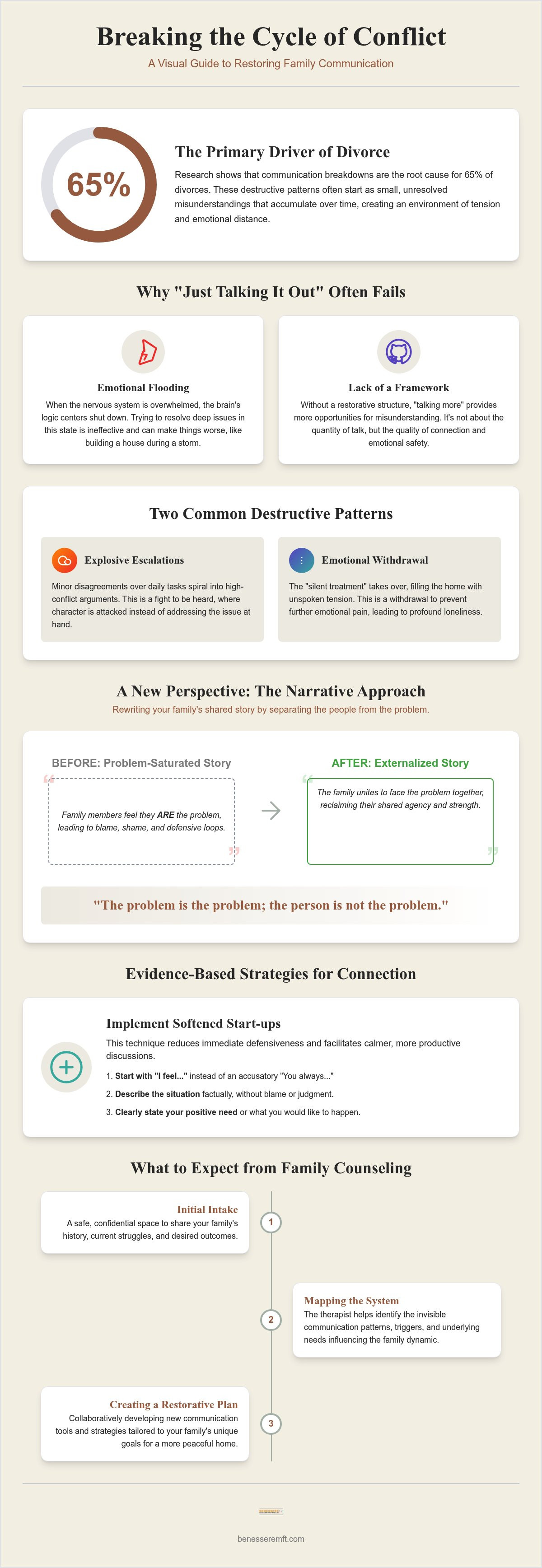
Research indicates that communication breakdowns are the primary driver for 65% of divorces, yet many families don't realize that these destructive patterns often begin with small, repetitive misunderstandings that go unresolved. If you're seeking family counseling for communication issues Roseville, you've likely reached a point where every conversation feels like a potential minefield. It's incredibly draining to live in a home where you feel unheard by those you love most, and it's natural to worry about the long-term impact this tension has on your children's emotional well-being.
You deserve a space where your perspective is valued and where arguments don't have to end in exhaustion. This article will show you how evidence-based family therapy can break cycles of conflict and help your Roseville family build a foundation of lasting emotional safety. We will explore practical tools to stop escalations before they start, helping you gain a deeper understanding of one another's unique perspectives. By the end, you'll see a clear path toward a more peaceful, supportive home environment where every family member feels truly seen and heard.
Table of Contents
Understanding the Root of Communication Issues in Roseville Families
Communication within a family is far more than a simple exchange of information; it is a systemic negotiation of emotional safety. When we view these interactions through a clinical lens, we see that every word, gesture, and silence serves as a signal of either connection or distance. Systemic communication is the invisible thread connecting family members. For many families in our community, seeking family counseling for communication issues Roseville is the first step toward recognizing that their struggles aren't a sign of failure, but a signal that their current system is overtaxed and requires a new framework for engagement.
In Roseville, families often face a unique set of stressors that complicate their internal dynamics. The pressure of maintaining high-performing careers in the medical or tech sectors, combined with the daily exhaustion of long commutes and the desire to provide an ideal life for children, can leave little emotional bandwidth for nuanced conversation. When parents and children are operating from a state of chronic depletion, "talking more" often backfires. Without a restorative structure, increased dialogue simply provides more opportunities for misunderstanding, leading to a cycle where the family feels like they're spinning their wheels without moving toward resolution.
These issues typically manifest in two distinct but equally damaging ways. Some families experience explosive escalations, where minor disagreements over chores or schedules quickly spiral into high-conflict arguments. Others fall into the "silent treatment" or emotional withdrawal, where a heavy, unspoken tension fills the home. This clinical perspective allows us to see that both patterns are actually protective mechanisms; family members are either fighting to be heard or withdrawing to prevent further pain.
The Difference Between Healthy Conflict and Chronic Breakdown
Conflict is an inevitable and even necessary part of human growth, yet there's a clear tipping point where disagreement becomes damaging. Healthy conflict focuses on the issue at hand and maintains respect for the relationship, while a chronic breakdown attacks the character of the individuals involved. This persistent state of tension often leads to significant individual mental health challenges, including heightened anxiety or a sense of profound loneliness within the family unit. Identifying this shift is crucial for those considering family counseling for communication issues Roseville, as it marks the moment when the "problem" has started to overshadow the family's shared love and history.
Why Traditional "Talking It Out" Often Fails
Many families feel frustrated when their attempts to "talk it out" only lead to more tears or anger. This failure often occurs because of emotional flooding, a state where the nervous system is so overwhelmed that the brain's logic centers effectively shut down. Attempting to resolve deep-seated issues during this state is like trying to build a house in the middle of a storm. As a specialized branch of psychotherapy, Family therapy provides a structured environment where these invisible threads can be untangled and rewoven with intention. By understanding how individual trauma histories and past experiences influence current reactions, a family can begin to move beyond repetitive arguments and toward a more peaceful, supportive home life.
The Narrative Approach: Rewriting Your Family’s Shared Story
When families seek family counseling for communication issues Roseville, they often feel trapped by a single, narrow perspective of their life together. Over time, repetitive arguments and misunderstandings create what clinicians call a "problem-saturated" story. In this narrative, the conflict itself becomes the lead character, overshadowing the love, humor, and resilience that originally defined the family unit. Narrative therapy offers a restorative path forward by helping families externalize these challenges, allowing them to view the conflict as something they can face together rather than something they are doing to one another.
The cornerstone of narrative therapy is the profound realization that "the problem is the problem; the person is not the problem." By separating an individual's identity from the conflict, we reduce the shame that often keeps families stuck in defensive loops. This shift allows for collaborative problem-solving, where parents and children join forces against a common obstacle, such as "The Wall of Silence" or "The Grumpiness," rather than attacking each other. Transitioning from a problem-saturated story to a restorative one is the core work of family counseling for communication issues Roseville, providing a safe clinical environment to uncover the strengths that have been buried under years of tension.
Breaking the Cycle of Blame and Defense
Most families fall into predictable roles during a conflict, such as the "pursuer" who seeks clarity or the "withdrawer" who seeks safety in silence. Recognizing these roles is the first step toward shifting from defensive posturing to curious observation. Instead of asking "Why are you doing this?", we begin to look for "unique outcomes," which are those rare moments when your family successfully navigated a difficult moment without escalating. Focusing on these exceptions proves that your family already possesses the skills needed for connection; you simply need a guide to help you access them more consistently. If you feel these roles have become too rigid, exploring our approach to family therapy can help you begin the process of softening those boundaries.
Building Emotional Safety through Clinical Insight
Effective communication is physically impossible when the brain is in a "fight or flight" state. When emotions run high, the prefrontal cortex, the area responsible for logic and empathy, essentially goes offline to prioritize survival. This neurobiological reality explains why a simple request can feel like a personal attack. By learning de-escalation techniques, families can lower the collective temperature of the home before a narrative becomes destructive. By acting as a collaborative witness, a therapist helps families identify overlooked moments of strength to re-author their future with hope and agency.
Common Barriers to Effective Communication in Modern Households
Modern households face an array of obstacles that can silently erode the quality of their connections. One of the most pervasive challenges is the loss of intentional presence due to digital distraction. A study from Baylor University found that 46% of individuals have been "phubbed," or phone-snubbed, by their partners. This behavior, while often unintentional, signals to family members that they are less important than the device in hand. In the context of family counseling for communication issues Roseville, we often see how these small moments of disconnection accumulate, creating a culture of secondary importance that stifles deep, restorative dialogue.
Another significant barrier is the "Mind-Reading" trap, a cognitive distortion where family members assume they know each other's thoughts or intentions without verification. This assumption often leads to defensive reactions based on perceived slights rather than actual words. These patterns are frequently rooted in intergenerational cycles; we often unconsciously replicate the communication styles we witnessed in our childhood homes. When these learned behaviors are combined with secret-keeping or a lack of transparency, the foundation of family trust begins to fracture, making honest expression feel like a risky endeavor.
Identifying Your Family’s Conflict Style
Every family develops a unique style for handling disagreements, and identifying yours is a key step in clinical healing. The Avoidant Family often prioritizes a superficial peace at the high cost of honesty, leaving deep-seated issues to fester. Conversely, the Volatile Family may be deeply passionate but prone to explosive escalations that leave lasting emotional wounds. The ultimate goal is to move toward becoming a Validating Family, which is a primary focus of marriage and family therapy Roseville CA. In this model, family members learn to prioritize the other person's perspective even when they disagree, creating the emotional safety required for true resolution.
The Role of Codependency in Communication
Codependency often manifests as blurred boundaries that prevent family members from expressing their true needs. In these dynamics, "helping" can frequently cross the line into "enabling," where one person's silence is maintained to keep the other comfortable. This lack of healthy autonomy makes it difficult for individuals to speak their truth without fear of destabilizing the entire system. Restoring connection requires establishing clear, respectful boundaries that allow for both individual growth and collective support. When these barriers become insurmountable, seeking professional support through family counseling for communication issues Roseville provides a structured way to dismantle these obstacles and reclaim your family's agency.
Evidence-Based Strategies for Restoring Connection
Implementing evidence-based strategies requires a shift from reactive habits to intentional practices. One of the most effective tools for families is the "Softened Start-up," a method designed to introduce a concern without triggering a defensive response. Instead of beginning a conversation with a criticism or a "you" statement, family members learn to express their feelings and needs directly. This simple shift can drastically reduce the frequency of arguments for those engaging in family counseling for communication issues Roseville, as it sets a collaborative tone from the very first sentence.
Another foundational tool is the "Speaker-Listener" technique. In this exercise, one person holds the floor to share their perspective while the other listens without interrupting, eventually paraphrasing what they heard to ensure accuracy. This process ensures that every voice is validated, even if agreement hasn't been reached yet. To maintain these gains, we recommend scheduling intentional "Family Check-ins." These are dedicated times, perhaps once a week, to discuss the state of the household away from the immediate stressors of daily life. Practicing emotional regulation skills, such as deep breathing or taking a "strategic timeout," is essential before engaging in these difficult topics to ensure the prefrontal cortex remains active and receptive.
Practical Tools for Roseville Parents
Parents in the Roseville area often manage high expectations surrounding school-related stress and competitive extracurricular pressures. Navigating these collaboratively means modeling healthy disagreement for your children, showing them that conflict doesn't have to be a threat to safety. Sometimes, a change of scenery can help. Utilizing local Roseville resources, such as Maidu Regional Park or the Miner’s Ravine Trail, provides a "neutral ground" where the physical environment encourages movement and lowers the collective temperature of a conversation. These spaces allow families to step away from the domestic triggers that often spark repetitive arguments.
When to Transition from Self-Help to Professional Therapy
While self-led strategies are valuable, there are clear signs that they may no longer be sufficient. If you find that arguments have become circular, or if a sense of hopelessness has begun to settle over the home, a neutral, clinical third party can help break the deadlock. A therapist acts as a Wise Guide, providing the precision needed to identify deep-seated patterns that are difficult to see from the inside. Seeking family therapy Roseville CA offers a structured path to recovery, moving your family from a state of survival back into a state of connection. If you're ready to move beyond repetitive cycles and restore the emotional safety of your home, contact us today to learn how we can support your family's growth.
Professional Family Counseling in Roseville: What to Expect
Stepping into a clinical setting for the first time often brings a mix of vulnerability and hope. The process of family counseling for communication issues Roseville begins with a comprehensive intake, where we focus on understanding the unique story your family has lived. Rather than identifying a "problem person," we look at the systemic patterns that have emerged over time. This initial phase is about gathering the threads of your shared history to see how they've become tangled, ensuring that every member has the opportunity to share their perspective in a neutral, non-judgmental environment.
Once we've established a clear understanding of your family dynamics, we move toward creating a collaborative treatment plan. This roadmap isn't a rigid set of instructions but a restorative framework with clear, achievable goals. We prioritize psychoeducation, empowering each family member with a deeper understanding of how stress and trauma affect the brain's ability to process information. When you understand the mechanics of emotional flooding or the origins of defensive posturing, you gain the agency needed to choose different responses. Our focus remains on long-term resilience and agency rather than immediate, superficial fixes that fail to address the root of the conflict.
A Safe Space for Every Family Member
For therapy to be effective, the clinical environment must feel like a sanctuary. Children and adolescents are often the most sensitive to family tension, and we take great care to ensure they feel heard and respected as equal participants in the healing process. In this space, the therapist acts as a facilitator and a Wise Guide, not a judge or an arbiter of who's "right." By maintaining strict confidentiality and building therapeutic trust, we create the safety necessary for family members to speak their truths without fear of retaliation or further wounding. Our clinicians, who meet the rigorous California standards of 3,000 hours of supervised experience, bring both scientific precision and human warmth to every session.
Your Path to a Restorative Home Environment
The journey from chronic conflict to genuine connection is rarely linear, yet it is one of the most significant investments you can make for your family's future. By engaging in family counseling for communication issues Roseville, you're choosing to break intergenerational cycles and build a home environment where emotional safety is the default rather than the exception. The long-term benefits of this work extend far beyond the therapy room, influencing how your children will one day build their own relationships and how you will navigate future life stressors together. If you're ready to take the first step toward a more peaceful and supportive home, we're here to guide you through the process of restoration and growth.
Reclaiming Your Family’s Narrative
The transition from a home filled with tension to one defined by emotional safety is a profound shift that requires both patience and precision. By understanding the systemic roots of your conflict and adopting a narrative approach, you can begin to separate your loved ones from the problems that have temporarily overshadowed your bond. Our Roseville-based office provides a safe, clinical space where evidence-based clinical expertise meets deep-seated empathy. Through specialized training in Narrative Therapy, we help your family move beyond repetitive, circular arguments and toward a shared story of resilience and agency.
Choosing family counseling for communication issues Roseville is a courageous step toward breaking intergenerational cycles and restoring the invisible threads of connection. You don't have to navigate these complex emotional landscapes alone. Our role is to act as a Wise Guide, providing the tools and insights necessary to foster a more peaceful, supportive home environment.
Begin your journey toward a more connected home; schedule a family therapy consultation today.
Your family's story is still being written, and there is always room for growth, healing, and a more restorative future together.
Frequently Asked Questions
Is it normal for families to fight this much?
Conflict is a natural byproduct of shared lives, but it becomes problematic when it lacks a restorative framework for resolution. Many families experience periods of high tension where they feel stuck in circular arguments that leave everyone feeling unheard. Seeking professional support helps normalize these struggles while providing the precision needed to identify where healthy disagreement has shifted into chronic disconnection. It's a sign of strength to recognize when your family's current tools are no longer sufficient to maintain harmony.
How long does family counseling usually take to see results?
The timeline for seeing results is unique to every family and depends on the complexity of the issues being addressed. While some families begin to see a softening in their interactions after just a few sessions of practicing de-escalation skills, deeper restorative work often requires a longer commitment. Our focus is on building long-term resilience and agency, ensuring that the changes you make are sustainable and lead to a more peaceful home environment.
What if one family member refuses to attend therapy?
Significant progress can still occur even if one member is initially hesitant or refuses to participate in the process. Because families operate as a connected system, when one person changes their communication style or emotional regulation, it inevitably shifts the dynamics for everyone else. We often begin by working with the members who are ready to engage, which can eventually create an environment where the refusing member feels safe enough to join the restorative process.
Can family counseling help with communication issues involving teenagers?
Family therapy is particularly effective for navigating the complex developmental transitions and stressors associated with the teenage years. We help parents and adolescents move beyond power struggles and toward a relationship built on mutual respect and clear boundaries. By addressing modern stressors like academic pressure and digital distraction, we provide a structured space where teens feel their perspective is truly valued by the adults in their lives.
Does family therapy focus on the past or the future?
Our approach integrates both perspectives by examining how past experiences inform your current interactions to build a more intentional future. We use narrative therapy to understand the problem-saturated stories of the past, but the ultimate goal is to re-author those stories into a new framework of hope and connection. This balanced focus ensures that you aren't just reliving old wounds but are actively creating a more supportive home environment for the years ahead.
How do I know if we need family therapy or individual counseling?
If the primary distress occurs within the interactions between family members, such as repetitive arguments or emotional withdrawal, family therapy is often the most effective clinical path. Individual psychotherapy is better suited for internal struggles like personal trauma or depression that exist independently of the family dynamic. During your initial consultation for family counseling for communication issues Roseville, we can help you determine which approach best supports your family's collective and individual restoration.
What is the first session of family counseling like at Benessere Marriage and Family Therapy, Inc?
The first session at Benessere Marriage and Family Therapy, Inc focuses on understanding the unique narrative of your family unit. It's a calm, collaborative environment where each member is invited to share their perspective without the fear of being judged or interrupted. We prioritize the establishment of emotional safety from the very beginning, ensuring that every voice is respected as we begin to map out a restorative treatment plan tailored to your family's growth.


Comments