
Grief Counseling in Roseville, CA: A Restorative Path Through Loss
- Eddie Posadas
- 3 hours ago
- 12 min read

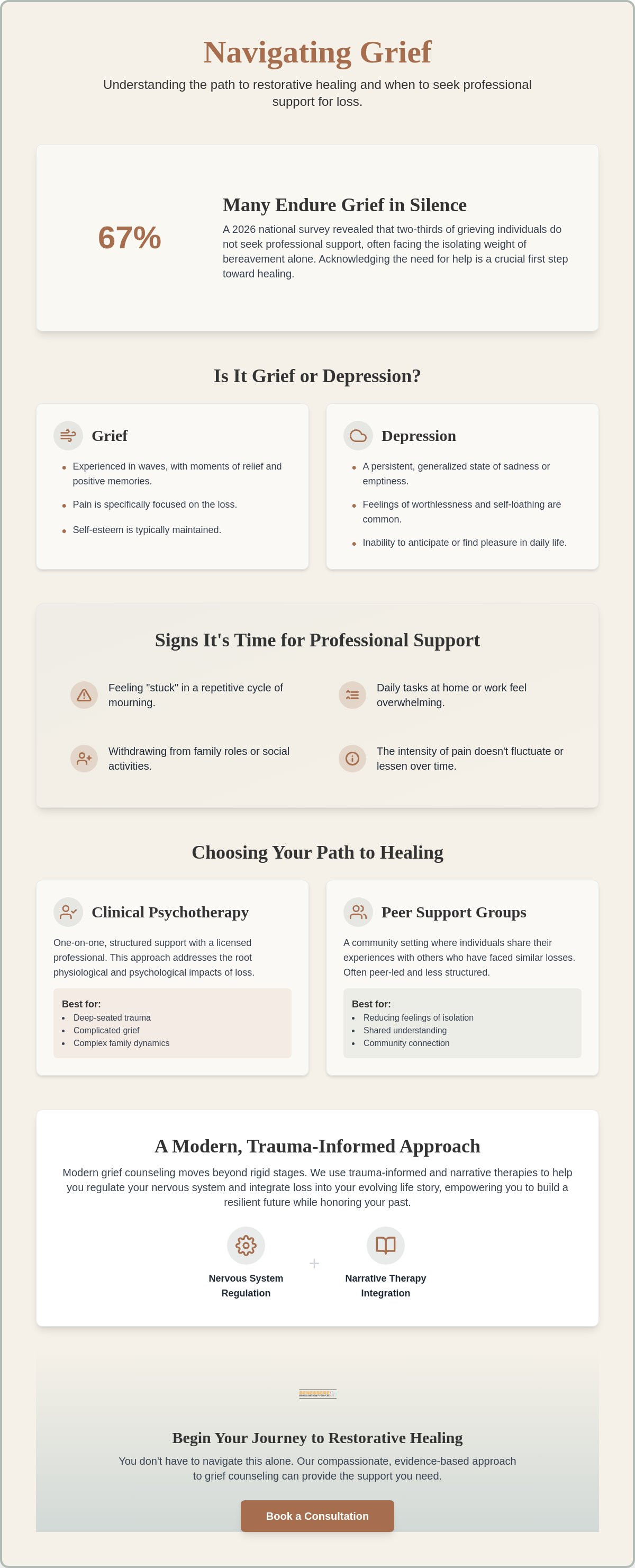
A 2026 national survey revealed that 67% of grieving individuals do not seek professional support, often enduring the isolating weight of bereavement in silence. You may find yourself among those who feel "stuck" in a repetitive cycle of mourning, perhaps noticing that even well-meaning friends or family in Placer County don't quite understand the depth of your experience. It's common to feel a profound sense of confusion when daily tasks at home or work become overwhelming, yet the path toward recovery remains unclear. Acknowledging that grief is a complex narrative shift rather than a clinical disorder to be "cured" is the first step toward genuine relief.
By engaging with professional grief counseling Roseville CA, you can begin to move through the complexities of loss toward a state of restorative healing. This article explores how specialized therapeutic support facilitates emotional regulation and helps you thoughtfully integrate loss into your evolving life story. We'll examine the methodical process of returning to meaningful daily functioning, ensuring you have the psychological tools to build a resilient future while honoring the memory of what has been lost.
Table of Contents
Understanding the Landscape of Loss: What is Grief Counseling?
Navigating the Complexities: A Trauma-Informed Approach to Loss
Clinical Psychotherapy vs. Support Groups: Choosing Your Path
Finding the Right Grief Counselor in Roseville: A Guidance Framework
The Benessere Approach: Restorative Healing for Roseville Residents
Understanding the Landscape of Loss: What is Grief Counseling?
Grief is a natural response to the loss of someone or something significant, yet its impact can be so destabilizing that it requires a structured, clinical approach to navigate. At its core, What is Grief Counseling? It's a specialized form of psychotherapy that focuses on helping individuals process the emotional, physical, and cognitive responses to bereavement. Unlike generic support, this clinical intervention provides a safe, unhurried space where the complex layers of mourning are addressed with scientific precision. In our Roseville community, we see this manifest through families navigating the death of a patriarch or individuals struggling with the quiet loss of a career or health status. The therapist acts as a steady, non-judgmental guide, ensuring that the healing process remains restorative rather than purely reactive.
While many people experience "normal" bereavement, which typically follows a predictable, if painful, trajectory, others find that their mourning becomes a barrier to living. Professional grief counseling Roseville CA is designed to bridge the gap between surviving a loss and integrating it into a meaningful life story. This process doesn't aim to "fix" the person, as grief isn't a broken state; instead, it seeks to normalize the struggle while providing the psychological tools necessary for long-term resilience.
The Difference Between Grief and Depression
Distinguishing between grief and clinical depression is essential for effective treatment, as the two states often share symptoms like lethargy, sleep disturbances, and profound sadness. Grief usually presents in waves, where moments of intense pain are interspersed with positive memories or brief periods of relief. In contrast, depression often feels like a persistent, generalized fog that lacks a specific focal point. Because these conditions can overlap, a professional diagnosis in a clinical setting is vital. It ensures that the individual receives support tailored to their specific mental state, whether that involves processing a specific loss or addressing a broader depressive episode.
When to Seek Professional Support in Roseville
It's time to consider professional intervention when the natural mourning process feels "stuck" or when the intensity of the pain doesn't fluctuate over time. In Placer County, this often shows up as a decline in workplace performance or a withdrawal from family roles that once provided joy. Complicated grief is a persistent, intense longing that prevents daily functioning. If you find that the loss has fundamentally altered your ability to engage with the world, seeking grief counseling Roseville CA can provide the clarity needed to move forward. Professional support helps you identify the specific points where your healing has stalled, offering a methodical path back to emotional stability and purpose.
Navigating the Complexities: A Trauma-Informed Approach to Loss
The experience of loss is rarely a linear progression. When a loss is sudden, violent, or unexpected, it often triggers a physiological response that transcends traditional sadness. This is where grief counseling Roseville CA must integrate a trauma-informed lens to be truly effective. Traumatic loss can leave the nervous system in a state of high alert, where the brain's amygdala remains hyper-reactive and the prefrontal cortex struggles to regulate emotional output. For those navigating these specific life-shattering events, specialized trauma therapy Roseville becomes an essential component of the restorative process. It addresses the "body's memory" of the event, providing a path toward physical and emotional stabilization.
While the "Five Stages of Grief" provided a foundational framework in the past, modern clinical practice recognizes that healing is far more nuanced and individualistic. We now look toward Narrative Therapy to help clients reclaim their agency. This approach views the loss as a significant chapter, but not the final word, in a person's life story. By externalizing the pain and examining the narrative of the relationship, individuals can begin to move from a state of being overwhelmed to a state of integration. This shift allows the survivor to carry the memory of the deceased without being consumed by the vacuum of their absence.
The Intersection of Trauma and Bereavement
In many cases, the symptoms of PTSD and grief overlap in ways that can feel confusing and exhausting. Flashbacks, intrusive thoughts, and a persistent sense of dread can complicate the mourning process, making it difficult to find moments of peace. It's critical to establish a safe space within the therapeutic environment before attempting to process the deeper layers of loss. Restorative mental health services prioritize the stabilization of the whole person. This means addressing sleep disturbances and physical tension alongside emotional pain. If you're currently choosing between therapy and a support group, consider that traumatic loss often requires the focused, one-on-one attention that only a clinical setting can provide.
Evidence-Based Skillsets for Emotional Regulation
Managing "grief bursts," those sudden, overwhelming waves of sorrow, requires more than just the passage of time; it requires a specific skillset. Cognitive Behavioral Therapy (CBT) and psychoeducation offer practical tools to identify and reframe the catastrophic thoughts that often follow a loss. These techniques help you understand that your anxiety is a natural response to a world that feels suddenly unsafe. Through methodical guidance, you can develop the resilience needed to manage these periods of high distress. For those seeking a deeper level of support, exploring individual psychotherapy can offer a structured path toward lasting stability and a return to meaningful functioning.
Clinical Psychotherapy vs. Support Groups: Choosing Your Path
When navigating the aftermath of a loss, individuals often face a choice between the community-based comfort of a support group and the specialized precision of a clinical setting. Peer-led organizations like GriefShare provide a vital service by fostering connection among those who share similar experiences. These groups validate the universality of pain, offering a social safety net that reduces the isolation often felt in Placer County. However, while a peer supporter offers shared experience, a clinical therapist provides the "Wise Guide" dynamic necessary for untangling deep-seated trauma or complex family conflicts. The peer model focuses on shared empathy, whereas the clinical model focuses on the methodical integration of the loss into your personal identity.
Deciding on the right level of care depends on the complexity of your internal state. If your grief is intertwined with past trauma, or if you find that your daily functioning remains severely impaired, the privacy and evidence-based methods of clinical psychotherapy Roseville are often necessary. This professional environment allows for a level of diagnostic clarity and personalized intervention that a group setting simply cannot replicate. Coping with the loss of a loved one is a highly individual process, and for many, the unhurried, one-on-one focus of a private practice is the most direct path toward restorative healing. Choosing grief counseling Roseville CA within a clinical framework ensures that your unique story is handled with both scientific precision and human warmth.
The Role of Family and Couples Therapy in Grief
Loss frequently acts as a catalyst for friction within Roseville families, as no two people grieve in the exact same way. One partner might seek solace in activity and work, while the other requires quiet reflection, leading to a profound sense of disconnection. Professional mediation through family or couples therapy helps bridge this gap. By facilitating a collaborative process, a therapist ensures that each family member's mourning style is respected. This prevents the loss from becoming a permanent wedge in the relationship, instead using the shared experience as a foundation for renewed connection.
Comparing Levels of Care
Understanding the distinction between these two models is essential for selecting the support that aligns with your current needs. While peer groups offer a valuable entry point, clinical settings provide a "Compassionate Expert" role that is often required for deep-seated emotional work.
Seeking grief counseling Roseville CA in an individual setting is particularly effective when you feel the need to move beyond simply talking about the pain and toward actively restructuring your life around a new reality. It offers a level of precision that respects the gravity of your experience while providing a stable path toward resolution.
Finding the Right Grief Counselor in Roseville: A Guidance Framework
Selecting a practitioner is a significant step that requires a balance of logistical planning and emotional intuition. In California, the landscape of mental health is regulated to ensure that providers meet rigorous standards. When you begin your search for grief counseling Roseville CA, you'll likely encounter professionals with various credentials. Licensed Marriage and Family Therapists (LMFT) and Licensed Clinical Social Workers (LCSW) are common designations. These clinicians have completed thousands of hours of supervised experience, making them well-equipped to handle the nuances of bereavement. Beyond the letters after a name, the "therapeutic fit" is the most reliable predictor of success. This refers to the sense of safety and mutual understanding you feel during your initial interactions.
To assess this fit, consider asking specific questions during your first contact. You might ask how they approach different types of loss or what percentage of their practice is dedicated to grief work. Understanding their specific experience with your type of loss, whether it's the death of a spouse or a significant life transition, can provide peace of mind. Logistically, Placer County offers several options, yet finding a clinician whose schedule and location align with your needs is essential for maintaining consistency in your treatment. Consistency creates the stability necessary for deep emotional work to take root.
Evaluating Clinical Experience and Specializations
Grief is rarely an isolated experience; it's often intertwined with family systems or past traumas. For this reason, a therapist with specialized training in PTSD or family dynamics can offer a more comprehensive level of care. We recommend looking for practitioners who utilize narrative therapy to help you explore the meaning of your loss and rewrite your story with agency. Searching for "evidence-based" care ensures that the methods used are grounded in scientific research rather than just general conversation. This clinical precision provides a clearer path toward the emotional regulation discussed in previous sections.
Navigating the First Session
The first session in a restorative clinical setting is primarily about establishing a foundation of trust. It's a time to communicate your unique history and the specific challenges you face, such as difficulty functioning at work or feeling isolated from your social circle. You don't have to share everything at once. Instead, focus on setting realistic goals for the first phase of your treatment. These might include reducing the frequency of overwhelming "grief bursts" or simply finding a space where you feel truly heard. If you're ready to begin this process with an expert who understands the complexities of bereavement, you can schedule a clinical consultation to take the next step toward healing.
The Benessere Approach: Restorative Healing for Roseville Residents
At Benessere MFT, we understand that the journey through loss requires more than just the passage of time; it requires a sophisticated integration of clinical authority and deep-seated empathy. Our approach to grief counseling Roseville CA is built on the fundamental belief that every story of loss is unique and deserves a personalized treatment plan. We provide a sanctuary where your specific experiences are handled with scientific precision and human warmth. This ensures that the restorative process is both grounded in psychological literacy and profoundly respectful of your individual narrative, allowing you to feel seen and supported throughout your recovery.
We prioritize evidence-based treatment and comprehensive psychoeducation to foster long-term resilience. By providing clarity on the mechanics of mental health, we empower you to understand your internal states rather than feeling overwhelmed by them. This collaborative process allows you to build a practical toolkit for emotional regulation that serves you well beyond the therapeutic hour. Our Roseville office is designed to be a calm, safe environment for residents of Placer County and surrounding areas, offering a stable space where complex emotions can be explored without the pressure of external expectations.
A Collaborative Path Toward Resolution
Our therapists are mentored to provide sophisticated, professional care that transcends surface-level conversation. We guide you through the vital transition from simply "managing" the daily weight of bereavement to "integrating" the loss into a holistic sense of health. As a Wise Guide, we walk alongside you during this unhurried process, helping you find a sense of continuity in the aftermath of life-shattering events. This methodical progression is essential for returning to a state where daily functioning feels meaningful again. We focus on the normalization of your struggles, highlighting the inherent possibility of growth even in the wake of profound sorrow.
Next Steps: Reclaiming Your Peace
Reclaiming your peace is a methodical process that begins with a single, steady step toward professional support. Initiating a session at our Roseville office is a straightforward process designed to lower your defenses and build a sense of security from the very first contact. Taking this step signifies a commitment to your own restorative healing and the long-term health of your family system. If you're ready to navigate the complexities of your loss with an expert who values both clinical precision and human connection, we invite you to reach out. Professional grief counseling Roseville CA offers the stability you need to begin your journey toward a renewed sense of purpose.
Embracing a Future of Integrated Healing
The journey through bereavement isn't a process of forgetting, but a methodical restructuring of your life story. By understanding the distinction between social support and clinical intervention, you can choose a path that respects the depth of your internal experience. Whether you're navigating the physiological impact of a sudden loss or the complexities of family conflict, professional guidance provides a sense of stability when the world feels unpredictable. You've learned that integrating loss is a restorative act that allows for both the honoring of the past and the building of a resilient future.
Our commitment to restorative mental health ensures that you don't have to carry the weight of mourning in isolation. Through evidence-based clinical expertise and specialized trauma-informed care, we help you move toward emotional regulation and meaningful daily functioning. If you're seeking professional grief counseling Roseville CA, our convenient local office offers a calm, safe space to begin this unhurried journey. You're invited to Connect with a Compassionate Expert at Benessere MFT to explore how we can support your unique path toward resolution. Healing is a steady, deliberate process, and you're capable of reclaiming a sense of peace.
Frequently Asked Questions
How long does grief counseling typically last?
The duration of grief counseling is highly individualized, typically ranging from several months to over a year depending on the complexity of the loss. Some clients find resolution in short-term stabilization, while others require longer-term integration to address deep-seated trauma or family conflict. We focus on your unique pace, ensuring that the transition back to meaningful functioning is steady and unhurried.
Is grief counseling different from regular individual psychotherapy?
Grief counseling is a specialized subset of individual psychotherapy that focuses specifically on the emotional, cognitive, and physical responses to bereavement. While regular psychotherapy might address generalized anxiety or life transitions, this restorative practice targets the integration of a specific loss into your life story. It utilizes specialized techniques, such as narrative therapy, to process the unique vacuum left by a significant death or life-shattering event.
Can I attend grief counseling if my loss happened years ago?
You can absolutely seek support for a loss that occurred years ago, as grief doesn't follow a strict chronological timeline. Many people find that their mourning was suppressed or delayed by life demands, only to resurface later with significant intensity. Professional grief counseling Roseville CA provides the safe space needed to finally process these dormant emotions, allowing for the healthy integration of the loss regardless of how much time has passed.
What is "complicated grief" and how do I know if I have it?
Complicated grief is a persistent and intense form of mourning that significantly impairs your ability to engage with daily life for an extended period. You might recognize it by a constant preoccupation with the deceased, an inability to accept the reality of the loss, or a feeling that life no longer holds meaning. If your pain remains as acute as it was in the initial weeks after the loss, a clinical assessment can help determine if specialized intervention is necessary.
Does Benessere MFT offer family therapy for grieving households?
Yes, Benessere MFT provides family therapy designed to support households where members are navigating the same loss in different ways. Grief can often create friction or silence between loved ones, making collaborative healing difficult. Our clinical approach focuses on restoring connection by facilitating open communication and ensuring each person's unique mourning style is validated and respected within the family system.
How do I know if I should choose a support group or a private therapist in Roseville?
You should choose a private therapist if your grief is accompanied by trauma, persistent depression, or significant family conflict. While peer-led support groups in Roseville offer valuable community connection and shared validation, they lack the diagnostic precision required for deep-seated emotional work. If you feel "stuck" or find that your daily functioning is compromised, the one-on-one focus of grief counseling Roseville CA is often the more restorative path.
What should I look for in a trauma-informed grief counselor?
A trauma-informed grief counselor should possess specialized training in nervous system regulation and the physiological impacts of sudden loss. Look for credentials like LMFT or LCSW, along with experience in evidence-based methods like CBT or Narrative Therapy. It's essential that the practitioner understands how to stabilize your emotional state before diving into the deeper processing of the loss, ensuring the therapeutic environment feels consistently safe and predictable.
How does narrative therapy help with the grieving process?
Narrative therapy helps by allowing you to externalize your pain and view your loss as a significant chapter rather than the end of your story. This approach empowers you to reclaim your agency by examining the meaning of the relationship and how its legacy continues in your life. By thoughtfully restructuring your internal narrative, you can move toward a state of integration where the memory of the deceased provides strength rather than just sorrow.


Comments