
Healing from Complex PTSD: A Restorative Guide to Reclaiming Your Story

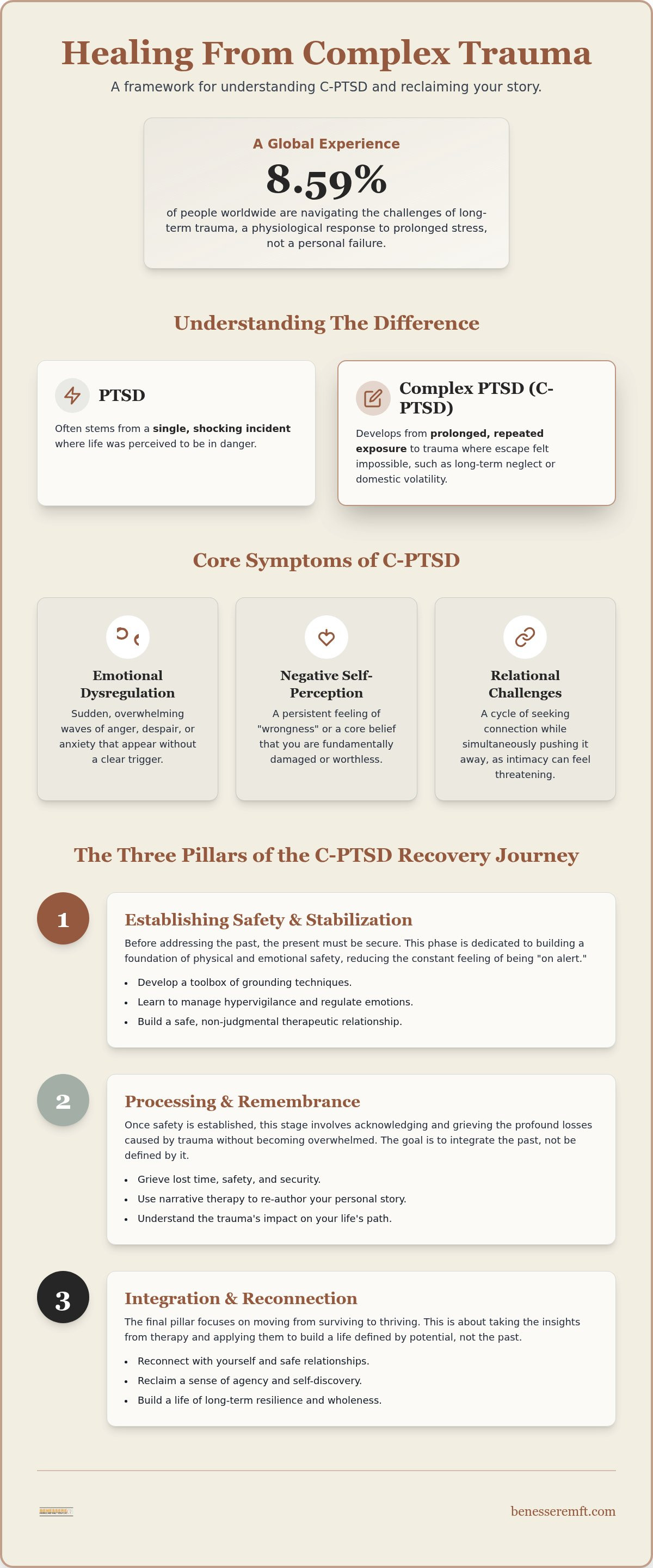
Healing from complex trauma isn't about fixing a broken person; it's about reclaiming a story that was interrupted by survival. For many, the experience of living with long-term trauma feels like a constant state of internal fragmentation, where your body feels like a stranger and a persistent sense of shame colors every interaction. If you struggle with dissociation or find it nearly impossible to trust others, you aren't failing at life. You're experiencing predictable physiological responses to prolonged stress. Research published in 2025 indicates that 8.59% of people globally are currently navigating these challenges. Recognizing that your symptoms are a valid response to an invalid environment is the first step toward healing from complex ptsd and finding a path back to yourself.
You deserve a life defined by your potential rather than your past. This guide provides a methodical, compassionate framework for understanding the mechanics of your trauma while offering a clear roadmap for recovery. We'll explore evidence-based strategies to reduce the frequency of emotional flashbacks, address the roots of persistent worthlessness, and help you reclaim a sense of agency. By integrating clinical precision with deep empathy, we'll outline how you can move from constant survival into a restorative process of long-term resilience and self-discovery.
Table of Contents
Understanding Complex PTSD: Why Your Experience is Unique
Standard PTSD often stems from a single, shocking event. However, Complex post-traumatic stress disorder develops through prolonged, repeated exposure to trauma where escape felt impossible. This might involve years of childhood neglect, domestic volatility, or systemic captivity. When a threat is constant, your nervous system must adapt to survive. These adaptations often manifest as a harsh internalized critic or a heavy, chronic sense of shame. It's essential to understand that these aren't character flaws. They're physiological responses. You aren't "broken"; you're a survivor whose brain learned to prioritize safety over everything else.
The Core Symptoms of C-PTSD
The impact of C-PTSD is uniquely personal because it often begins during formative years or lasts for such a duration that it alters your self-concept. Healing from complex ptsd involves identifying how these core symptoms manifest in your daily life, moving beyond the standard definitions of trauma to address the whole person. Key indicators include:
Emotional dysregulation: You might experience sudden, overwhelming waves of anger, despair, or anxiety that seem to come from nowhere.
Negative self-perception: This often feels like a persistent "wrongness" or a belief that you're fundamentally damaged compared to others.
Relational challenges: Because past trust was betrayed, intimacy can feel like a threat. This often leads to a cycle of seeking connection while simultaneously pushing it away.
Why Traditional 'Talk Therapy' Might Feel Incomplete
Many people seeking help for C-PTSD find that standard cognitive approaches don't quite reach the root of their pain. This is because the body keeps the score of trauma within the nervous system. Understanding your trauma intellectually doesn't necessarily stop an emotional flashback from hijacking your physiology. When you're in a state of hyper-arousal or dissociation, the logical part of your brain effectively goes offline. You can't simply think your way out of a biological survival state.
Healing from complex ptsd requires more than just insight; it requires specialized trauma treatment that respects the body's pace. A restorative, trauma-informed approach recognizes that the nervous system needs to feel safe before the mind can truly heal. It's about moving from surviving to thriving by addressing the somatic roots of your distress and reclaiming the narrative of your own life.
The Three Pillars of the C-PTSD Recovery Journey
The path toward healing from complex ptsd is rarely a linear progression. It's common to feel like you're taking two steps forward and one step back. This isn't a sign of failure. It's a natural part of a restorative process that seeks to return you to a state of wholeness. According to the National Center for PTSD, the complexity of these experiences requires a structured yet flexible approach. The goal isn't to erase the past, but to live fully in the present. We move at a pace that honors your nervous system, ensuring you aren't overwhelmed by the very process meant to help you. This careful pacing prevents re-traumatization and builds lasting resilience.
Stage 1: Establishing Safety and Stabilization
Before addressing the past, we must secure the present. This stage prioritizes your physical and emotional safety in your current environment. You'll build a comprehensive toolbox of grounding techniques to manage hypervigilance and the "always on" feeling of the trauma response. The therapeutic relationship itself serves as a safe harbor. It provides a consistent, non-judgmental space where you can practice emotional regulation. If you're looking for a supportive environment to begin this work, our trauma and PTSD treatment services in Roseville focus on creating this essential foundation of security.
Stage 2: Processing and Remembrance
Once safety is established, we begin to acknowledge the weight of your history. This involves grieving the profound losses trauma has caused, such as lost time, safety, or a stolen sense of childhood security. We often use narrative therapy to help you externalize the trauma. By viewing the trauma as a chapter in your life rather than the entire book, you can gently process memories without becoming flooded by them. This stage isn't about reliving the pain, but about integrating it into a broader, more compassionate life story.
Stage 3: Reconnection and Integration
The final pillar focuses on looking forward. You'll begin building a sense of self that isn't defined solely by survival. This stage involves developing healthy boundaries and pursuing relationships that feel nourishing rather than threatening. You'll learn to listen to your needs and desires again, often for the first time. It's about reclaiming agency over your future story and realizing that while your past shaped you, it doesn't have the final word. You aren't just a survivor; you're the author of what comes next.
Specialized Therapeutic Approaches for Lasting Resilience
Evidence-based skillsets aren't just clinical protocols; they're the architectural tools used to rebuild a life after trauma. Because every survivor’s history is distinct, a one-size-fits-all approach often falls short. Instead, a personalized strategy that integrates multiple modalities ensures that all layers of the trauma response are addressed. In this collaborative process, the therapist acts as a Compassionate Expert, offering a steady presence while you navigate the complexities of your inner world. This partnership is vital for healing from complex ptsd, as it models the safety and trust that trauma often erodes. The path to recovery is built on this foundation of clinical precision and human warmth.
Narrative Therapy: Rewriting the Script
One of the most transformative tools in our clinical toolkit is narrative therapy. Many survivors carry a heavy internal story where they believe they are the source of their own problems. Through a process called externalization, we shift the perspective to realize that the person is not the problem; the problem is the problem. This allows you to view the trauma as an outside force rather than an inherent part of your identity. We look for unique outcomes, which are specific moments where you demonstrated resilience even when the trauma tried to overwhelm you. Our individual psychotherapy Roseville services lean heavily into this restorative practice, helping you reclaim agency over your own history.
Trauma-Focused CBT and Emotional Regulation
While narrative work addresses identity, cognitive-behavioral techniques provide practical relief from the daily symptoms of hypervigilance. Survival mode often creates cognitive distortions, which are automatic, negative thought patterns developed by the brain to predict danger. By identifying these distortions, you can begin to untangle past fears from present reality. Psychoeducation is a cornerstone of this work. Understanding how your brain’s amygdala and prefrontal cortex interact helps normalize your experiences and reduces the shame associated with "overreacting." Accessing professional treatment and support for complex PTSD allows you to learn how to ride the wave of intense emotions without being pulled under. This balance of cognitive insight and emotional regulation is essential for healing from complex ptsd and fostering long-term stability.
Cultivating Internal Safety: Grounding and Self-Regulation
The "Window of Tolerance" is a clinical concept that describes the optimal zone of arousal where we can effectively process emotions and respond to life's demands. For individuals focused on healing from complex ptsd, this window is often significantly narrowed. You may find yourself frequently pushed into hyper-arousal, marked by panic and hypervigilance, or hypo-arousal, which manifests as numbness and dissociation. Cultivating internal safety is the practice of widening this window. It involves learning to recognize the subtle physiological shifts that precede a flashback and using specific, somatic tools to remain anchored in the present moment.
Grounding Techniques for Flashbacks
When an emotional flashback occurs, your brain is essentially misidentifying a current stimulus as a past threat. Grounding techniques provide the sensory data needed to correct this error. The 5-4-3-2-1 technique is a highly effective method for sensory integration. It requires you to identify five things you see, four you can touch, three you hear, two you can smell, and one you can taste. This deliberate focus shifts activity from the emotional centers of the brain back to the prefrontal cortex.
For more intense episodes, you can reset the vagus nerve by splashing ice-cold water on your face or holding an ice cube. This triggers the mammalian dive reflex, which naturally slows the heart rate and calms the nervous system. Anchoring is a deliberate practice of connecting to a physical object or a specific sensation to maintain a steady awareness of the present environment. These tools aren't just distractions; they're biological interventions that help you regain control over your body's survival responses.
Developing a 'Self-Care' Protocol
Restorative self-regulation is often confused with superficial pampering, yet they serve very different purposes. While pampering offers temporary comfort, a restorative protocol focuses on the consistent maintenance of the nervous system. This includes establishing a stable daily routine, as the traumatized brain finds safety in predictability. Identifying your specific triggers is the first step in creating a "safety plan" for difficult days, ensuring you have a predetermined list of actions to take when you feel your window of tolerance beginning to close.
Self-compassion is a vital clinical tool in this process. It acts as a direct counterweight to the chronic shame and the "internalized critic" common in C-PTSD. By treating your struggles with the same warmth you would offer a friend, you lower the physiological stress response. If you're ready to move beyond basic coping mechanisms, our trauma therapy Roseville services provide the professional guidance needed to refine these skills and achieve lasting healing from complex ptsd.
Taking the Next Step: Professional Trauma Support in Roseville
Deciding to seek professional support is a profound act of courage and the first definitive step toward reclaiming your agency. For many, the journey of healing from complex ptsd begins with the realization that survival, while necessary, is no longer enough. It's a transition from simply enduring life to actively shaping it. This process requires a therapeutic partnership built on trust, clinical precision, and a deep respect for your individual story. When you're ready to move beyond independent coping, finding a trauma-informed guide in Placer County ensures that your recovery is supported by specialized expertise.
Why Local, Specialized Care Matters
While digital resources provide valuable insights, the benefit of in-person sessions in a calm, safe clinical environment cannot be overstated. A physical office serves as a dedicated sanctuary, providing the containment needed to explore difficult emotions without them spilling into your home life. Our Roseville office is designed to be a restorative space where your nervous system can begin to downshift from a state of constant alert. We recognize that trauma often impacts the entire family system. By offering Individual Psychotherapy alongside Family and Couples Therapy, we help you address the relational challenges that often accompany long-term trauma, ensuring your path to healing from complex ptsd is holistic and sustainable.
Your Path to Healing at Benessere MFT
At Benessere Marriage and Family Therapy, our practitioners are mentored to provide care that's both evidence-based and deeply human. We don't view you as a list of symptoms to be managed, but as a person with an inherent capacity for growth. A significant part of our work involves psychoeducation, which empowers you with a clear understanding of how trauma has shaped your brain's responses. When you understand the mechanics of your triggers, they lose their power to overwhelm you. We invite you to a collaborative experience where your voice is the primary guide. If you're ready to begin this restorative process, reach out to Benessere MFT today to begin your restorative journey and discover what it means to live a life defined by your future, not your past.
Reclaiming Your Future Through Restorative Care
The journey toward healing from complex ptsd is a profound process of rediscovery. It's about moving from a state of constant survival into a life characterized by agency and self-worth. By establishing internal safety through grounding techniques and addressing the physiological roots of your trauma, you're doing more than managing symptoms. You're reclaiming your story. We've explored how a methodical, three-pillar approach provides the stability needed to process the past while building a resilient future.
At Benessere Marriage and Family Therapy, we provide a restorative, compassionate clinical environment where your experiences are handled with scientific precision and human warmth. Our practitioners utilize evidence-based trauma skillsets and specialized Narrative Therapy expertise to help you externalize the pain and rewrite your script. You don't have to navigate this unhurried process alone. If you're ready to take the next step, you can schedule a consultation for Trauma Therapy in Roseville today. There is an inherent possibility for growth within every story. Your path to wholeness is waiting to be explored.
Frequently Asked Questions
Is healing from Complex PTSD actually possible after many years?
Healing from complex ptsd is absolutely possible, regardless of how long you've carried the weight of your history. The human brain possesses a remarkable capacity for neuroplasticity, meaning it can form new pathways and unlearn survival responses even decades later. Recovery isn't about erasing the past; it's about building a present where those memories no longer dictate your physiological state. With dedicated support, you can reclaim a sense of agency and emotional stability.
How is C-PTSD different from standard PTSD?
While standard PTSD often results from a single, isolated traumatic event, C-PTSD stems from prolonged, repeated exposure to trauma where escape felt impossible. This typically occurs in situations like childhood neglect or domestic volatility. Beyond the traditional symptoms of flashbacks and avoidance, C-PTSD uniquely impacts a person’s sense of identity. This often results in chronic shame, difficulty with emotional regulation, and persistent challenges in maintaining healthy, trusting relationships with others in the community.
What should I expect during my first trauma therapy session in Roseville?
Your initial session at our Roseville office focuses on establishing a sense of safety and professional rapport. We prioritize your comfort, so there's no pressure to disclose every detail of your history immediately. Instead, we'll discuss your current challenges and goals while beginning to outline a personalized roadmap for your recovery. This collaborative intake process ensures that our clinical approach aligns with your specific needs and respects your individual pace throughout the therapeutic journey.
Can Narrative Therapy help me if I don't remember all my trauma?
Narrative Therapy is highly effective even when memories are fragmented or incomplete. This approach focuses on how the trauma currently affects your life story rather than requiring a perfect chronological recall of every event. By externalizing the "problem" and identifying your inherent resilience, we can reshape your relationship with your past. We work with the emotional and somatic information your body provides, helping you integrate these experiences into a more empowered personal narrative.
How long does the recovery process for C-PTSD typically take?
The timeline for healing from complex ptsd is highly individual and varies based on the depth and duration of the trauma. Because recovery is a non-linear, restorative process, it's more helpful to view it in stages rather than a fixed number of months. Some clients notice improvements in emotional regulation within a few months, while deeper identity work may take longer. We focus on sustainable progress that respects your nervous system's capacity for change.
Do I need medication to heal from Complex PTSD?
Medication is not a requirement for healing, though some individuals find it helpful for managing specific symptoms like severe anxiety or insomnia. It's important to clarify that Benessere MFT does not provide psychiatric medication management. Our focus remains on providing specialized psychotherapy and evidence-based skillsets that address the root causes of trauma. We recommend consulting with a medical professional if you're considering pharmacological support as a complement to your restorative work.
What if I feel too overwhelmed to talk about my past?
Feeling overwhelmed is a common response to complex trauma, and we never force you to discuss things before you're ready. Our initial focus is on stabilization and building your "Window of Tolerance" through grounding and self-regulation skills. We prioritize somatic safety, ensuring your nervous system feels secure in the present moment before gently addressing historical events. This unhurried, clinical approach prevents re-traumatization and allows you to remain in control of your own recovery.
How can I support a loved one who is healing from C-PTSD?
Supporting a loved one requires a balance of patience and consistent, non-judgmental presence. Educating yourself on the mechanics of trauma can help you understand that their reactions are physiological survival responses rather than personal slights. You can offer support by respecting their boundaries and maintaining a stable home environment here in Roseville. At Benessere MFT, we also offer Family Therapy to help navigate the complex relational dynamics that often arise during this process.


Comments