
Healing Together: Couples Therapy After Trauma in Roseville, CA (2026 Guide)
- Eddie Posadas
- 3 days ago
- 12 min read

What if the person who represents your greatest source of comfort has also become the primary trigger for your nervous system's alarm? When trauma enters a relationship, it often acts like an uninvited guest that rewrites your shared history and turns ordinary moments into emotional battlegrounds. You aren't alone in feeling like communication constantly spirals into conflict or that intimacy has been replaced by a heavy, protective numbness. Seeking specialized couples therapy after trauma Roseville is a vital step toward understanding these reactive patterns as symptoms of a wounded system rather than a lack of love.
It's possible to transform your relationship from a place of distress into a sanctuary for mutual recovery. This guide will show you how trauma-informed care provides the tools to manage triggers together and restore a sense of safety within your home. We'll explore the specific ways PTSD influences your dynamic and how a restorative, narrative-focused approach can help you reclaim your agency. You'll discover how to move beyond the feeling of being misunderstood by traditional counselors and find a path that honors your unique story. By the end of this guide, you'll have a clearer vision for healing the fractures in your bond and building a future defined by resilience.
Table of Contents
Understanding How Trauma Impacts the Relationship Dynamic
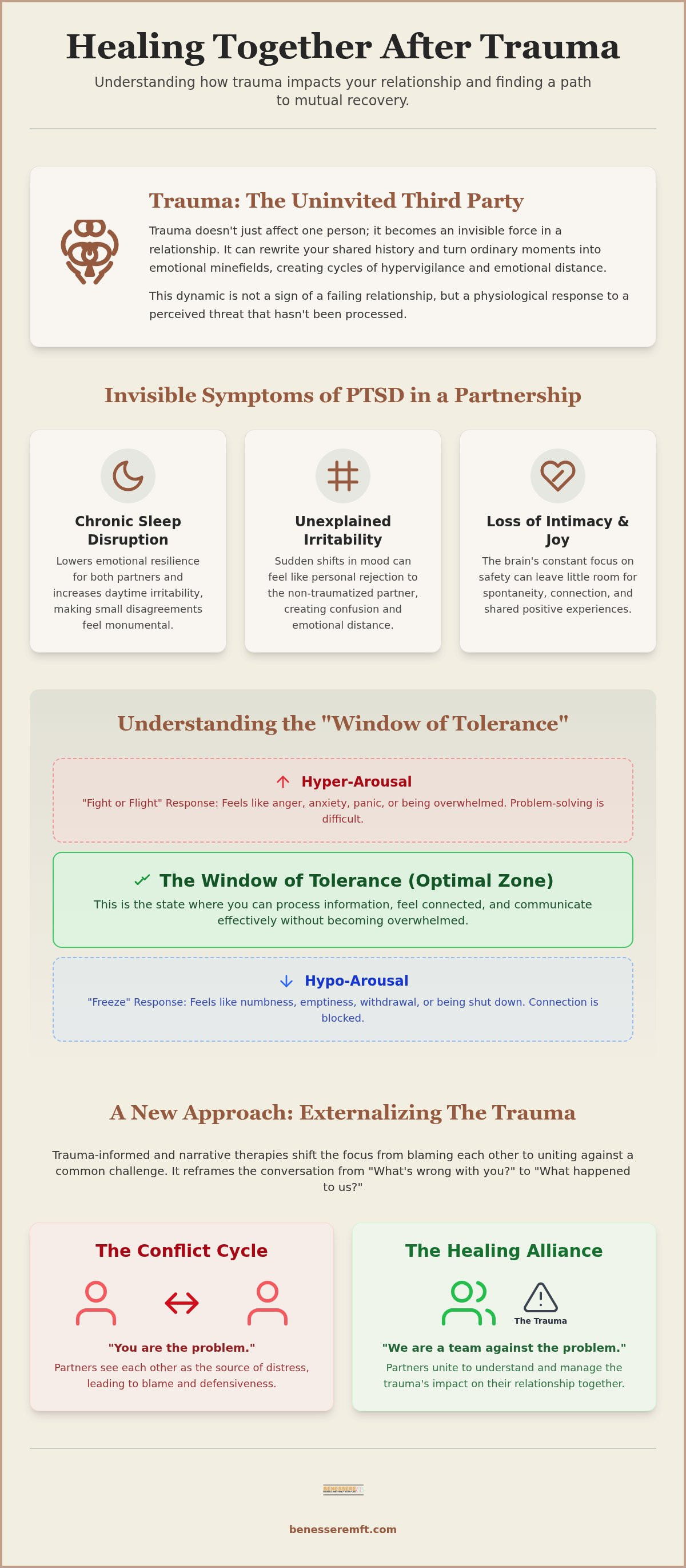
Trauma doesn't just live within an individual; it weaves itself into the very fabric of a partnership. It often acts as a silent, invisible third party that dictates how you and your partner interact, react, and perceive one another. When one person carries the weight of past distress, their nervous system remains on high alert, which can lead to a persistent cycle of hypervigilance and emotional withdrawal. One partner may feel constantly on edge, scanning for threats that aren't there, while the other feels increasingly isolated or shut out by their partner's need for distance. This dynamic isn't a sign that the relationship is failing. Instead, it's a physiological response to a perceived threat that hasn't yet been processed or integrated into your shared story.
Traditional communication exercises frequently fail when trauma is present because they assume both partners are in a regulated state. If your brain is stuck in a "fight or flight" mode, the parts of the mind responsible for empathy and complex problem solving are essentially offline. You can't logic your way through a panic response or an emotional flashback. Engaging in couples therapy after trauma Roseville offers a specialized path that addresses these biological realities rather than just the surface-level arguments they cause. It normalizes the struggle by acknowledging that your reactions are a result of your brain's attempt to protect you, not a lack of love or commitment.
The Invisible Symptoms of PTSD in a Partnership
PTSD symptoms often manifest in ways that look like marital discord but are actually survival mechanisms. Triggers might include a specific tone of voice, a certain facial expression, or even the way a door closes, leading to an immediate shutdown or an explosive argument. The supporting partner may also experience secondary trauma, feeling the emotional weight of their loved one's distress without fully understanding its origin. These invisible symptoms can strain daily household harmony through:
Chronic sleep disruption that lowers emotional resilience and increases daytime irritability.
Unexplained irritability that feels like personal rejection to the other partner.
A loss of spontaneous joy or intimacy due to the brain's constant focus on maintaining safety.
Breaking the Cycle of Reactivity
To heal, couples must learn about the "window of tolerance." This is the emotional zone where you can process information effectively and feel connected to your partner. When you move outside this window, you either become hyper-aroused, which looks like anger or anxiety, or hypo-aroused, which feels like numbness and withdrawal. Trauma-informed care provides a framework to recognize these shifts before they turn into full-scale crises. By shifting the perspective from "What's wrong with you?" to "What happened to us?", you begin to externalize the trauma. Psychoeducation helps you understand that these reactions are your brain's attempt to keep you safe, which de-escalates tension and builds a foundation for restorative couples therapy after trauma Roseville.
What is Trauma-Informed Couples Therapy?
Trauma-informed couples therapy is a specialized therapeutic framework that prioritizes emotional and physical safety above all other clinical goals. It isn't merely traditional counseling applied to a survivor; it's a fundamental shift in how a therapist views the relationship's struggles. In this approach, every interaction is filtered through the understanding that trauma has fundamentally changed how the brain perceives threat and connection. By creating a predictable and secure environment, the therapist ensures that the work of healing doesn't inadvertently cause more distress. This foundation of safety is essential for any long-term resolution, as it allows both partners to lower their defenses and engage with the process from a place of relative calm.
A primary objective of this modality is to prevent re-traumatization during difficult conversations. In standard settings, partners are often encouraged to "share their feelings" or "be vulnerable" before they have the regulatory tools to handle the resulting emotional surge. Trauma-informed care reverses this order, focusing on stabilization first. We spend time building a toolkit of grounding techniques and self-regulation strategies before diving into deep emotional processing. Researchers have documented the significant impact of PTSD on family relationships, highlighting why a standard approach often falls short. By integrating evidence-based skillsets like Cognitive Behavioral Therapy (CBT) and narrative techniques, couples therapy after trauma Roseville helps partners deconstruct the "trauma story" and replace it with a narrative of shared resilience.
Traditional vs. Trauma-Informed Counseling
The difference between these two approaches lies in the focus of the intervention. Traditional counseling often emphasizes behavior modification or "fair fighting" rules. While these are useful, they're often ineffective when a partner's nervous system is overwhelmed. Trauma-informed practitioners shift the focus to nervous system regulation, helping couples recognize when they've left their window of tolerance. The goal isn't just to resolve a specific conflict; it's to create a restorative process where both individuals feel biologically safe in each other's presence. By working with a practitioner who understands these nuances, you can begin a restorative journey that respects your past while building your future.
The Role of Safety and Trust
Safety is the primary currency of trauma recovery. Within the therapy room, this looks like establishing clear "stop signs" or boundaries that allow either partner to pause a conversation if they feel flooded. The therapist acts as a regulated anchor, modeling a calm presence that helps the couple co-regulate. This structured environment ensures that both partners feel heard and protected, even when discussing painful topics. Over time, this modeled safety transfers from the office to the home, allowing couples therapy after trauma Roseville to build a lasting foundation of trust that trauma once tried to dismantle.
The Power of Narrative Therapy in Couples Recovery
Narrative therapy offers a profound shift in perspective for partners struggling with the aftereffects of distressing events. Instead of viewing one another as the source of conflict, this approach helps you view the trauma itself as an external force trying to disrupt your connection. This technique, known as externalizing, allows you to collectively stand against the symptoms of PTSD rather than standing against each other. When engaging in couples therapy after trauma Roseville, this shift is often the first step toward genuine reconciliation. It moves the focus from individual blame to a shared mission of restoration.
A central component of this work involves identifying "unique outcomes." These are specific moments in your history where you and your partner successfully resisted the trauma's influence. Perhaps it was a quiet evening where you felt safe enough to laugh, or a difficult conversation that didn't escalate into a shutdown. These moments aren't accidents; they're evidence of your relationship's inherent strength. By highlighting these instances, we begin to rewrite your shared history to include resilience and survival alongside the pain. Aligning with SAMHSA's guidance on trauma, we recognize that recovery is a holistic process that requires a supportive environment.
Reclaiming Your Unique Story
Trauma has a way of monopolizing a relationship's narrative. It tries to convince you that the past was only pain and the future is only fear. Using narrative therapy helps you find the threads of connection that remain hidden beneath the surface of distress. Professional clinical psychotherapy provides the space to examine these threads and weave them into a new, more empowering story. You aren't just survivors; you're the authors of your next chapter. This process doesn't erase what happened, but it ensures that the trauma is no longer the only voice telling your story.
Moving Beyond the Victim-Survivor Binary
Shifting your relationship identity from "broken" to "healing" is a powerful act of agency. It moves you away from a static label and toward a dynamic process of growth. This change is vital for long-term recovery because it restores a sense of control over your shared life. Narrative therapy helps couples separate their identity from their PTSD symptoms by positioning the trauma as an external challenge they face together rather than a permanent character flaw in either partner. This perspective fosters the empathy needed for couples therapy after trauma Roseville to truly take root and create lasting change.
What to Expect: Your Healing Journey in Roseville
Embarking on a path toward recovery requires a structured yet flexible approach that respects the unique tempo of your relationship. The initial assessment serves as a vital foundation, where we move beyond surface-level symptoms to understand the historical context of your partnership and your specific goals for the future. This isn't a passive interview; it's a collaborative discovery process. During these early meetings, we identify the strengths that have kept your bond intact despite the weight of past distress. By the end of this phase, we develop a personalized mental health treatment plan that serves as a roadmap for your restorative journey, ensuring that every session has a clear purpose and direction.
The rhythm of couples therapy after trauma Roseville balances individual needs with shared relational goals. We recognize that while you're working as a unit, each partner may be at a different stage of readiness or regulation. Sessions are designed to provide space for both perspectives, ensuring neither person feels sidelined or overwhelmed. Between appointments, we often suggest practical skill-building exercises or "homework" to help you integrate new tools into your daily life. These exercises focus on real-world application, such as practicing grounding techniques during a minor disagreement or using new communication scripts to express needs without triggering a defensive response. This consistent practice helps bridge the gap between the therapy room and the home environment.
A Safe Space in Placer County
Our localized support in Roseville addresses the community-specific stressors that often exacerbate emotional distress. Living in a high-pressure environment like the Greater Sacramento area, where career competition and cost of living can create a "pressure cooker" effect, adds layers of complexity to trauma recovery. Our office provides a professional, restorative sanctuary away from these external demands. By choosing a specialist who understands the local landscape, you gain a partner who is attuned to the specific challenges faced by families in Placer County. If you're ready to begin this collaborative process, you can learn more about our couples therapy services.
The Path to Stabilization
Stabilization is the essential first phase of healing, providing the security needed for deeper work. This progression typically follows three methodical steps:
Step 1: Establishing a Shared Language. We help you define trauma symptoms in a way that removes blame and fosters mutual understanding.
Step 2: Implementing Regulation Techniques. Partners learn to identify physiological cues of distress and use specific tools to de-escalate high-stress moments before they spiral.
Step 3: Beginning Narrative Reconstruction. Once safety is established, we start the deeper work of externalizing the trauma and rewriting your shared story, as discussed in previous sections.
This logical progression ensures that you aren't pushed into deep emotional processing before your relationship has the stability to support it. By following this path, couples therapy after trauma Roseville becomes a predictable and secure process that honors your resilience.
Taking the Next Step Toward Restorative Healing
Deciding to seek professional support is a significant turning point in a relationship's history. It isn't an admission of defeat but a profound act of courage and a testament to the value of your bond. When you choose couples therapy after trauma Roseville, you're making a commitment to a future that isn't dictated by past distress. This specialized form of marriage and family therapy goes beyond the scope of general counseling by addressing the systemic impact of trauma on the entire partnership. While general counseling might focus on surface-level disagreements, a trauma-informed approach looks at the underlying nervous system patterns that drive those conflicts. It recognizes that the symptoms you're experiencing are adaptive responses to extraordinary circumstances; it provides a clinical path toward restoration and renewed connection.
Finding the Right Fit
The success of trauma work depends heavily on the therapeutic alliance. Trust is the primary currency of this work. Both partners must feel a sense of safety and trust with their clinician to engage in the vulnerable work of healing. When you speak with a potential trauma-informed therapist in Roseville, consider asking how they manage triggers within the room or what specific evidence-based modalities they use to support couples. It's also helpful to ask about their experience with narrative techniques or how they facilitate stabilization. If your partner feels hesitant about the process, focus the conversation on the shared goal of creating a more peaceful environment. Framing therapy as a tool for mutual safety rather than a critique of character can lower defenses and open the door to collaboration.
Begin Your Recovery Today
At Benessere MFT, we provide a restorative path that honors your unique story and fosters long-term resilience. We understand that your narrative is still being written, and the current chapter of struggle is just one part of a much larger journey. By prioritizing the health of your partnership today, you're building a foundation of agency and hope that'll serve you for years to come. We believe that healing is a collaborative process that requires both scientific precision and human warmth. Engaging in couples therapy after trauma Roseville allows you to move beyond survival and toward a relationship defined by growth and mutual support. We invite you to reach out to our Roseville team to discuss your unique needs and begin the collaborative process of reclaiming your shared story. Healing is possible, and your shared story is just beginning.
Reclaiming Your Shared Future
Your relationship's story doesn't have to be defined by the trauma you've endured. We've explored how trauma functions as a disruptive force and how specialized interventions help you externalize those challenges. By prioritizing stabilization and utilizing narrative techniques, you and your partner can move from a state of survival into a collaborative process of restoration. Seeking couples therapy after trauma Roseville is a powerful commitment to your long-term health and connection. It's a choice to stop viewing each other as the problem and start viewing the future as a shared project.
Our team provides a restorative, evidence-based approach rooted in specialized Narrative Therapy training. As compassionate local Roseville experts, we're dedicated to helping you build a sanctuary of safety within your partnership. You don't have to navigate these complexities alone. When you're ready to begin this next chapter, we invite you to Connect with a Trauma-Informed Therapist in Roseville Today. Your resilience has brought you this far, and we're here to help you find the way forward together. Healing is possible, and your shared story is just beginning.
Frequently Asked Questions
Is couples therapy effective if only one partner has experienced trauma?
Yes, couples therapy is highly effective in this scenario because trauma inherently impacts the relationship system as a whole. When one partner carries a history of distress, their survival responses can inadvertently trigger cycles of withdrawal or conflict that affect both individuals. Working together allows the non-traumatized partner to become a vital part of the healing process, learning co-regulation skills that foster a more supportive and predictable home environment.
Will we have to talk about the trauma in detail during our couples sessions?
No, you aren't required to disclose every detail of the traumatic event to find relief in a couples setting. Our focus remains on how the symptoms of trauma are currently influencing your dynamic and your ability to connect. This approach ensures the therapy room remains a safe space and prevents the risk of re-traumatization, allowing you to focus on stabilization and the restoration of your bond instead of the past itself.
How long does trauma-informed couples therapy usually take?
The duration of the therapeutic process depends on the complexity of your shared history and your specific goals for the partnership. Some couples experience a noticeable shift in their dynamic after several months of stabilization work, while others choose to engage in longer-term narrative reconstruction to deepen their connection. We prioritize a methodical pace that respects your nervous system's capacity for change, ensuring that progress feels stable and sustainable.
What if my partner is hesitant to attend therapy for PTSD?
Hesitation is a natural response often rooted in the fear of being judged or feeling emotionally overwhelmed by past experiences. It's helpful to frame the invitation as a collaborative effort to improve the relationship's overall sense of safety rather than a way to fix an individual. Proposing a single initial assessment for couples therapy after trauma Roseville can lower the pressure and allow a hesitant partner to experience our restorative environment firsthand.
Can couples therapy help with infidelity that occurred as a result of trauma?
Yes, we can address infidelity by exploring the underlying emotional distress and maladaptive coping mechanisms that may have contributed to the betrayal. While trauma doesn't excuse the behavior, understanding its role in the relationship dynamic helps both partners move toward genuine accountability. This process involves rebuilding trust through transparency and developing healthier, more resilient ways to manage emotional pain together without causing further harm.
What is the difference between marriage counseling and trauma-informed couples therapy?
Traditional marriage counseling typically focuses on conflict resolution and communication skills, whereas trauma-informed therapy prioritizes nervous system regulation and psychological safety. We recognize that even the best communication tools often fail when a partner is in a state of hyper-arousal or shutdown. By addressing the biological impact of PTSD first, we create the necessary stability that allows traditional counseling techniques to eventually become effective and lasting.
Do you offer individual sessions alongside couples therapy in Roseville?
Yes, we provide individual psychotherapy in addition to our couples work to ensure a comprehensive approach to your mental health. Sometimes an individual requires a private space to process personal aspects of their history while simultaneously working on relational dynamics with their partner. This integrated model allows for specialized attention to both individual trauma symptoms and the unique needs of the partnership, providing a holistic path toward recovery.
How do we know if we need specialized trauma therapy instead of general counseling?
You may need specialized support if your conflicts feel deeply physiological, such as experiencing sudden panic, heart racing, or an inability to speak during arguments. If standard communication advice has failed to create change, it's likely that your relationship is being influenced by unresolved distress. Seeking couples therapy after trauma Roseville ensures your therapist understands how to work with the nervous system to stop these reactive cycles at their source.


Comments