
Managing Chronic Stress Therapy: A Clinical Path to Restoring Resilience
- Eddie Posadas
- 5 hours ago
- 12 min read

Chronic stress isn't a failure of willpower or a simple mindset problem; it's a physiological state of "stuckness" that your mind cannot simply think its way out of. You might find yourself in a perpetual state of fight-or-flight, feeling a deep sense of physical exhaustion that persists even after a full night of sleep. It's a heavy burden to feel like a passenger in your own life story, watching the days pass while your body remains braced for a crisis that never quite arrives. You aren't alone in this experience, and your body's response is a natural, albeit taxing, attempt to keep you safe.
Engaging in managing chronic stress therapy provides a clinical path to transition from this state of constant vigilance to one of sustainable peace. By understanding the intricate biology of your nervous system, you can begin to apply specialized therapeutic modalities that restore your sense of agency. This article explores how restorative, evidence-based practices help you regulate your internal environment. We'll examine the mechanics of the stress response and introduce the clinical tools necessary to move beyond survival and back into a life defined by joy and presence.
Table of Contents
Beyond Burnout: Understanding the Clinical Nature of Chronic Stress
The Physiology of Persistence: Why Your Body Stays in Fight-or-Flight
Therapeutic Modalities for Managing Chronic Stress: From CBT to Narrative Therapy
Recognizing the Threshold: When Self-Care Should Transition to Professional Therapy
Restoring Balance: Personalized Stress Management Therapy in Roseville
Beyond Burnout: Understanding the Clinical Nature of Chronic Stress
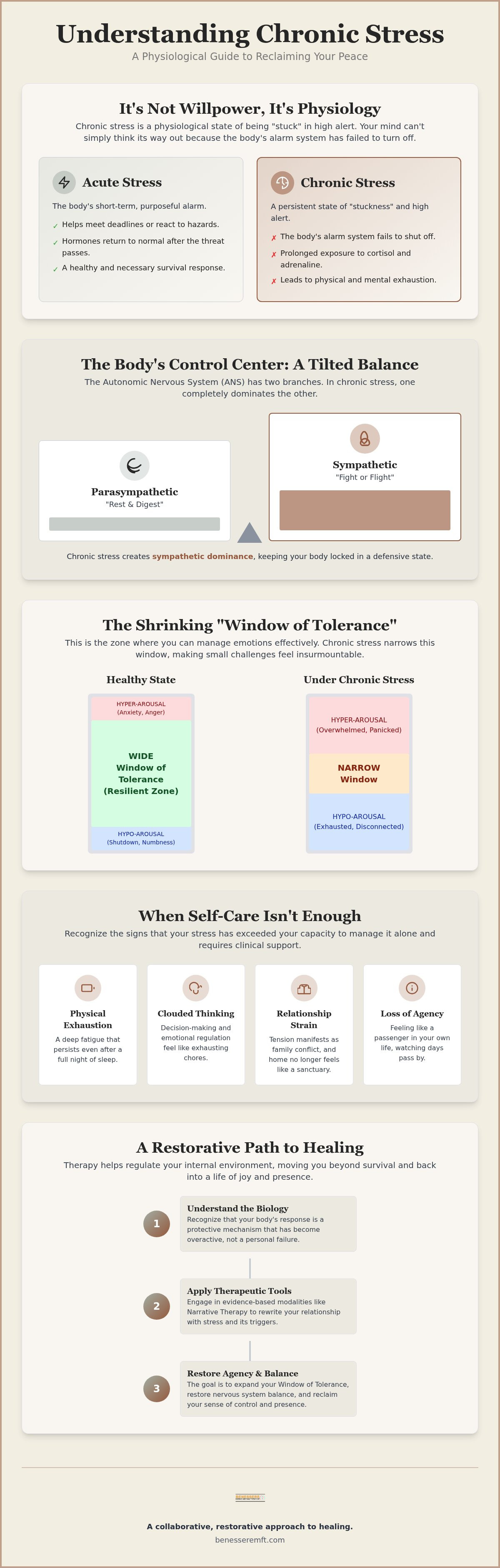
Stress is often misunderstood as a simple, temporary hurdle. In reality, it's a complex physiological event that demands clinical attention when it refuses to subside. Acute stress serves a specific purpose. It's the surge of adrenaline that helps you meet a critical deadline or react to a sudden hazard. However, chronic stress is fundamentally different. It's a state of "stuckness" where the body's alarm system fails to turn off even when the threat is gone. When you are exploring managing chronic stress therapy, the primary goal is to identify this persistent strain and address it at its biological and psychological roots. By viewing these symptoms as a physiological reality rather than a character flaw, we create a safe space for genuine healing to begin.
The Threshold of Chronicity
The transition from healthy pressure to clinical chronicity is often subtle. It's the moment when the pressure no longer subsides after the task is finished. Prolonged exposure to cortisol, the body's primary stress hormone, begins to reshape how you process information and interact with the world. It clouds decision-making and makes emotional regulation feel like an exhausting chore. Many people try to "power through" these symptoms, believing that more effort will solve the problem. This approach often deepens the clinical impact. Instead of resolving the issue, the body becomes more entrenched in its defensive posture. This leads to a significant narrowing of your "Window of Tolerance," making even small daily tasks feel insurmountable and overwhelming.
Stress in the Modern Roseville Context
For many residents in Roseville and the broader Placer County area, high-pressure professional roles are the baseline. The local landscape is growing rapidly, bringing both professional opportunity and a relentless pace. It's common to see these workplace demands bleed into family life. Unresolved tension often manifests as family conflict, where the home environment becomes another source of vigilance rather than a sanctuary. In our community, we often normalize these high stress levels, viewing constant busyness as a badge of honor or a prerequisite for success. This cultural backdrop can make it incredibly difficult to recognize when your internal resources are actually depleted.
Adopting a restorative perspective allows you to see stress as a signal rather than a personal failure. It's an invitation to pause and engage in managing chronic stress therapy as a collaborative, evidence-based process of recovery. This approach doesn't just manage symptoms; it seeks to restore the resilience that allows you to engage fully with your life again. By understanding the unique pressures of our local environment, we can better tailor the therapeutic process to your specific needs.
The Physiology of Persistence: Why Your Body Stays in Fight-or-Flight
Your Autonomic Nervous System (ANS) acts as a sophisticated control center, managing everything from your heartbeat to your breath without a single conscious thought. It's divided into two primary branches: the sympathetic system, which prepares you for action, and the parasympathetic system, which facilitates rest and recovery. When you are managing chronic stress therapy, you're essentially working to re-tune this system. In a healthy state, these branches balance each other out. However, chronic stress creates a state of sympathetic dominance. Your body remains locked in a defensive posture, even when you're sitting in a quiet room.
This persistent state often leads to a narrowing of what clinicians call the Window of Tolerance. This is the psychological space where you can effectively process emotions and navigate daily challenges without becoming overwhelmed or shutting down. When this window shrinks, even minor inconveniences can trigger a full-scale stress response. This is why trauma therapy Roseville is often an essential component of the recovery process. A trauma-informed perspective recognizes that your body's refusal to "just relax" isn't a choice; it's a protective mechanism that has become over-active.
Cortisol, Adrenaline, and the Vigilant Brain
In a state of chronic vigilance, the brain prioritizes survival over long-term maintenance. It floods the system with cortisol and adrenaline, keeping your senses sharp but your body exhausted. For many, traditional relaxation techniques like deep breathing can actually feel threatening because the brain interprets "letting down your guard" as a vulnerability. Allostatic load is the cumulative wear and tear on the body that results from this chronic overexposure to stress hormones. Over time, this load depletes your restorative reserves, making it harder for the body to return to a baseline of calm without professional guidance.
The Somatic Manifestation of Narrative
The stories you tell yourself about your stress often create tangible physical tension. If you believe you must always be "on" to be safe or successful, your muscles will reflect that belief through chronic tightness. This emotional distress frequently manifests as physical ailments, such as persistent insomnia or digestive issues, which are the body's way of signaling that it's overwhelmed. Managing chronic stress therapy involves moving beyond just treating these individual symptoms. It's about restoring systemic balance and helping your body feel safe enough to finally rest. Working with a compassionate guide can help you navigate this physiological landscape with clarity and confidence.
Therapeutic Modalities for Managing Chronic Stress: From CBT to Narrative Therapy
While lifestyle changes like exercise or improved sleep hygiene are valuable, they often fail to address the core of a dysregulated system. Clinical intervention provides a more robust framework for recovery. Managing chronic stress therapy utilizes evidence-based counseling to offer a structured, methodical path forward. This process isn't about "trying harder" to relax; it's about employing specific psychological modalities that retrain the brain and body to function from a place of safety rather than survival. By engaging in this collaborative work, you move beyond surface-level coping and begin to address the underlying patterns that sustain chronic tension.
Narrative Therapy: Reclaiming Agency
Narrative therapy offers a profound shift in perspective by externalizing the challenges you face. Instead of viewing yourself as a "stressed person," we work to see "The Stress" as an outside force that has moved into your life. This separation is vital. It allows you to examine the tactics stress uses to dominate your time and energy without the weight of self-blame. By rewriting your unique story, you begin to identify "unique outcomes." These are specific moments where you successfully resisted the stress narrative and acted with agency. As you reclaim your story, your physiological response begins to shift; your brain starts to recognize that the "stuckness" discussed earlier is not a permanent state.
Cognitive and Behavioral Skillsets
Trauma-informed Cognitive Behavioral Therapy (CBT) provides the practical tools needed to manage emotional dysregulation. We focus on identifying cognitive distortions, such as catastrophizing or "all-or-nothing" thinking, that act as fuel for chronic anxiety. Understanding these patterns through psychoeducation is often the first step toward stability. It's empowering to realize that your brain's response is a predictable biological pattern rather than a random occurrence. This clarity reduces the fear associated with the stress response itself.
A comprehensive toolkit for managing chronic stress therapy includes several key components:
Trigger Identification: Recognizing specific environmental or internal cues before they lead to a full stress response.
Grounding Techniques: Practicing somatic skills that communicate safety directly to the Autonomic Nervous System.
Response Planning: Developing a personalized strategy for high-stress moments to prevent the narrowing of your Window of Tolerance.
These skillsets don't just manage symptoms; they build the resilience necessary to navigate the complexities of life in Roseville with a sense of calm authority. By integrating these clinical tools, you can transition from a state of constant vigilance to one where you feel empowered and in control of your own narrative.
Recognizing the Threshold: When Self-Care Should Transition to Professional Therapy
While self-care tools like meditation, exercise, or journaling are foundational, they aren't always sufficient for a nervous system that's remained in a state of high alert for months or years. There's a distinct point where "managing" becomes an act of endurance rather than a path to growth. Recognizing this threshold is a vital step in the process of managing chronic stress therapy, as it signals that your internal resources have been depleted beyond the point of self-regulation. Seeking professional support isn't an admission of weakness; it's a strategic decision to involve a specialist in your restorative journey when the weight of persistence becomes too heavy to carry alone.
The Relational Cost of Chronic Stress
Individual stress rarely stays contained within the individual. It inevitably bleeds into marriage and family dynamics, often manifesting as uncharacteristic irritability or a quiet, heavy withdrawal. When home harmony is replaced by frequent family conflict, it's often a sign that the collective nervous system of the household is under strain. You might notice you're less present for your partner or more reactive with your children. Engaging in family therapy Roseville CA provides a neutral, clinical space to break these cycles. It allows family members to understand the physiological roots of the tension, fostering empathy instead of blame and restoring the home as a sanctuary.
Clinical Red Flags to Watch For
Certain indicators suggest that stress has transitioned into a more complex clinical state that requires targeted intervention. Persistent sleep disturbances, where you feel "tired but wired" even after a full night's rest, directly impact your mental clarity and emotional resilience. You might also notice a sense of emotional numbness, a loss of interest in activities that once brought joy, or a feeling that you're merely performing the motions of your life. These symptoms often overlap with clinical low mood, making depression counseling Roseville a relevant consideration for those feeling stuck in a persistent fog. When stress-induced anxiety begins to interfere with your professional performance or your ability to feel safe in your own body, the threshold for professional guidance has been met.
In our local high-achievement culture, there's often a silent pressure to maintain an appearance of effortless control. This stigma can delay necessary care, causing the cumulative wear and tear on your system to deepen. Professional guidance offers an objective, clinical perspective that self-help resources cannot provide. It moves you from passive endurance to active recovery, helping you reclaim the agency that chronic stress often strips away. If you find that your usual coping mechanisms are no longer providing relief, it may be time to consult a professional therapist who can help you map a new path toward sustainable peace.
Restoring Balance: Personalized Stress Management Therapy in Roseville
Transitioning from a state of constant vigilance to one of sustainable peace requires more than just clinical knowledge; it demands a therapeutic environment where scientific precision meets deep-seated empathy. At Benessere Marriage and Family Therapy, Inc, we recognize that your experience with stress is as unique as your personal history. Our approach to managing chronic stress therapy is rooted in the belief that healing is a collaborative process. We don't simply provide a list of coping mechanisms. Instead, we act as a wise guide, helping you navigate the complexities of your nervous system while honoring the narrative of your life. This restorative care is designed to help you reclaim your sense of agency and move toward a future defined by growth rather than endurance.
A Collaborative Path to Growth
Effective therapy is never a one-size-fits-all solution. We tailor every intervention to align with your specific life experiences and goals. By integrating evidence-based skillsets with restorative psychoeducation, we help you understand the "why" behind your body's responses. This clarity is often the first step in lowering your internal defenses. The team at Benessere Marriage and Family Therapy, Inc is uniquely qualified to handle these complex emotional states because we prioritize a mentored and trained clinical environment. This commitment to ongoing professional development ensures that you receive advanced, trauma-informed care that reflects the latest developments in psychological literacy. Within this calm, safe space, you can begin the vital work of deconstructing the patterns that have kept you stuck in a cycle of fight-or-flight.
Finding Resilience in Placer County
Choosing a local clinic in Roseville means working with professionals who understand the specific cultural and professional pressures of the Placer County community. We are familiar with the high-achievement expectations and the fast-paced lifestyle that can often contribute to systemic strain. When you take the first step toward individual psychotherapy Roseville, you're entering a non-judgmental space where your struggles are normalized and your potential is prioritized. In your first session, we focus on building a foundation of trust and identifying the specific clinical red flags that have been impacting your daily life. It's a methodical, unhurried process designed to build a sense of security from the very beginning.
The journey toward restoring balance is a deliberate one, but it's entirely possible. Chronic stress may have made you feel like a passenger in your own story, yet the inherent possibility of growth remains. By engaging with a professional therapeutic team, you can begin to expand your Window of Tolerance and rediscover the joy that stress has obscured. We invite you to reach out and schedule an appointment to begin this restorative process. Together, we can map a clinical path that leads away from constant vigilance and toward a life of lasting resilience and agency.
Reclaiming Your Sense of Agency and Peace
Chronic stress is more than a demanding schedule or a difficult mindset; it's a physiological state of persistence that requires a clinical approach to resolve. By engaging in managing chronic stress therapy, you move beyond the exhaustion of mere survival and begin to retrain your nervous system for sustainable rest. We've explored how identifying the threshold of chronicity and utilizing evidence-based modalities can help you rewrite your relationship with persistent strain. This process isn't about trying harder to relax, but about building the clinical skillsets necessary to expand your internal Window of Tolerance.
Our expertly trained clinical team is here to support you with evidence-based therapeutic modalities tailored to your unique story. Located at our convenient Roseville, CA office, we provide a calm, safe space for your restorative work. You don't have to remain a passenger in your own life story. Growth and resilience are always within reach when you have the right guide by your side. Begin your restorative journey with Benessere Marriage and Family Therapy, Inc today.
Frequently Asked Questions
How is chronic stress different from regular anxiety?
Chronic stress is a response to external, persistent pressures, while anxiety is often characterized by internal apprehension or worry that persists even without a specific trigger. Stress is typically tied to a defined situation or timeline. Chronic stress occurs when that situation doesn't resolve, leading to a state of physiological "stuckness." While they share symptoms like irritability and fatigue, chronic stress is rooted in the long-term activation of the body's survival systems.
Can therapy actually help with physical symptoms of stress?
Yes, clinical therapy addresses the somatic manifestations of stress by helping you regulate your Autonomic Nervous System. Symptoms like tension headaches, insomnia, and digestive issues are often your body's way of signaling a state of high vigilance. Through managing chronic stress therapy, we use evidence-based tools to communicate safety to your brain. This reduction in internal tension often leads to a significant decrease in the physical discomfort associated with prolonged strain.
What is the most effective therapy for chronic stress management?
There isn't a single "best" method, but a combination of trauma-informed Cognitive Behavioral Therapy (CBT) and Narrative Therapy is highly effective. These modalities help you identify cognitive distortions and externalize the stress as an outside force. This collaborative approach allows you to build a toolkit for emotional regulation while rewriting your relationship with pressure. The most effective path is one tailored to your unique story and physiological needs by a trained professional.
How long does it take to see results from stress therapy?
Every restorative journey is unique, but many clients begin to feel a shift in their perspective within the first few sessions. Achieving sustainable peace and systemic regulation often requires a longer commitment to deconstruct deep-seated patterns. You might notice small changes in your reactivity or sleep patterns early on. Consistent work with a wise guide ensures that these improvements are integrated into your long-term resilience rather than being temporary relief.
Is chronic stress considered a mental health disorder?
Chronic stress itself isn't a formal diagnosis in the DSM-5, but it's a significant clinical state that often precedes or accompanies disorders like Generalized Anxiety Disorder or Depression. It represents a physiological and psychological strain that impairs your daily functioning. Left unaddressed, it can lead to more severe mental health challenges. Recognizing the clinical nature of this strain is the first step toward seeking the professional support needed to restore your health.
What should I look for in a therapist for chronic stress in Roseville?
Look for a provider who offers a trauma-informed perspective and evidence-based skillsets. It's important to find a clinic that values a collaborative, non-judgmental relationship and understands the specific pressures of the Roseville community. Ensure the therapeutic team is mentored and trained in advanced modalities like Narrative Therapy. A wise guide should be able to explain the biology of your stress while maintaining a compassionate, restorative environment for your growth.
Can family therapy help if my stress is caused by work?
Yes, because individual stress inevitably bleeds into your home life and relational dynamics. Even if the trigger is professional, the resulting irritability or withdrawal affects your partner and children. Family therapy provides a neutral space to address these patterns and restore home harmony. It helps your loved ones understand your physiological state, which reduces conflict and turns your home back into a sanctuary where you can truly recover and find balance.
What happens if I don't treat my chronic stress?
Ignoring chronic stress often leads to a state of systemic depletion known as high allostatic load. This cumulative wear and tear can result in burnout, weakened immune function, and severe relational strain. Over time, your Window of Tolerance narrows, making it difficult to function professionally or personally. Proactive care through managing chronic stress therapy prevents this downward spiral, helping you reclaim your sense of agency before the physiological costs become even higher.


Comments