
Psychoeducation for Trauma: A Guide to Healing

What if the reactions that make you feel broken are actually your brain's most sophisticated attempts to keep you safe? Many people living with the aftermath of distressing events feel a deep sense of shame, wondering why they can't simply move on or why their body stays in a state of constant hypervigilance. It's exhausting to feel like a stranger in your own skin, reacting to invisible threats while the world moves on around you. Since research shows that 63.9% of adults in the U.S. have experienced at least one adverse childhood experience, you're certainly not alone in this struggle.
Discovering the power of psychoeducation for trauma can shift this perspective, turning a source of confusion into a structured journey of resilience. By understanding the neurobiology and mechanics of your responses, you'll learn to replace self-blame with a sense of clarity and restorative control. This guide explores how understanding the "why" behind your symptoms reduces stigma and provides a clear framework for what your path to healing through professional therapy will look like. We'll examine how the brain's fear centers function and how specific therapeutic interventions help you reclaim your unique story and move toward lasting wellness.
Table of Contents
What is Psychoeducation for Trauma?
Psychoeducation for trauma represents a deliberate, evidence-based approach to understanding the psychological and physiological impacts of distressing life events. While many wonder, What is Psychoeducation?, it's essentially a collaborative therapeutic intervention where the therapist acts as a wise guide. It's more than simply receiving information; it's the process of building clinical literacy together. This shared knowledge transforms a chaotic internal experience into a manageable, structured framework. By learning the mechanics of your responses, you move from a place of confusion to one of informed agency.
Many individuals spend hours researching symptoms online, which can sometimes increase anxiety rather than soothe it. Clinical psychoeducation for trauma differs because it occurs within a safe, restorative container. It isn't just about abstract facts. It's about how those facts apply to your specific history and current struggles. The primary goal is to replace the heavy weight of shame with the clarity of scientific validation. When you understand that your brain is functioning exactly as it was designed to under extreme stress, the narrative of being "broken" begins to dissolve.
The Foundational Pillars of Trauma Education
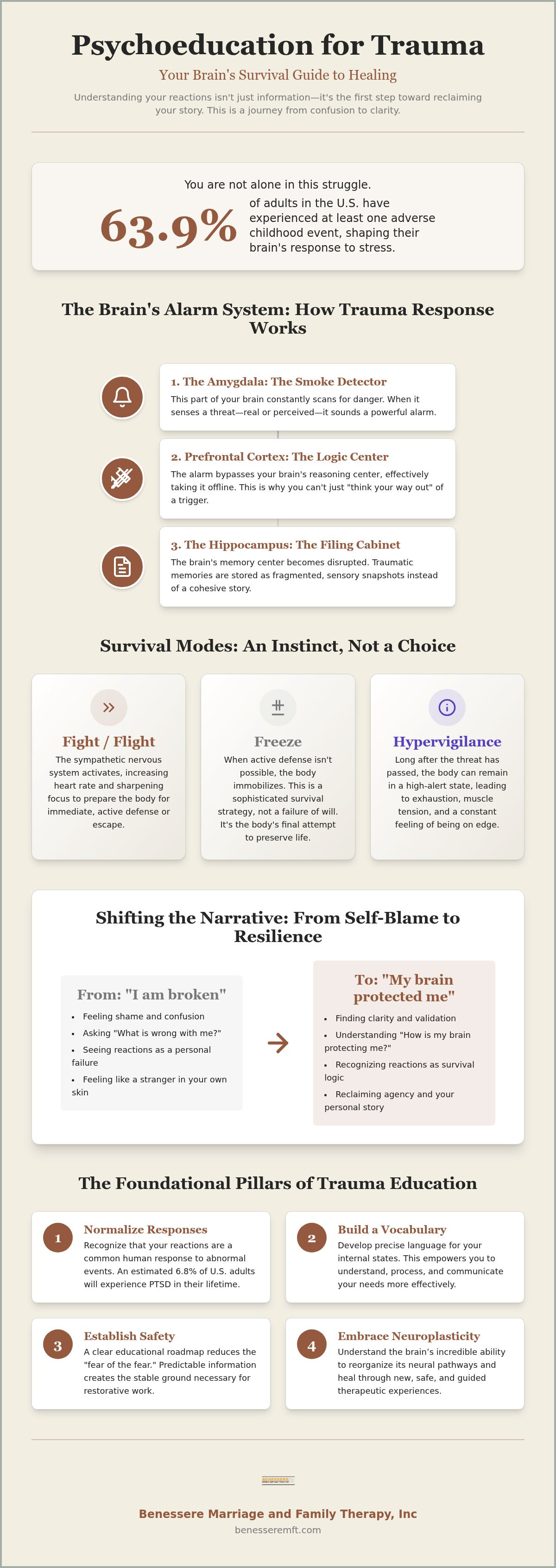
This process rests on three essential pillars that support your growth. First, it focuses on normalizing the human response to abnormal events. Since an estimated 6.8% of adults in the U.S. will experience PTSD in their lifetime, understanding that your reactions are a common physiological outcome is vital. Second, it builds a shared vocabulary. Having precise words for your internal states allows you to communicate your needs more effectively. Finally, it establishes a sense of safety through predictable information. A clear roadmap ensures you aren't blindsided by the intensity of your own recovery process.
Why Education is the First Step in Trauma Recovery
Starting with education helps reduce the "fear of the fear." When you understand why a trigger causes a specific physical reaction, the reaction itself becomes less terrifying. This knowledge serves as a vital buffer against self-blame. Instead of criticizing yourself for not being "over it" yet, you can recognize the neurobiological timeline required for healing. This foundational work prepares the mind for deeper processing. It's difficult to engage in narrative or somatic work when the nervous system is still stuck in a state of high alarm due to a lack of understanding. Through psychoeducation for trauma, we create the stable ground necessary for the restorative work that follows.
The Neurobiology of Trauma: Understanding Your Brain’s Survival Logic
Understanding the biological root of your reactions is a cornerstone of psychoeducation for trauma. It shifts the focus from "what is wrong with me" to "how is my brain protecting me." Inside the brain, the amygdala acts as a constant smoke detector, scanning the environment for any hint of danger. When it senses a threat, it sounds an alarm that bypasses your logical mind. This causes the prefrontal cortex, the area responsible for reasoning and calm decision-making, to effectively go offline. It's why you can't simply "think your way out" of a panic attack or a trigger. Additionally, the hippocampus, which functions as the brain's filing cabinet, can become disrupted during high-stress events. This leads to trauma memories being stored as fragmented, sensory snapshots rather than a cohesive story, a phenomenon frequently researched by the National Center for PTSD. Neuroplasticity is the brain’s inherent ability to reorganize its neural pathways and heal through new experiences.
The Autonomic Nervous System: Fight, Flight, and Freeze
When the brain's alarm sounds, the autonomic nervous system coordinates a total body response. The sympathetic branch prepares you for fight or flight by increasing your heart rate and sharpening your focus. If these active defenses aren't possible, the body may initiate a freeze response. This state of immobilization is a sophisticated survival strategy, not a failure of will; it's the body's final attempt to preserve life when escape feels impossible. Chronic hypervigilance means the body stays in this high-alert state long after the threat has passed, which creates significant physical exhaustion and muscle tension.
Neuroplasticity and the Hope for Restorative Healing
The brain's survival logic is powerful, but it's also adaptable. Because of neuroplasticity, the neural pathways that maintain a state of constant alarm can be retrained. Specialized therapeutic interventions work to "rewire" the stress response, helping the prefrontal cortex and amygdala communicate more effectively again. This physiological repair is most successful in consistent, safe environments where the nervous system feels truly secure. If you're seeking a space to begin this work, trauma and PTSD treatment can provide the professional guidance needed to facilitate this deep internal shift.
Shifting the Narrative: From "Broken" to "Protected"
The transition from feeling "broken" to feeling "protected" is perhaps the most profound shift a person can experience during their healing journey. Trauma often creates a distorted story of helplessness, where you feel as though your identity has been permanently altered by past events. This internal narrative can lead to a cycle of self-criticism and despair. Through psychoeducation for trauma, we begin to dismantle these beliefs by providing a clinical context for your experiences. By externalizing the trauma, we recognize that the symptoms you experience are not flaws in your character, but rather evidence of your brain's remarkable effort to survive.
We utilize narrative therapy to help you reclaim agency over your life. This approach allows you to step back from the "problem" and view it as a separate entity rather than an inherent part of who you are. Instead of asking what is wrong with you, we explore what happened to you and how your system responded. This perspective fosters a sense of restorative compassion, allowing you to move from a passive victim of symptoms to an active participant in your own recovery.
Reframing Symptoms as Survival Skills
Many of the symptoms that cause the most distress are actually highly evolved protective mechanisms. Hypervigilance, for instance, isn't a sign of paranoia; it's your brain's way of ensuring you aren't blindsided by danger again. Similarly, avoidance isn't a sign of weakness. It's a temporary boundary your system created to maintain safety when the world felt overwhelming. Depathologizing these reactions provides immediate psychological relief. When you stop fighting your symptoms and start understanding their protective intent, the internal conflict begins to quiet.
Reclaiming Your Agency Through Clinical Insight
Understanding the "why" behind your physiological responses is the necessary precursor to the "how" of making lasting changes. Clinical insight empowers you to recognize when your survival brain has taken the wheel. This awareness allows you to implement specific strategies to bring your logical mind back online. A key concept in this process is the Window of Tolerance, which represents the optimal zone of arousal where a person can effectively manage their emotions and process information without becoming overwhelmed or shutting down. By learning to stay within this zone, you move from feeling out of control to being an active manager of your mental health. This mastery is a central goal of psychoeducation for trauma, providing the stability needed for long-term growth.
Practical Skillsets: Integrating Psychoeducation into Daily Life
Applying the insights gained from psychoeducation for trauma requires moving from intellectual understanding to embodied practice. A foundational tool in this process is identifying your Window of Tolerance. This concept helps you recognize the boundaries of your emotional regulation. When you're within this window, you can process stress effectively and remain present. If you feel pushed toward hyper-arousal, such as anxiety or rage, or hypo-arousal, such as numbness or exhaustion, you've moved outside your zone of safety. Identifying these boundaries allows you to intervene with specific skills before a full trauma response takes hold.
Grounding techniques aren't just simple distractions; they utilize the brain's sensory pathways to signal to the amygdala that the current environment is safe. By focusing on three things you can touch or the specific scent of a familiar object, you're anchoring the prefrontal cortex and pulling energy away from the survival centers. Mindfulness acts as a similar anchor. It helps you observe your internal state without becoming overwhelmed by it. Using "Self-Check-ins" throughout the day allows you to monitor your physiological arousal, ensuring you catch rising tension before it reaches a peak.
Managing Triggers with Biological Awareness
Recognizing the physical "tells" of a trauma response, such as a tightening chest, cold hands, or a sudden change in heart rate, is a vital skill. These are early warning signs from your nervous system. When you notice these signals, you can use breathing techniques that specifically target the Vagus nerve. Long, slow exhales signal the parasympathetic nervous system to initiate a relaxation response. Creating a "Safety Plan" based on your unique neurobiological needs ensures you have a reliable roadmap when you feel your system starting to dysregulate. If you're ready to develop these skills within a professional clinical setting, exploring trauma and PTSD treatment can provide the guided support you need.
The Importance of Self-Compassion as a Clinical Tool
Self-criticism is often perceived by the brain as an internal threat. This triggers the same stress response as the trauma itself, creating a secondary loop of distress. Practicing restorative self-talk isn't about ignoring reality; it's about calming the amygdala by providing the internal safety it craves. When you replace "I should be over this" with "my nervous system is trying to protect me," you lower your physiological alarm. Building a daily routine that supports nervous system regulation, such as consistent sleep patterns and intentional periods of quiet, provides the stable environment your brain needs for long-term repair.
Trauma Therapy in Roseville: Finding Your Path to Recovery
Choosing the right environment for your recovery is a pivotal decision. While digital resources offer a helpful starting point, specialized trauma therapy in Roseville provides the clinical safety required for deep, restorative work. At BMFTI, we believe that you shouldn't have to navigate the complexities of your nervous system alone. Our sessions are designed as a collaborative space where your story is respected and your physiological responses are understood through a clinical lens. We integrate psychoeducation for trauma into every stage of the process, ensuring you always understand the reasoning behind the interventions we use.
This approach seamlessly blends individual psychotherapy with trauma-specific skillsets. The therapist serves as a compassionate expert and a steady guide, helping you translate clinical knowledge into tangible life changes. We don't just talk about the past; we work to stabilize your present and build a resilient future. By working with a professional who understands the neurobiology of survival, you can move away from the frustration of feeling "stuck" and toward a sense of active, informed progress.
Evaluating Trauma-Informed Care in Placer County
When searching for support in the Placer County community, it's helpful to ask potential providers how they incorporate education into their practice. A truly trauma-informed therapist will welcome questions about their psychoeducational approach and how they help clients identify their unique triggers. Having a local, office-based practice in Roseville allows for a physical sense of clinical safety that is often missing in remote settings. At BMFTI, we tailor each intervention to the specific stories of our residents, recognizing that healing happens best in a community where you feel seen and understood.
Taking the Next Step Toward Restorative Healing
It's natural to feel a degree of anxiety before your first session. Stepping into a therapeutic space requires courage, especially when your survival brain is accustomed to staying on guard. However, the long-term benefits of committing to an evidence-based path are profound. By engaging in psychoeducation for trauma, you're investing in a clear map for your recovery. This structured journey reduces the uncertainty that often fuels distress. Healing isn't just a possibility; it's an inherent capacity of your brain and body when provided with the right tools and professional guidance. You've already taken the first step by seeking understanding. The next step is simply to continue the walk toward wellness.
Embracing a New Chapter of Resilience
Healing from trauma is a process that begins with the quiet realization that you aren't broken. By engaging in psychoeducation for trauma, you've already started to demystify the survival responses that once felt overwhelming. You now understand that your brain's biological logic is rooted in protection, not failure. This shift in perspective, combined with practical skills like sensory grounding and recognizing your Window of Tolerance, creates the stable foundation needed for lasting growth. Transitioning from knowledge to action is a collaborative effort. Our compassionate, expert Roseville-based therapists provide personalized narrative-driven care and evidence-based trauma skillsets to help you reclaim your story. You don't have to carry the weight of these experiences without a guide.
Your capacity for restoration is immense, and with the right map, a life of clarity and peace is within reach.
Frequently Asked Questions
What is the primary goal of psychoeducation for trauma?
The primary goal of psychoeducation for trauma is to empower you with a clear understanding of your psychological and physiological responses to distressing events. By learning how your brain and body adapt to survive, you can replace self-blame and confusion with clinical literacy and self-compassion. This foundational knowledge reduces the stigma associated with symptoms like hypervigilance, creating a stable platform for deeper therapeutic work and long-term restorative healing.
Can I practice trauma psychoeducation on my own?
While you can certainly read books or articles about the neurobiology of stress, clinical psychoeducation for trauma is most effective as a collaborative process with a professional. A therapist helps you apply general concepts to your specific history and unique symptoms. This guided approach ensures that the information remains grounding rather than overwhelming. At BMFTI, our therapists act as wise guides, helping you integrate these insights safely into your personal journey of recovery and resilience.
How long does it take for psychoeducation to start helping?
Many clients experience a sense of relief almost immediately after learning that their distressing reactions are actually logical survival mechanisms. This initial shift in perspective can quickly lower the intensity of shame and self-criticism. However, the deep integration of these concepts into your daily life and emotional regulation is a gradual process. Consistent engagement with your therapist allows these insights to become a reliable anchor, providing stability throughout the various stages of your healing journey.
Is psychoeducation the same as "reliving" my trauma?
No, psychoeducation for trauma is distinct from the detailed processing or "reliving" of specific events. Instead of focusing on the traumatic narrative itself, this phase of therapy focuses on the mechanics of your current symptoms and brain function. It's a "top-down" approach designed to build safety and stability first. By understanding the "why" behind your reactions, you gain the necessary tools to manage your nervous system before moving into deeper narrative work.
Why does my therapist spend time explaining brain science?
Explaining the neurobiology of trauma helps demystify your internal experiences and validates that your symptoms are biological, not character flaws. When you understand how the amygdala and prefrontal cortex interact during stress, your reactions feel less chaotic and more predictable. This scientific precision provides a sense of restorative control. It shifts the therapeutic focus from "what is wrong with you" to "what happened to me," allowing you to approach your recovery with informed optimism and clinical clarity.
Does psychoeducation work for all types of trauma?
Yes, psychoeducation for trauma is a versatile and foundational component that benefits individuals recovering from diverse traumatic experiences, including single incidents, chronic childhood neglect, or complex PTSD. While every story is unique, the underlying physiological response of the human nervous system follows certain universal patterns. By tailoring these educational insights to your specific life experiences, your therapist can help you build a personalized framework for regulation that respects your history while focusing on your inherent potential for growth.
What is the "Window of Tolerance" in trauma recovery?
The "Window of Tolerance" describes the optimal zone of arousal where you can effectively process emotions and information without becoming overwhelmed or shutting down. When you stay within this window, you feel present and capable of managing stress. Trauma often narrows this window, making it easier to flip into hyper-arousal or hypo-arousal. Learning to identify these boundaries is a key skillset, allowing you to use grounding techniques to return to a state of calm and restorative safety.
How do I find a trauma-informed therapist in Roseville, CA?
Finding a specialized provider involves looking for therapists who emphasize evidence-based skillsets and a collaborative, narrative-driven approach. At Benessere Marriage and Family Therapy, Inc, our local office in Roseville serves the Placer County community with a focus on trauma and PTSD treatment. You can begin by scheduling an initial session to discuss how our therapists integrate psychoeducational tools with individual psychotherapy to help you reclaim your unique story and build a path toward lasting wellness.


Comments