
Therapy for Childhood Trauma in Roseville: Healing the Roots of Adult Distress
- Eddie Posadas
- 2 days ago
- 12 min read

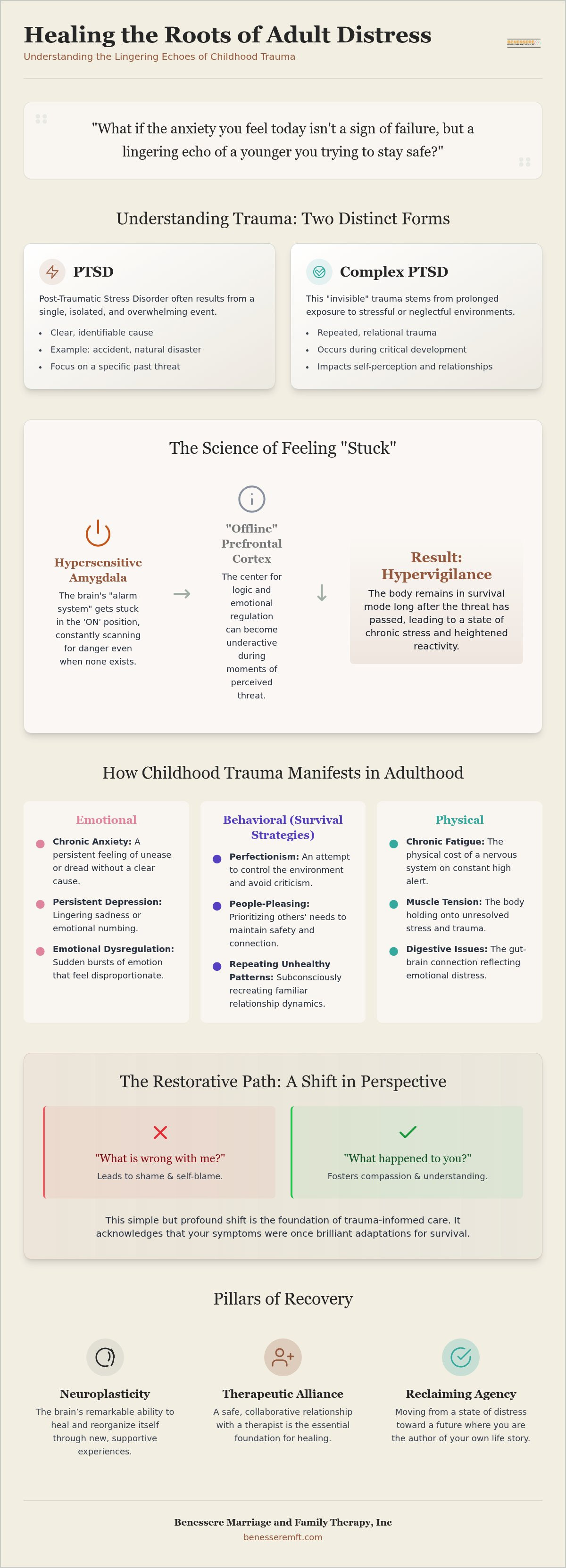
What if the anxiety you feel today isn't a sign that you're failing, but rather a lingering echo of a younger version of yourself trying to stay safe? It's common to feel frustrated when you find yourself repeating unhealthy relationship patterns or reacting with intense emotion to situations that seem minor to others. You might feel as though you're stuck in a cycle you didn't choose, unable to bridge the gap between who you are and who you want to be. Specialized therapy for childhood trauma Roseville offers a path toward understanding these deeply rooted responses, allowing you to process early experiences with the care they deserve.
By engaging in this restorative process, you can transform the way you relate to your past and your future. We'll explore how trauma-informed care helps you develop better emotional regulation, establish healthier boundaries, and ultimately reclaim agency over your own life story. This journey isn't about changing what happened; it's about changing how those experiences define your life today. Through a collaborative and evidence-based approach, you can move from a state of persistent distress toward a future built on resilience and clarity. Discover how healing the roots of adult distress can lead to a more grounded and intentional way of living.
Table of Contents
Understanding Childhood Trauma: The Impact of Adverse Childhood Experiences (ACEs)
Childhood is intended to be a season of discovery and safety, yet for many, it's marked by experiences that overwhelm a child's ability to cope. These events, clinically categorized as Adverse Childhood Experiences (ACEs), are remarkably common. Research indicates that a significant portion of the adult population has experienced at least one ACE, ranging from household instability to emotional neglect. These early experiences don't simply vanish with age; they often settle into the foundation of a person's "internal working model," which is the subconscious blueprint we use to understand ourselves and our relationships with others.
While many people are familiar with Post-Traumatic Stress Disorder (PTSD) resulting from a single, isolated event, childhood trauma often takes the form of Complex PTSD (C-PTSD). This "invisible" trauma stems from prolonged exposure to stressful environments where a child's needs weren't consistently met. Because these experiences happen during critical developmental windows, they shape the nervous system to remain in a state of high alert. Choosing to seek trauma therapy Roseville is not an admission of brokenness. Rather, it's a profound act of resilience and a commitment to updating that internal blueprint for a healthier adult life.
The Science of the Stuck: Neurobiology of Trauma
To understand why you feel "stuck," it helps to look at the mechanics of the brain. The amygdala acts as an internal alarm system, constantly scanning for danger. In a child who experiences trauma, this alarm becomes hypersensitive. Meanwhile, the prefrontal cortex, which is responsible for logic and emotional regulation, can become "offline" during moments of stress. This creates a state of hypervigilance where your body stays in survival mode long after the original threat has passed. You might find yourself reacting to a partner's tone of voice with the same intensity as a child facing a crisis because your nervous system hasn't learned that the environment is now safe. Neuroplasticity is the brain’s remarkable ability to heal and reorganize itself through new, supportive experiences and therapeutic interventions.
Moving Beyond "What is Wrong With Me?"
One of the most restorative shifts in therapy for childhood trauma Roseville is moving the focus from "What is wrong with me?" to "What happened to you?" This perspective recognizes that your current symptoms, such as chronic anxiety or emotional numbing, were once brilliant adaptations that helped you survive a difficult environment. Psychoeducation plays a vital role in this transition by providing a logical framework for your feelings, which naturally reduces the heavy burden of shame and self-blame. By viewing mental health as a collaborative and restorative process, you can begin to see your struggles not as permanent flaws, but as historical responses that can be gently unlearned in a safe, professional setting.
How Childhood Trauma Manifests in Adult Life
Childhood trauma isn't just a memory; it's a physiological imprint that continues to influence how an adult moves through the world. Many people find themselves struggling with chronic anxiety, persistent depression, or sudden bursts of emotional dysregulation that feel disproportionate to their current circumstances. These reactions are often rooted in what the Substance Abuse and Mental Health Services Administration (SAMHSA) defines as Understanding Child Trauma, which can fundamentally alter an individual's perception of safety. For those seeking therapy for childhood trauma Roseville, identifying these symptoms is a vital step toward reclaiming a sense of groundedness and agency.
Survival strategies developed in childhood, such as perfectionism or chronic people-pleasing, often persist long into adult life. These behaviors weren't personal flaws. They were necessary tools used to navigate unpredictable or neglectful environments. Over time, the body also bears the burden of this constant vigilance. Physical manifestations, including chronic fatigue, muscle tension, or digestive issues, often mirror the emotional weight of unresolved past experiences. Acknowledging that your body is still trying to protect you is a powerful starting point for restorative work.
The Relational Echo: Trauma and Modern Families
When early needs for security and validation go unmet, it often leads to a specific codependency meaning a pattern where an individual prioritizes the needs of others at the expense of their own well-being. This dynamic can complicate parenting and marital bonds, sometimes creating a cycle of intergenerational trauma. Breaking this cycle frequently requires specialized family therapy Roseville CA to restore relational harmony and teach new, healthier ways of connecting. By addressing these roots, adults can provide the emotional safety for their children that they may have lacked in their own youth.
Emotional Regulation and Coping Mechanisms
Many adults utilize "maladaptive" coping mechanisms, such as avoidance or workaholism, simply because they haven't been taught how to soothe a dysregulated nervous system. It is helpful to recognize the signs of clinical anxiety that often flare up when the past is triggered by current stressors. Clinical support works to expand your "window of tolerance," which is the emotional range where you can function effectively without feeling overwhelmed or completely shut down. If you're noticing these patterns in your daily life, engaging in Individual Psychotherapy can provide the clinical precision and human warmth needed to foster lasting change.
Evidence-Based Modalities for Trauma Recovery
Effective recovery from early adversity involves more than just talking about the past. It requires a strategic combination of methods that address both the mind and the body. According to the CDC, Adverse Childhood Experiences (ACEs) have profound long-term impacts, making specialized therapy for childhood trauma Roseville essential for sustainable change. Many practitioners utilize a blend of top-down cognitive strategies and bottom-up somatic approaches. While cognitive methods help us reframe thoughts, somatic awareness allows us to process body memories where trauma is often physically stored.
The integration of these approaches ensures that healing is holistic. Top-down therapy focuses on the prefrontal cortex to help you gain logical insight, while bottom-up work targets the nervous system to release the physical tension of survival mode. This dual focus is necessary because trauma often bypasses the logical brain, leaving the body in a state of perpetual high alert. By addressing both levels, you can find relief that is both intellectual and visceral.
Narrative Therapy: Rewriting Your Story
A cornerstone of narrative therapy is the foundational belief that "the person is not the problem; the problem is the problem." This philosophy allows you to externalize childhood trauma, effectively separating your core identity from the painful events you endured. When you externalize these experiences, you can move away from thin stories of victimhood and toward rich stories of resilience and survival. This shift doesn't ignore the past. Instead, it reclaims the narrative by highlighting the strengths and values you used to survive. Narrative Therapy serves as a restorative method for reclaiming personal agency by allowing you to become the primary author of your own life story.
CBT and Skill-Building for Daily Life
While narrative work addresses the overarching story, trauma informed cbt provides the practical tools needed to manage the challenges of daily life. It's common for survivors to experience sudden flashbacks or intense emotional triggers that feel impossible to control. CBT offers immediate relief through evidence-based grounding techniques and specific emotional regulation skillsets. These tools help you stay present in the moment rather than being pulled back into past distress. By integrating these cognitive shifts with deep emotional processing, therapy for childhood trauma Roseville creates a cohesive path toward healing. This balanced approach ensures that you aren't just understanding your history, but also gaining the mastery needed to navigate your current world with confidence.
Finding the Right Trauma-Informed Therapist in Roseville
Selecting a provider for therapy for childhood trauma Roseville requires looking beyond basic licensure. A truly trauma-informed clinician understands that safety isn't just a concept; it's a physiological state that must be cultivated within the session. You should look for practitioners who possess specific training in evidence-based modalities like CBT or Narrative Therapy, which were discussed in the previous sections. During your search, consider how a therapist describes their approach. It should feel clinical yet restorative, offering a clear path forward while respecting the complexity of your early experiences.
Evaluating Clinical Expertise and Empathy
There is a distinct difference between general counseling and specialized individual psychotherapy Roseville. While general support is valuable for situational stress, trauma recovery requires a clinician who can navigate the nuances of the nervous system with scientific precision. The gold standard for care is a combination of clinical authority and human warmth. This balance ensures that while the therapist is an expert in the mechanics of mental health, they remain profoundly respectful of your unique story. A skilled guide will always respect your pace, ensuring you never feel rushed through the processing of sensitive memories.
Local Accessibility and Consistency
Practical logistics play a significant role in maintaining the consistency needed for deep restorative work. Finding a local office near familiar landmarks like Sunrise Ave or Douglas Blvd can help ground the therapeutic experience in your daily environment. For many in the Placer County area, the challenge is balancing a demanding lifestyle with the unhurried nature of healing. In-person sessions in Roseville offer a physical sense of safety that digital interactions sometimes lack. Healing is a deliberate process. Having a dedicated, local space to do this work provides a sense of continuity that supports long-term growth.
When you reach out for an initial consultation, don't hesitate to ask specific questions to ensure a good fit. You might ask how they integrate trauma-informed principles into their practice or what evidence-based modalities they use for childhood experiences. Inquire about how they prioritize the therapeutic alliance, which is the safety of the connection between therapist and client. If you're ready to begin this restorative journey, Individual Psychotherapy at Benessere Marriage and Family Therapy provides the expert guidance needed to process your past and build a resilient future.
The Restorative Path at Benessere Marriage and Family Therapy, Inc
At Benessere Marriage and Family Therapy, Inc, we view the healing process as a deliberate journey toward wholeness that requires both scientific precision and deep seated empathy. Our philosophy is rooted in the belief that while the mechanics of mental health are complex, the approach must always be human. Every therapist in our practice is mentored to provide highly individualized care, ensuring that the interventions used are specifically tailored to the unique echoes of your childhood history. This level of specialization is what defines our commitment to therapy for childhood trauma Roseville. We don't just look at symptoms; we look at the person behind them.
The ultimate objective of our work isn't merely the reduction of distress like anxiety or chronic people pleasing. We strive for a restorative return to self, where you can move through the world with a renewed sense of agency. Because trauma rarely exists in a vacuum, we also address the intricate ways these early experiences impact your current relationships. Through marriage and family therapy Roseville CA, we help you and your loved ones navigate complex dynamics, fostering a home environment that supports lasting connection and relational harmony. This holistic focus ensures that healing extends beyond the individual to the entire family system.
A Collaborative and Educational Process
We believe that understanding the "why" behind your emotional responses is a fundamental part of the recovery process. Our approach prioritizes psychoeducation, empowering you with a clear understanding of how your brain has adapted to survive past challenges. By demystifying the neurobiology of trauma, we help you replace shame with clarity. This collaborative work is a hallmark of our clinical psychotherapy Roseville, where we utilize advanced, evidence based skillsets to help you manage triggers in real time. You aren't a passive recipient of care; you're an active partner in a process designed to help you integrate your past into a more cohesive and resilient present. We work together to ensure the tools you learn are practical and sustainable.
Your Journey to Resilience Starts Here
It's important to remember that the struggles you face today are normal human responses to abnormal circumstances. Feeling overwhelmed by the weight of your history is a common experience, yet it doesn't have to be your permanent state of being. Growth is always possible when you have the right support and a safe space to explore your story. Reclaiming your agency starts with a single, intentional step toward healing. By connecting with a Wise Guide at Benessere Marriage and Family Therapy, Inc, you can begin the restorative work needed to transform your narrative. We're here to offer the steady, non judgmental guidance you deserve as you pursue a future defined by resilience rather than distress. Your story is worth the effort it takes to heal.
Reclaiming Your Future from the Echoes of the Past
Healing from the lingering impact of early adversity is a profound process that requires both scientific precision and compassionate care. By understanding how childhood environments shape your current emotional regulation and relationship patterns, you move from a place of confusion to one of clinical clarity. This transition allows you to view your survival strategies not as permanent flaws, but as historical adaptations that can be gently unlearned within a safe, restorative environment. Recognizing these patterns is the first step toward significant growth.
Engaging in specialized therapy for childhood trauma Roseville offers you the opportunity to work with experts in Placer County who specialize in evidence-based Narrative Therapy and trauma-informed CBT. This collaborative work is designed to help you externalize the past and reclaim your personal agency over your own life story. You don't have to navigate this complex path alone; our practice provides the clinical authority and human warmth necessary for deep healing. Through these proven modalities, you can begin to integrate your experiences into a more resilient sense of self.
Begin your restorative journey with trauma therapy in Roseville.
Your history has shaped you, but it doesn't have to define the chapters yet to be written. Resilience is a skill that can be cultivated, and a more grounded, intentional life is entirely possible. We are here to guide you toward a future where you feel empowered and at peace with your narrative.
Frequently Asked Questions
How do I know if my childhood experiences count as "trauma"?
Trauma is defined by your internal response rather than the objective severity of the event. If an experience overwhelmed your ability to cope at the time and continues to impact your emotional stability today, it is clinically significant. This includes not only overt abuse but also emotional neglect or household instability. In therapy for childhood trauma Roseville, we focus on how these events shaped your nervous system rather than comparing your story to others.
Is it possible to heal from childhood trauma without confronting my family?
Yes, healing is an internal process that doesn't require the participation or acknowledgment of your family members. The goal of restorative therapy is to help you process your own experiences and reclaim your narrative. While some clients eventually choose to address family dynamics, many find profound relief simply by establishing internal safety and healthier boundaries. Your recovery is about your own agency and the relationship you have with yourself today.
How long does therapy for childhood trauma usually take?
The duration of therapy is highly individualized and depends on the complexity of your history and your specific goals. Some clients notice relief from acute symptoms within a few months, while deeper restorative work often takes longer. Healing is a deliberate and unhurried process that respects your unique pace. We prioritize building a stable therapeutic alliance first, ensuring you have the necessary skillsets before moving into deeper processing of early memories.
What is the difference between PTSD and Complex PTSD (C-PTSD)?
PTSD typically results from a single, isolated traumatic event, whereas Complex PTSD stems from prolonged or repeated exposure to trauma, often within a relational context. While both share symptoms like flashbacks and hypervigilance, C-PTSD often involves additional challenges with emotional regulation and a fractured sense of identity. Understanding this distinction is vital for tailoring therapy for childhood trauma Roseville to address the specific invisible layers of long-term developmental distress.
Can therapy help with physical symptoms like chronic pain or tension?
Clinical psychotherapy can be very effective in addressing physical manifestations of trauma because the body often stores stress that the mind cannot process. Chronic muscle tension, fatigue, and digestive issues are frequently linked to a nervous system stuck in survival mode. By using somatic awareness and grounding techniques, we help your body learn that the environment is now safe. This physiological shift often leads to a noticeable reduction in physical distress.
What should I expect during my first trauma therapy session in Roseville?
Your initial session is a collaborative and unhurried process focused on building safety and understanding your current needs. We won't ask you to dive into deep trauma immediately. Instead, we'll discuss your history at a pace that feels manageable and identify the specific symptoms affecting your daily life. It's an opportunity to experience our restorative approach and ensure you feel comfortable with the therapeutic connection before beginning deeper work.
Do you offer medication management for trauma-related anxiety?
We do not offer psychiatric medication management at our practice. Our focus is exclusively on providing evidence-based psychotherapy, including individual and family therapy, to address the roots of trauma. If medication is a component of your care plan, we are happy to collaborate with your prescribing physician or psychiatrist. This ensures that your therapeutic work and medical treatment are aligned toward your overall health and resilience.


Comments