
Therapy for Fear of Abandonment and Anxious Attachment

Fear of abandonment can shape a relationship even when no one is leaving. Therapy for fear of abandonment helps people explore the experiences and anxious attachment patterns behind this fear, understand how it affects adult relationships, and build more grounded ways of responding to it.
If you fear rejection, struggle to trust reassurance, or feel unsettled when someone important seems distant, these reactions can be painful, but they do not define you. This article explains what abandonment fears can look like, how they may develop, and how anxious attachment can affect closeness, communication, and emotional security.
You’ll also learn how therapy can help you identify triggers, understand relationship patterns, and manage intense feelings. Recognizing a pattern can be a meaningful step toward relationships with more trust, clearer communication, and a steadier sense of self.
Table of Contents
Attachment styles and adult relationships
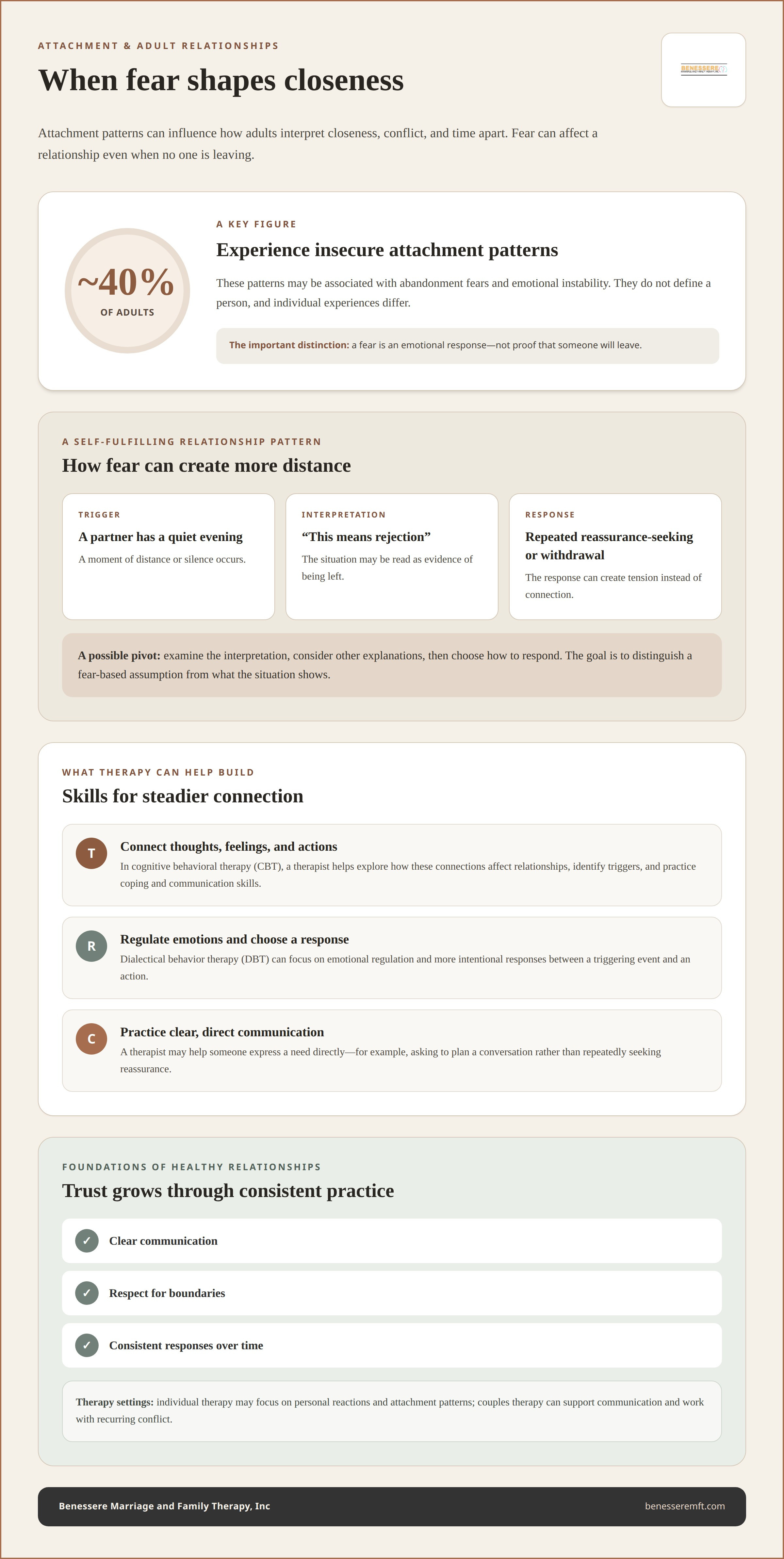
Attachment patterns can influence how adults interpret closeness, conflict, and time apart. Nearly 40% of adults experience insecure attachment patterns, which may be associated with abandonment fears and emotional instability.
In cognitive behavioral therapy (CBT), a therapist helps you connect thoughts, emotions, and behaviors, then consider how these connections affect relationships. Therapy may include exploring personal history, identifying triggers, and practicing coping and communication skills at a pace that suits you.
Self-Fulfilling Relationship Patterns
A self-fulfilling relationship pattern happens when fear shapes a response that contributes to the distance a person fears. For example, someone who interprets a partner’s quiet evening as rejection might repeatedly seek reassurance or withdraw, creating tension instead of connection. In therapy, a therapist can help examine that interpretation and consider other explanations before choosing how to respond. Recognizing the pattern can make a different interaction possible.
Building Safe, Healthy Relationships
Building healthy relationships involves developing trust through clear communication, respect for boundaries, and consistent responses over time. Therapy can provide a supportive place to practice expressing a need directly, such as asking to plan a conversation rather than repeatedly seeking reassurance. A therapist may also guide manageable behavioral experiments to test an anxious prediction and reflect on what happens. These experiences can support emotional security while preserving independence.
Abandonment fears may affect how adults respond to delayed replies, disagreements, or a partner’s need for space. A therapist-guided experiment might involve agreeing on a communication plan with a partner, then noticing how it affects anxiety and interaction. The goal is not to prove a feeling wrong, but to distinguish a fear-based assumption from what the situation shows.
Therapy for fear of abandonment can help you identify relationship triggers, reconsider negative beliefs, and develop emotional regulation skills. In Couples Therapy, partners can work together on communication and recurring conflict; individual therapy may focus on personal reactions and attachment patterns. With a therapist’s guidance, you can practice new responses instead of relying on reassurance alone.
What Are Abandonment Issues?
“Abandonment issues” describes a persistent fear of being left, rejected, or replaced. The phrase can describe distress, but one reaction alone does not establish a diagnosis. For example, panic when a close friend replies later than expected may point to a fear worth exploring, especially if it repeatedly disrupts connection.
In children, separation anxiety, clinginess, emotional outbursts, or difficulty self-soothing can reflect abandonment fears. A child may become distressed when a caregiver leaves for school or struggle to settle after a goodbye. One study compared children ages 3 to 10 with histories of familial neglect, institutional rearing, and no neglect, highlighting how early caregiving experiences can matter to development.
Adolescents may fear rejection by peers, experience emotional extremes, people-please, or withdraw socially. An adult might overanalyze a partner’s message, struggle to trust, seek reassurance that never feels sufficient, or stay in an unhealthy relationship because being alone feels worse. These signs can mean different things for different people; their pattern and impact provide important context.
Therapists can explore your history, current triggers, and emotional responses before tailoring support to your needs. Strategies may include creating a safe space to process painful experiences, strengthening emotional regulation, and practicing ways to soothe the “inner child,” the younger self connected to earlier unmet needs. A therapist might help you name the feeling beneath a reaction and respond with compassion rather than self-criticism.
Consider professional evaluation when fear repeatedly strains relationships, interferes with daily life, or makes it difficult to manage intense emotions. Therapy for fear of abandonment can offer guided support for understanding these patterns and identifying appropriate goals. If childhood experiences or family interactions are central, professional support for family concerns can help make space for those dynamics in therapy.
Definition and possible origins of abandonment fears
Abandonment fear is persistent distress about losing an important relationship through rejection, separation, or emotional withdrawal. It can arise even when no separation is imminent. For example, a partner’s request for quiet time might feel like proof that the relationship is ending rather than a temporary need for space. The fear is an emotional response, not evidence that someone will leave.
There is no single cause that explains everyone’s experience. A parent’s divorce can contribute to abandonment fears, as can neglect, abuse, or inconsistent care. Such experiences can shape expectations about whether close relationships are dependable. Later events, such as a painful breakup or repeated conflict, may also bring earlier concerns to the surface. Understanding what happened and how you interpret it can clarify the pattern without reducing your story to one event.
Dialectical behavior therapy (DBT) can address abandonment fears and relationship insecurity by focusing on emotional regulation and more intentional responses. In therapy, you can explore what happens between a triggering event and an action, such as moving from a partner canceling plans to panic and repeated calls. That sequence can show where support and new coping strategies may help.
Therapy can also help distinguish present circumstances from expectations shaped by earlier experiences. A therapist might help you identify a trigger, name the emotion, and examine the belief attached to it. If a friend is slow to respond, for instance, you can consider whether the fear reflects this interaction or an older expectation of being forgotten. This does not dismiss the feeling; it makes room for a clearer response.
In DBT-informed work, emotional regulation skills can help create a pause between feeling and action. A therapist may help you notice rising distress, identify the need beneath it, and communicate that need directly. The goal is not to eliminate closeness or dependence, but to develop more flexible responses. Therapy for fear of abandonment can focus on how your history, current relationships, and emotional intensity shape your treatment goals.
Fear of abandonment and anxious attachment
Anxious attachment can make uncertainty in close relationships feel especially threatening. Therapy can explore how this response develops and how it affects connection, communication, and emotional security.
Attachment-Based Therapy
Attachment-based therapy explores how earlier relationship experiences shape expectations of closeness and reliability. A therapist may ask what happens when a partner needs space, then help you distinguish the present situation from older expectations. This approach connects fear to its relationship context instead of treating each anxious reaction as an isolated problem. Therapy can also clarify goals for building trust and responding more intentionally.
Therapy length depends on the person’s history, the intensity of distress, and the goals being addressed. The cost of therapy in the United States depends on the case and is given after a quote request; factors include the type of therapy, treatment needs, and session arrangements.
Finding a Therapist
When looking for a nearby therapist, consider whether they can explore attachment concerns, relationship patterns, and emotional responses with you. Therapy should address how fear affects your life, rather than rely on a generic plan. In an initial conversation, describe a recurring difficulty, such as distress during time apart or conflict about reassurance. That context can help shape meaningful goals.
Attachment-focused care can include individual work on personal responses or couples work on communication and recurring conflict. A therapist can help identify situations that activate fear, explore the feelings and beliefs involved, and support practice with healthier responses. In the United States, the appropriate format depends on whether the main concern is an individual pattern, a relationship dynamic, or both.
If abandonment fears are affecting your relationships, explore therapy options for support in understanding attachment patterns and developing emotional security.
Benessere Marriage and Family Therapy
Benessere Marriage and Family Therapy, Inc provides psychotherapy in Roseville to help you understand how fear of abandonment affects your emotional well-being and relationships. Therapists tailor evidence-based interventions to each person’s story, including concerns such as anxiety, trauma, or family conflict that may shape attachment patterns.
Individual Therapy can provide space to explore personal triggers and develop more grounded responses. If fear contributes to recurring conflict or communication difficulties, Couples Therapy or Family Therapy can address relationship dynamics together. The focus depends on the concerns you bring and the goals you want to work toward.
If these patterns are affecting your life, contact Benessere Marriage and Family Therapy, Inc in Roseville to discuss a thoughtful next step.
Take a Supported Step Toward Greater Security
Change can begin with understanding what you need from relationships, not with pressure to stop feeling afraid. Therapy for fear of abandonment can help you explore what feels difficult, identify meaningful goals, and consider what support may suit you. You can start by describing a recurring concern, such as distress during conflict or uncertainty about closeness. That conversation gives a therapist a starting point for understanding your experience and shaping the work with you.
Progress may mean noticing a reaction with more compassion and finding a more intentional response. You do not need to have every detail organized before seeking support. Your questions, concerns, and hopes can all be part of the first conversation.
If you’re ready to discuss a possible next step, contact Benessere Marriage and Family Therapy, Inc. A thoughtful conversation can help you begin building a more secure relationship with yourself and the people who matter to you.
Frequently Asked Questions
What is a fear of abandonment?
Fear of abandonment is distress about losing an important connection, even when separation is uncertain. It may affect choices, communication, and comfort with closeness. For example, someone might find it difficult to make independent plans because they worry a partner will feel rejected. The phrase describes an experience, not a diagnosis on its own; a therapist considers its context and impact.
What types of therapy help with fear of abandonment?
Individual Therapy can explore personal relationship patterns, while Couples Therapy or Family Therapy can address concerns between loved ones. Cognitive behavioral therapy (CBT) focuses on connections between thoughts, emotions, and actions; dialectical behavior therapy (DBT) can build emotional regulation skills. Attachment-focused work explores how relationship experiences shape expectations. The approach can be tailored to your concerns and goals.
Can fear of abandonment be treated without medication?
Yes. Psychotherapy can address abandonment fears without medication by helping you examine relationship patterns, develop emotional regulation, and practice communicating your needs. For example, therapy may focus on responding to uncertainty with a considered conversation rather than an impulsive reaction. Whether medication is relevant depends on your broader mental-health needs; psychotherapy and medication are distinct forms of care.
What are self-help strategies for fear of abandonment?
Notice situations that trigger fear, practice grounding or breathwork, and try movement such as stretching, dancing, or yoga. Nurture safe relationships, attend to your own needs, express needs and boundaries, and practice tolerating emotions when alone. Remember that feelings are feelings, not facts.



Comments