
Trauma Informed CBT: How Evidence-Based Skillsets Facilitate Healing

What if the process of healing from the past didn't require you to be overwhelmed by it? For many, the weight of previous experiences creates a persistent sense of being stuck, where negative thought patterns and emotional turbulence feel like an inescapable reality. You might find yourself hesitating to seek support, fearing that discussing your history will only lead to further distress or a loss of control. This is why trauma informed cbt is so vital; it provides a structured path to recovery that prioritizes your psychological safety while respecting the pace of your unique journey.
You can find a way to process your experiences without losing your footing. This restorative approach integrates the precision of evidence-based cognitive techniques with a foundational commitment to your empowerment, ensuring that you aren't just managing symptoms, but actively reclaiming your personal narrative. In this article, we'll examine how these specialized skillsets facilitate emotional regulation and reduce PTSD symptoms. You'll learn how a methodical framework can help you move from a state of survival into a life defined by agency, clarity, and genuine security.
Table of Contents
Understanding Trauma-Informed CBT: Beyond Standard Talk Therapy
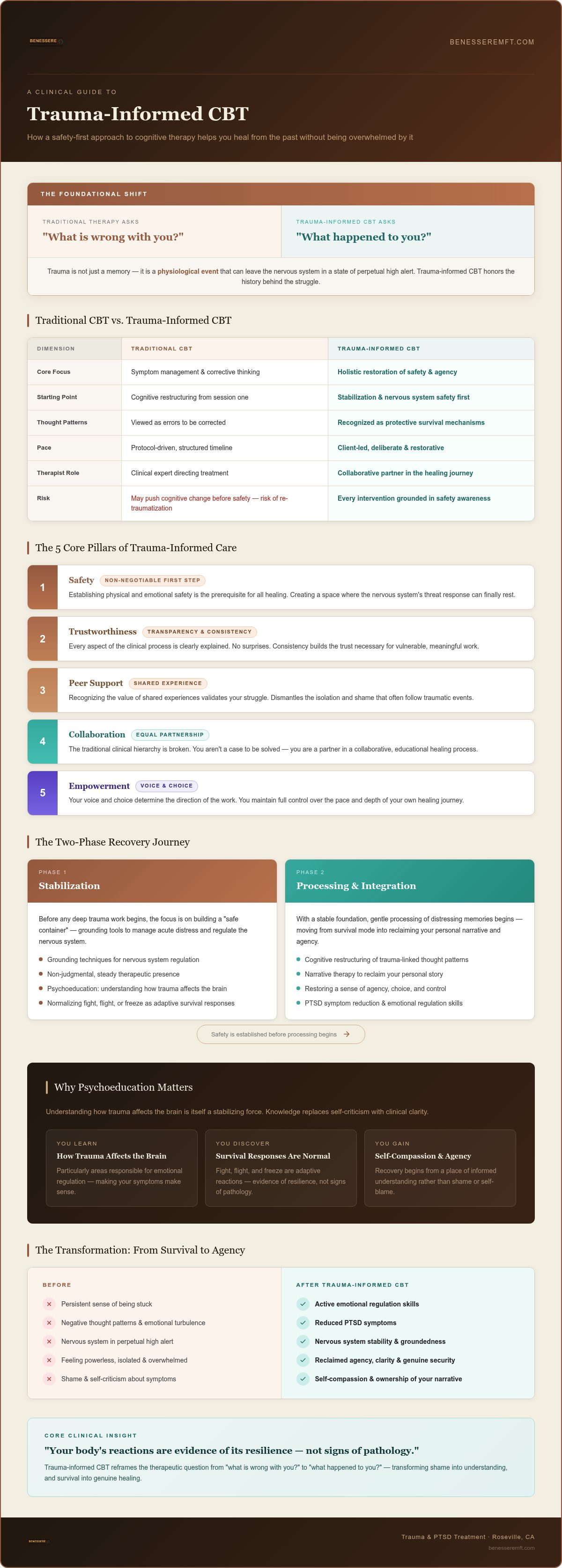
Traditional psychotherapy has long utilized cognitive behavioral models to help individuals identify the intricate loops between thoughts, feelings, and behaviors. However, when a person has experienced significant distress, a standard approach may inadvertently overlook the physiological reality of their experience. Trauma informed cbt represents a necessary evolution in clinical care. It's a method that doesn't just look at the current struggle but honors the history behind it. This perspective shifts the fundamental clinical question from "What's wrong with you?" to a more compassionate inquiry: "What happened to you?"
By adopting this lens, practitioners prioritize the client's sense of safety above all else. Trauma isn't merely a memory; it's a physiological event that can leave the nervous system in a state of perpetual high alert. Without this understanding, standard therapy might push for cognitive changes before the body feels safe enough to process them, which can lead to re-traumatization. A trauma-informed approach ensures that every intervention is grounded in an awareness of how past events continue to shape present reactions.
The Evolution of Cognitive Behavioral Therapy
CBT's origins are rooted in evidence-based protocols that provide clear structures for symptom management. Over time, the field has transitioned from a purely corrective model to a more holistic, restorative understanding of the human experience. We now recognize that negative thought patterns are often protective mechanisms developed during times of crisis. Trauma-informed CBT is a framework that integrates neurological safety into cognitive skill-building. This integration allows for a therapeutic process that is both scientifically precise and deeply respectful of an individual's survival strategies.
Why Clinical Psychoeducation Matters
Empowerment often begins with understanding the mechanics of one's own mind. When you learn how trauma affects brain function, particularly the areas responsible for emotional regulation, the symptoms you're experiencing start to make sense. Survival responses such as fight, flight, or freeze are normalized as adaptive reactions rather than signs of pathology. This knowledge serves as a stabilizing force; it replaces self-criticism with clinical clarity. By recognizing that your body's reactions are evidence of its resilience, you can begin the work of recovery from a place of self-compassion and informed agency.
The Five Core Pillars of Trauma-Informed Clinical Care
Clinical care for trauma recovery is built upon five foundational pillars designed to ensure that the therapeutic environment is restorative rather than triggering. In trauma informed cbt, these principles guide every interaction, moving beyond simple symptom management to create a truly supportive framework. These pillars provide the stability necessary for deep, meaningful work to occur without compromising your sense of security.
Safety: Establishing physical and emotional safety is the non-negotiable first step. It involves creating a space where the nervous system's threat response can finally rest.
Trustworthiness: This is built through transparency and consistency. Every aspect of the clinical process is explained, ensuring there are no surprises that could trigger vulnerability.
Peer Support: Recognizing the value of shared experiences validates your struggle. It helps dismantle the isolation and shame that often follow traumatic events.
Collaboration: We break the traditional hierarchy. You aren't a case to be solved but a partner in a collaborative, educational process.
Empowerment: Your voice and choice determine the direction of the work. You maintain control over the pace and depth of your own healing journey.
Prioritizing Safety and Stabilization
Before any deep trauma work begins, we focus on stabilization. This involves creating a "safe container" in the therapy room, a space where you can feel grounded and secure. Our clinicians model a steady, non-judgmental presence, helping you develop specific tools to manage acute distress. These grounding techniques are essential for regulating the nervous system, allowing you to stay present rather than becoming overwhelmed by past memories. If you're looking for this level of care in Roseville, our specialized trauma and PTSD treatment provides the stability needed for lasting change.
Restoring Agency and Choice
Trauma often leaves individuals feeling powerless, as if they've lost the ability to direct their own lives. Effective trauma informed cbt works to reverse this by actively restoring agency. We view you as the expert on your own story, integrating your unique insights into the collaborative goal-setting process. You always have the "right of refusal" during any therapeutic intervention, ensuring that you never feel forced or coerced. By prioritizing your voice, we help you transition from survival mode into a state of empowerment where you can reclaim your story and your future.
Trauma-Informed CBT vs. Traditional CBT: Key Differences
Traditional CBT is often celebrated for its efficiency in addressing symptom reduction through logic and behavioral change. While effective for many conditions, this standard approach can sometimes feel incomplete for those carrying the weight of past trauma. The primary distinction in trauma informed cbt lies in its commitment to holistic stabilization before attempting any cognitive shifts. While standard protocols might prioritize rapid habituation to triggers, a trauma-informed lens views these triggers as physiological signals that require a more sensitive, titrated response.
In this framework, the therapist recognizes that your thoughts aren't just "errors" in logic; they're often survival instincts that kept you safe during a crisis. For instance, a persistent belief that the world is unsafe isn't treated as a simple distortion to be corrected. Instead, it's acknowledged as a protective mechanism. This shift in perspective ensures that the therapeutic process feels restorative rather than confrontational, allowing you to slowly dismantle these patterns without losing your sense of internal security.
The Nuance of Pacing and Emotional Regulation
Standard CBT can sometimes feel dismissive of the sheer intensity of trauma-based emotions if it moves too quickly toward cognitive restructuring. Pacing is a clinical necessity in this work. We prioritize therapy for emotional regulation to build a sturdy foundation before addressing the trauma itself. This involves staying within your "Window of Tolerance," which is the optimal zone where you can process difficult information without becoming hyper-aroused or shut down. By honoring this window, we ensure the work remains manageable and productive.
Addressing the Root Causes vs. Surface Symptoms
Moving beyond surface-level symptom management requires us to understand the protective origins of your current behaviors. A trauma-informed practitioner validates the logic behind your beliefs, recognizing that your mind developed these strategies for a reason. Instead of purely logical analysis, we focus on somatic and emotional integration. This means we don't just talk about change; we work to ensure your body feels the reality of your current safety. This dual focus on the mind and the nervous system is what allows for true, lasting healing rather than temporary symptom relief.
What to Expect During Your Trauma-Informed CBT Journey
Embarking on a journey of recovery requires a clear map and a steady guide. When you engage in trauma informed cbt, the process is structured into distinct phases designed to respect your nervous system while fostering deep, sustainable change. This methodical progression ensures that you are never pushed beyond your capacity to cope. Throughout every session, clinical psychoeducation remains a constant thread, helping you understand the "why" behind your reactions and the "how" of your healing.
The journey typically unfolds in three primary stages:
Phase 1: Safety and Stabilization. We focus on building your internal and external resources so you feel secure in your daily life.
Phase 2: Processing the Trauma. Once a foundation of safety exists, we gently address distressing memories using specialized cognitive techniques.
Phase 3: Integration and Meaning. We work to connect your past experiences to a resilient present, helping you reclaim your identity beyond the trauma.
The Assessment and Stabilization Phase
The initial stage of therapy is dedicated to comprehensive assessment and the cultivation of your personal toolkit. We work together to identify specific triggers that disrupt your peace and create a concrete safety plan for navigating daily challenges. During this time, you will develop personalized anxiety management techniques that you can use between sessions to maintain emotional balance. Stabilization is not a delay in therapy, but the most critical part of the work. It provides the psychological "anchor" necessary for the deeper processing that follows.
Skill-Building for Long-Term Resilience
As you progress, the focus shifts toward mastering evidence-based skillsets that challenge intrusive thoughts without the weight of self-judgment. You'll learn to recognize the difference between a current threat and a past memory, allowing you to respond to life with clarity rather than reactivity. These skills extend far beyond the therapy room; they often lead to improved professional performance and more fulfilling personal relationships. By developing a restorative self-care practice that supports your nervous system, you create a lifestyle of resilience. If you're ready to begin this collaborative process, our team offers specialized trauma and PTSD treatment tailored to your specific needs.
Trauma Recovery in Roseville: The Benessere MFT Approach
At Benessere MFT, we understand that evidence-based protocols are most effective when they're applied with a profound respect for your lived experience. Our approach to trauma informed cbt in Roseville is intentionally unhurried, creating a calm environment where clinical precision meets human warmth. We recognize that healing isn't a linear checklist but a collaborative process of discovery. By providing a safe, professional office environment in the heart of Placer County, we offer a sanctuary where you can begin the vital work of restoration without feeling like a subject in a cold medical model.
Our commitment to this work is reflected in our methodical, steady pace. We believe that true healing requires a foundation of trust that can't be rushed. Every intervention we use is designed to lower your defenses and build a sense of security, ensuring that you remain the primary architect of your own recovery. This collaborative spirit defines our practice, allowing us to handle complex emotions with both scientific precision and deep-seated empathy.
Personalized Clinical Care for Roseville Adults
Choosing a trauma informed therapist Roseville means working with a practitioner who is deeply invested in the wellness of our local community. We tailor our interventions to meet the specific needs of individuals, couples, and families who are navigating the complexities of past distress. This specialization allows us to move beyond generic advice. Instead, we lean into compassionate expertise, ensuring that every session is a step toward greater stability. Whether you're seeking individual psychotherapy or family support, our clinical skillsets are adapted to honor your unique history.
Integrating Narrative and Cognitive Approaches
One of the unique strengths of our practice is the seamless integration of narrative therapy alongside traditional cognitive behavioral techniques. While CBT helps you manage thought-feeling loops, narrative work allows you to re-examine the story you tell yourself about your life. This dual approach is essential for reclaiming agency over your past. By externalizing the trauma, you can shift from an identity defined by survival to one characterized by resilience and growth. It's about more than just symptom management; it's about rewriting your unique story so you can reclaim your voice.
If you're feeling stuck in the echoes of the past, know that a path toward resolution exists. Taking the next step is a courageous act of self-advocacy. We invite you to reach out and discover how a collaborative, trauma-informed framework can help you build a future defined by safety, agency, and lasting peace.
Reclaiming Your Story Through Restorative Care
Healing from the past is a deliberate process that requires both clinical precision and a deep respect for your individual journey. By prioritizing your nervous system's safety, trauma informed cbt provides a structured framework for moving beyond survival and into a state of genuine agency. This approach ensures that the work of recovery remains manageable by focusing on stabilization before addressing deeper memories. You have the capacity to transform your relationship with the past, moving from a place of distress to one of resilient clarity.
At Benessere MFT, our Roseville clinicians provide specialized psychotherapy tailored to your unique story. We offer compassionate, expert care for individuals and families in Placer County, utilizing evidence-based skillsets that foster lasting emotional regulation. Begin your restorative journey with trauma-informed therapy at Benessere MFT.
It's possible to find a sense of peace and security again. Your history doesn't have to define your future; with the right support and a steady, unhurried pace, you can reclaim the story that belongs to you.
Frequently Asked Questions
Is trauma-informed CBT effective for adults with long-term PTSD?
Yes, it's a highly effective clinical framework for adults managing long-term PTSD symptoms. By focusing on stabilization first, it allows the nervous system to move out of a chronic state of high alert. This specialized form of cognitive behavioral therapy helps individuals address the root causes of their distress rather than just managing surface-level symptoms. It's particularly useful for those who have felt stuck in traditional models that didn't account for the physiological impact of trauma.
How does trauma-informed CBT differ from standard talk therapy?
Standard talk therapy often focuses on current life challenges, while trauma informed cbt specifically addresses how past events have reshaped your nervous system. It integrates clinical psychoeducation to help you understand your brain's survival responses, such as fight, flight, or freeze. This approach prioritizes psychological safety and emotional regulation as essential precursors to cognitive work. By building these foundational skills, it ensures the therapeutic process remains restorative and avoids the risk of overwhelming the client.
Will I have to relive my trauma in detail during the first session?
You won't be asked to relive distressing memories in detail during your initial sessions. The first phase of this work is dedicated entirely to assessment, safety, and stabilization. We focus on building a robust toolkit of emotional regulation skills before any deep processing occurs. This ensures you have the internal resources to stay grounded. Your therapist will follow your lead, ensuring the pace of therapy respects your comfort and prevents you from feeling flooded or re-traumatized.
How long does trauma-informed CBT typically take to show results?
The timeline for recovery is unique to every individual, but many clients report feeling a greater sense of control after the first few stabilization sessions. While deep trauma processing is a gradual journey, the initial skill-building phase provides immediate tools for managing daily distress. Consistent engagement with a trauma-informed therapist helps build sustainable resilience over time. We focus on progress that feels steady and secure rather than rushing toward a predetermined endpoint, allowing for genuine, lasting healing.
Can trauma-informed CBT help with anxiety and depression as well?
Yes, it's highly effective for addressing anxiety and depression, especially when these conditions are rooted in past traumatic experiences. Many individuals find that their symptoms of low mood or persistent worry are actually survival strategies developed by the nervous system. By utilizing evidence-based skillsets to regulate your emotional state, you can reduce the intensity of these symptoms. This holistic approach helps you move beyond survival mode and into a life characterized by greater emotional balance.
What should I look for when choosing a trauma-informed therapist in Roseville?
Look for a clinician who prioritizes safety and demonstrates a deep understanding of the physiological impact of trauma. It's important to find a practice that uses evidence-based skillsets and maintains a collaborative, unhurried pace. In Roseville, our team at Benessere MFT offers specialized clinical psychotherapy in a professional, restorative environment. Choosing a local expert ensures you receive care that is both scientifically precise and respectful of your unique personal story within the community.
Is this approach suitable for complex trauma (C-PTSD)?
This approach is particularly well-suited for complex trauma because of its emphasis on stabilization and the therapeutic relationship. Complex trauma often involves layered experiences that require a more nuanced, phase-based progression. By integrating narrative techniques with cognitive behavioral strategies, we help you dismantle the pervasive sense of unsafety that often accompanies C-PTSD. This methodical framework allows you to slowly reclaim your agency and build a resilient identity that isn't defined by past events.
How do I know if I am ready to start trauma-informed therapy?
Feeling ready often begins with a recognition that your current coping strategies are no longer serving you. If you feel a desire to understand your reactions better and want to build a more stable emotional life, you may be ready to begin. You don't need to have all the answers or be "healed" enough to start. The process is collaborative, and your therapist will guide you through the initial stages of building safety at a pace that feels right for you.


Comments