
Understanding Codependency Meaning: A Restorative Guide to Relational Health
- Eddie Posadas
- Jul 11
- 12 min read

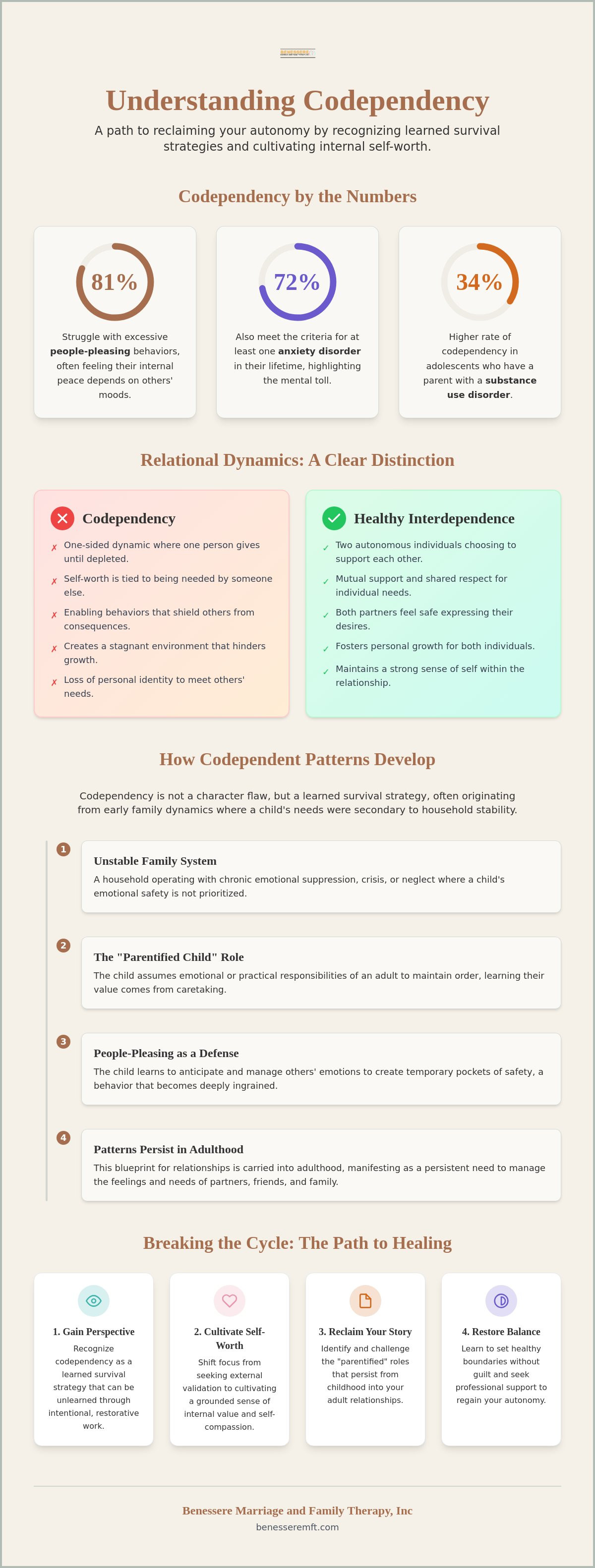
What if the very empathy you pride yourself on is actually the wall standing between you and a truly fulfilling relationship? It's exhausting to live in a state of constant hyper-vigilance, where your internal peace depends entirely on the shifting moods of those around you. When you search for the codependency meaning, you're often looking for more than a clinical label; you're seeking an explanation for why your identity has slowly dissolved into the needs and expectations of others. You aren't alone in this experience, as research suggests that approximately 81 percent of individuals with these patterns struggle with excessive people-pleasing behaviors.
You probably believe that being the "reliable one" is your greatest strength, even as you feel a growing sense of resentment and chronic anxiety. This guide offers a clinical yet deeply compassionate understanding of these dynamics, providing you with the tools to reclaim your autonomy and restore balance to your life. We'll explore a clear definition of these behaviors, validate the exhaustion you feel, and provide methodical steps to help you set boundaries without the weight of unearned guilt.
Table of Contents
What is the Meaning of Codependency? Defining the Dynamic
To grasp the codependency meaning, we must first view it as more than just a personality trait or a tendency to be "too nice." It is a learned behavioral condition that fundamentally alters how an individual navigates intimacy, self-worth, and personal boundaries. While it is not currently recognized as a formal diagnosis in the DSM-5-TR, it remains a vital clinical concept for understanding why some people feel an overwhelming, often crushing responsibility for the emotional well-being of others. It is a complex state of being, evidenced by the fact that 72 percent of people with codependent traits also meet the criteria for at least one anxiety disorder in their lifetime.
This dynamic often mirrors a form of "relationship addiction." In this cycle, your internal value becomes inextricably linked to how much you are needed by someone else. You might find yourself caught in a loop where your mood is a direct reflection of your partner's or family member's emotional state. This isn't a sign of a "weak" character, but rather a survival strategy developed in response to environments where your own needs were secondary to the stability of the household. By defining these patterns, we can begin to shift from a place of reactive sacrifice to one of intentional self-governance.
Codependency vs. Healthy Interdependence
Healthy relationships thrive on interdependence, which involves two autonomous individuals who choose to support each other without losing their own sense of self. In an interdependent relationship, support is mutual and respect is shared; both partners feel safe expressing their individual needs and desires. Contrast this with the "enabling" behaviors often seen in codependent cycles, where one person consistently shields another from the consequences of their choices. Codependency is a pattern of prioritizing others’ needs to the detriment of one’s own mental health. While interdependence fosters growth, codependency creates a stagnant environment where one person gives until they are depleted, and the other remains stuck in unhealthy patterns.
The Origins of the Term: From Addiction to General Wellness
The history of the term Codependency traces back to the 1970s within "co-alcoholic" support circles. It originally described the partners of those struggling with chemical dependency, but the mental health community soon realized these behaviors were not limited to substance use. The definition has since broadened to encompass any individual raised in a dysfunctional family system where emotions were ignored, punished, or suppressed. Today, we recognize that any environment requiring a child to manage an adult’s emotions can plant the seeds for these adult struggles. Engaging in individual psychotherapy Roseville offers a structured, supportive way to uncover these origins, allowing you to trace the threads of your history and begin the process of unlearning these deeply ingrained survival strategies.
How Codependency Develops: The Role of Family Systems
The development of codependent behaviors is rarely a conscious choice; it is an adaptive response to a family system that lacks emotional stability. When a household operates in a state of crisis or chronic emotional suppression, children often assume roles that aren't age-appropriate to maintain a sense of order. The "Parentified Child" is a primary example, where a young person takes on the emotional or physical responsibilities of an adult. This early exposure to caretaking creates a blueprint for adult relationships, where the individual feels they must earn love through constant service and sacrifice.
Research indicates that adolescents who have a parent with a substance use disorder show a 34 percent higher rate of codependency. This statistic highlights how deeply these patterns are woven into the fabric of our early development. These "invisible loyalties" to family patterns can follow us for decades, manifesting as a persistent need to manage the feelings of those around us. By exploring the codependency meaning through the lens of family systems, we begin to see these behaviors not as flaws, but as survival strategies that have outlived their usefulness.
The Impact of Childhood Trauma and Neglect
In environments where emotional safety is absent, "people-pleasing" becomes a sophisticated defense mechanism. If you can anticipate a parent's anger or sadness and mitigate it, you create a temporary pocket of safety for yourself. This hyper-vigilance is often a symptom of underlying trauma, where "fixing" others becomes a way to exert control over an unpredictable world. Processing these early wounds through trauma therapy Roseville allows individuals to dismantle these survival strategies and build a foundation of genuine self-security. Understanding the deeper codependency meaning involves recognizing that your current behaviors were once your most effective tools for navigating a difficult reality.
Codependency in Different Relationship Roles
While often discussed in romantic contexts, these dynamics permeate every area of life. In parent-child relationships, it may appear as an adult child who cannot make decisions without parental approval or a parent who relies on their child for emotional regulation. In the workplace, codependency often manifests as over-functioning. You might find yourself completing a colleague’s tasks or staying late to compensate for a manager’s lack of organization, driven by a fear of conflict or an intense need to be indispensable.
As noted by Mental Health America, these patterns are often passed down through generations until someone chooses to break the cycle. If you find yourself exhausted by the weight of others' expectations, exploring family therapy can provide the clarity needed to establish healthier, more balanced connections. Recognizing these patterns is the first step toward reclaiming your identity from the roles you were taught to play.
Signs and Symptoms: Recognizing Codependent Patterns
Identifying the signs of relational imbalance is a vital step in understanding the broader codependency meaning. While the external behaviors often look like extreme kindness or loyalty, the internal emotional state is frequently one of profound exhaustion, guilt, and shame. You might find that your sense of worth is entirely dependent on being "the helper," leading to a persistent "need to be needed" that leaves little room for your own desires. This emotional labor takes a significant physical toll; chronic stress and burnout are common among those who carry the emotional weight of their entire social or family circle.
There is also a complex "Control-Care" paradox at play in these dynamics. While caretaking is often viewed as an act of pure altruism, in a codependent context, it can function as a subconscious attempt to control an unpredictable environment. By managing everyone else's problems, you create a temporary sense of safety and minimize the risk of being surprised by a loved one's negative reactions. Data suggests that 74 percent of individuals with these traits are overly involved in their partner's decisions, often neglecting their own fundamental needs in the process.
A Checklist for Self-Reflection
Self-awareness is the foundation of restorative growth. As you reflect on your own relational habits, consider the following questions to help clarify your current experience:
Do you feel a sense of responsibility for the actions, moods, or choices of the adults in your life?
Do you find it difficult to identify your own feelings or needs when they aren't tied to someone else's well-being?
Are you afraid of rejection or being alone if you aren't actively "helping" or fixing a situation?
Do you frequently apologize for things that aren't your fault to keep the peace?
Recognizing these signs is the first step toward improving family communication and establishing a more balanced relational dynamic. As highlighted by the James Madison University Counseling Center, these patterns often manifest as a loss of identity where the caregiver's life revolves almost entirely around the needs of others.
The Boundary Problem: Why "No" Feels Dangerous
Boundaries are the essential "gates" to our emotional well-being, yet for those in codependent cycles, the word "no" can feel like a threat to the relationship itself. You might view setting a boundary as a selfish act rather than a necessary one for long-term health. This often leads to "enabling," where your attempts to protect a loved one from the natural consequences of their actions actually prevent them from experiencing the growth they need. Shifting your perspective on boundaries is a key part of the codependency meaning, moving from the fear of abandonment to the safety of self-respect. When you learn to set limits, you aren't pushing people away; you're defining where you end and where they begin, which is the only way to foster a truly mutually satisfying connection.
Breaking the Cycle: The Path to Restorative Healing
Healing begins with a fundamental shift in perspective. You are moving from a state where your value is determined by external validation to a place of inherent internal worth. Deepening your understanding of the codependency meaning in the context of your own life requires a commitment to psychoeducation. When you learn how your brain responds to relational stress, you can begin to recognize the "fawn" response. This is a biological drive to appease others to ensure safety, often rooted in early experiences. This awareness transforms a reactive, lifelong habit into a conscious choice for change.
One of the most restorative concepts in this journey is "Detachment with Love." This does not mean abandonment, coldness, or the end of a relationship. Instead, it is the practice of maintaining emotional distance from the problems of others while still caring for the person. It allows you to step back from the "rescuer" role, giving your loved ones the necessary space to face their own challenges and experience the natural consequences of their actions. Start small with boundaries in low-stakes environments. For instance, practice saying, "I can't take that on right now," when a colleague asks for an unnecessary favor. Notice the internal discomfort that arises, but allow it to exist without trying to fix the situation immediately.
Evidence-Based Strategies for Change
Cognitive Behavioral techniques are highly effective for challenging the "must-fix" thoughts that drive codependent behavior. When you feel the urge to intervene in someone else's crisis, ask yourself: "Is this my responsibility to solve?" Mindfulness also plays a crucial role in this process. By identifying bodily sensations, such as a tight chest or shallow breathing, during a conflict, you can ground yourself before falling into old patterns of over-functioning. Engaging in family conflict therapy provides a safe, clinical container to practice these new skills under the guidance of a professional who understands the systemic nature of your struggle.
Developing a Self-Care Practice That Isn’t Selfish
We must redefine self-care as the stewardship of your mental health. It is not an indulgence; it is a professional and personal necessity for relational longevity. Cultivating hobbies and interests that are entirely independent of your primary relationships helps rebuild a sense of self that has often been lost in the service of others. Whether it is a solo creative pursuit, a physical activity, or simply a quiet hour alone, these moments of autonomy are vital. A robust support system outside of the codependent bond is also essential for providing a balanced perspective. This might include friendships, peer support groups, or professional guidance. If you are ready to begin this collaborative process of reclaiming your life, our clinicians at Benessere MFT are here to help you navigate this path toward autonomy.
Professional Support in Roseville: Rewriting Your Story
While self-reflection is a vital beginning, the deeply rooted nature of these patterns often requires a clinical perspective that looks beyond the individual to the entire family system. Professional support through marriage and family therapy Roseville CA offers a structured, safe environment to address these relational dynamics. At Benessere MFT, we recognize that your struggle isn't a permanent character flaw; it's a learned strategy that once helped you navigate a difficult environment. When we explore the codependency meaning in a clinical setting, we shift the focus from personal blame to a collaborative investigation of the patterns that keep you stuck.
For residents of Placer County, seeking local, trauma-informed care means working with clinicians who understand the specific stresses of our community. In a typical session at Benessere MFT, you can expect a calm, non-judgmental space where your individual story is handled with both scientific precision and human warmth. We don't just look at the symptoms of anxiety or people-pleasing; we look at the historical context that made those behaviors necessary. This methodical approach helps lower your defenses, allowing for genuine growth and the eventual restoration of your relational health.
How Narrative Therapy Restores Agency
One of the most powerful tools we use is Narrative Therapy, which allows you to "externalize" the problem. Instead of internalizing a label, we view the behaviors as separate from your core identity. You aren't "a codependent"; you're a person who has been influenced by certain survival patterns. By separating yourself from the problem, you gain the space needed to re-author your life story. This process helps you build a sense of personal power, moving you toward the goal of family therapy Roseville CA: restoring home harmony by strengthening individual autonomy. You begin to see yourself as the hero of your own narrative, capable of making choices that honor your needs as much as those of others.
Taking the Next Step Toward Balance
If you feel stuck in a cycle of resentment or find that your identity has dissolved into the needs of your loved ones, reaching out for a professional consultation is a courageous step. Healing isn't a race; it's a collaborative and unhurried process designed to build a sense of long-term security. Understanding the codependency meaning in your own life is the first chapter in a new story of resilience. We invite you to reach out to our Roseville clinic to begin this restorative journey. Together, we can work toward a life defined by balance, clear boundaries, and a reclaimed sense of self.
Reclaiming Your Path to Relational Balance
Moving beyond a life defined by the needs of others requires both patience and a methodical shift in perspective. We have explored how these behaviors often originate as survival strategies within complex family systems, and how the physical and emotional toll of chronic caretaking can be addressed through intentional self-stewardship. Deepening your awareness of the codependency meaning in your daily life allows you to recognize that your worth isn't a commodity to be earned through sacrifice, but an inherent quality to be protected through healthy boundaries.
This journey toward autonomy is a collaborative process that doesn't have to be navigated alone. At Benessere MFT, our trauma-informed, evidence-based approach provides a compassionate and non-judgmental environment for Placer County residents to begin this restorative work. Our licensed clinical expertise is here to help you move from reactive patterns to a life of agency and balance. Ready to reclaim your autonomy? Schedule a consultation with a Roseville therapist today. You possess the inherent capacity for growth, and a more fulfilling, mutually satisfying way of relating to others is within your reach.
Frequently Asked Questions
Is codependency a mental illness?
Codependency is not classified as a formal mental illness or a standalone clinical diagnosis in the DSM-5-TR. Instead, it is recognized as a learned behavioral pattern and a survival strategy often developed in response to dysfunctional family systems. Understanding the codependency meaning helps you view these habits as adaptive responses to past environments rather than permanent character flaws or medical pathologies.
Can a relationship survive if one person is codependent?
A relationship can certainly survive and even flourish if the codependent patterns are addressed through intentional, restorative work. Success usually requires both partners to acknowledge the imbalance and commit to individual or couples therapy to shift the dynamic. When one person begins to set healthy boundaries, the relationship must evolve to accommodate this new autonomy, which often leads to a more genuine and stable connection.
What is the difference between being caring and being codependent?
The primary distinction lies in the presence of autonomy and mutual respect. Caring is a choice made from a place of abundance where you support someone while maintaining your own identity and needs. In contrast, codependency is a compulsion driven by a fear of rejection or a "need to be needed." In these dynamics, your self-worth is entirely dependent on the other person’s mood or stability.
How do I stop being codependent without losing my relationship?
You can begin breaking these cycles by focusing on self-differentiation and establishing small, consistent boundaries. It is helpful to start with low-stakes situations where you practice expressing your own needs without immediately rushing to fix the problems of others. While the relationship dynamic will change, this shift often creates a healthier foundation where both individuals can exist as separate, whole beings rather than enmeshed parts of a cycle.
Does codependency always involve an addiction or substance abuse?
While the term originated in substance use support circles, codependency does not always involve addiction. It can develop in any environment where emotional safety was absent or where a child was required to manage an adult's emotional state. Any dysfunctional family system, whether marked by chronic illness, neglect, or extreme rigidity, can lead an individual to adopt these caretaking behaviors as a way to find stability.
How long does it take to recover from codependent patterns in therapy?
The timeline for healing is a highly individual and unhurried process that depends on the depth of the ingrained patterns. Some individuals begin to see significant shifts in their relational perspective within a few months of consistent therapy. However, unlearning lifelong survival strategies and rebuilding a sense of internal self-worth is often a longer, collaborative journey that requires ongoing practice and self-compassion.
Can codependency happen in friendships or at work?
Codependent dynamics frequently manifest outside of romantic relationships, appearing in professional environments and long-term friendships. In the workplace, this often looks like over-functioning to compensate for a colleague’s lack of productivity or an inability to say no to unreasonable demands. In friendships, it may appear as a "rescuer" dynamic where you feel responsible for solving every crisis your friend experiences, often at the expense of your own peace.
What should I look for in a therapist for codependency in Roseville?
When seeking support in Roseville, look for a Licensed Marriage and Family Therapist (LMFT) who specializes in trauma and systemic dynamics. It is beneficial to find a clinician who uses evidence-based approaches, such as Narrative Therapy or Cognitive Behavioral Therapy, to help you externalize the problem. A trauma-informed perspective is essential for uncovering the origins of these behaviors and providing a safe, non-judgmental environment for your restorative growth.


Comments