
Healing from a Toxic Friendship: Take New Friendships Slowly

A friendship can be toxic when repeated patterns harm your mental, emotional, or physical well-being. Healing from a toxic friendship starts with recognizing that ongoing criticism, pressure, or disrespect is different from the ordinary conflict that can happen between friends. Healthy friendships make room for trust, respect, and encouragement.
If you feel drained or uneasy around someone, it can be hard to tell whether the relationship is going through a rough patch or causing lasting harm. Your feelings matter. You don’t need to dismiss them simply because you share history or care about the person.
This article explains what can make a friendship toxic and how to recognize harmful patterns in your relationships. It also offers ways to set boundaries, care for yourself through a friendship breakup, and let new connections develop at a pace that feels safe and steady.
Table of Contents
1. What Makes a Friendship Toxic?
A friendship may be toxic when repeated patterns harm your mental, emotional, or physical health. One painful disagreement doesn’t automatically make a relationship unhealthy; the pattern and its effects matter. For example, if a friend regularly mocks your concerns, dismisses your boundaries, or leaves you anxious after conversations, the relationship may be costing you self-respect and emotional safety. Healing from a toxic friendship can begin by noticing that cost.
Use a simple reflection to clarify what is happening: write down how you feel before, during, and after spending time with the friend. For example, note whether you feel relaxed beforehand, tense during a conversation, and ashamed afterward. Repeat this after different interactions. Your observations can help distinguish a temporary disagreement from a recurring pattern of pressure, disrespect, or distress.
Ending or distancing yourself from a friendship can bring grief, guilt, anger, relief, and sadness, sometimes all at once. You might miss shared routines while also feeling calmer without daily criticism. These reactions don’t cancel each other out. Name each feeling plainly in a journal, such as, “I miss our walks, but I felt judged when I shared good news.” That distinction can help you process the loss without denying the harm.
A friendship breakup can also affect confidence and stress. Repeated negative interactions may contribute to lower self-esteem and mental health difficulties over time. If you notice yourself doubting every decision after a friend’s criticism, write down what happened and what you believe about yourself now. Comparing those notes can show whether the relationship has shaped your self-image in painful ways.
How do you handle mutual friends after ending a toxic friendship? Briefly tell them you’re taking distance, and ask them not to carry messages or pressure you to reconcile. You can remain civil in shared settings without discussing private details.
Guilt can arise even when distance is necessary, especially if you feel responsible for your former friend’s reactions. You can care about someone without taking responsibility for fixing their behavior. If they respond to boundaries with hostility or retaliation, behave abusively, or refuse meaningful change, consider whether continued contact is safe and healthy for you.
Before deciding, separate the friendship’s history from its present pattern. List specific moments of trust and respect alongside repeated experiences of pressure or judgment. People can drift apart as circumstances change, and not every ending requires blame. If the relationship consistently harms your well-being, acknowledging that reality is a grounded step toward making a choice that respects your emotional needs.
2. Setting boundaries with mean-spirited friends
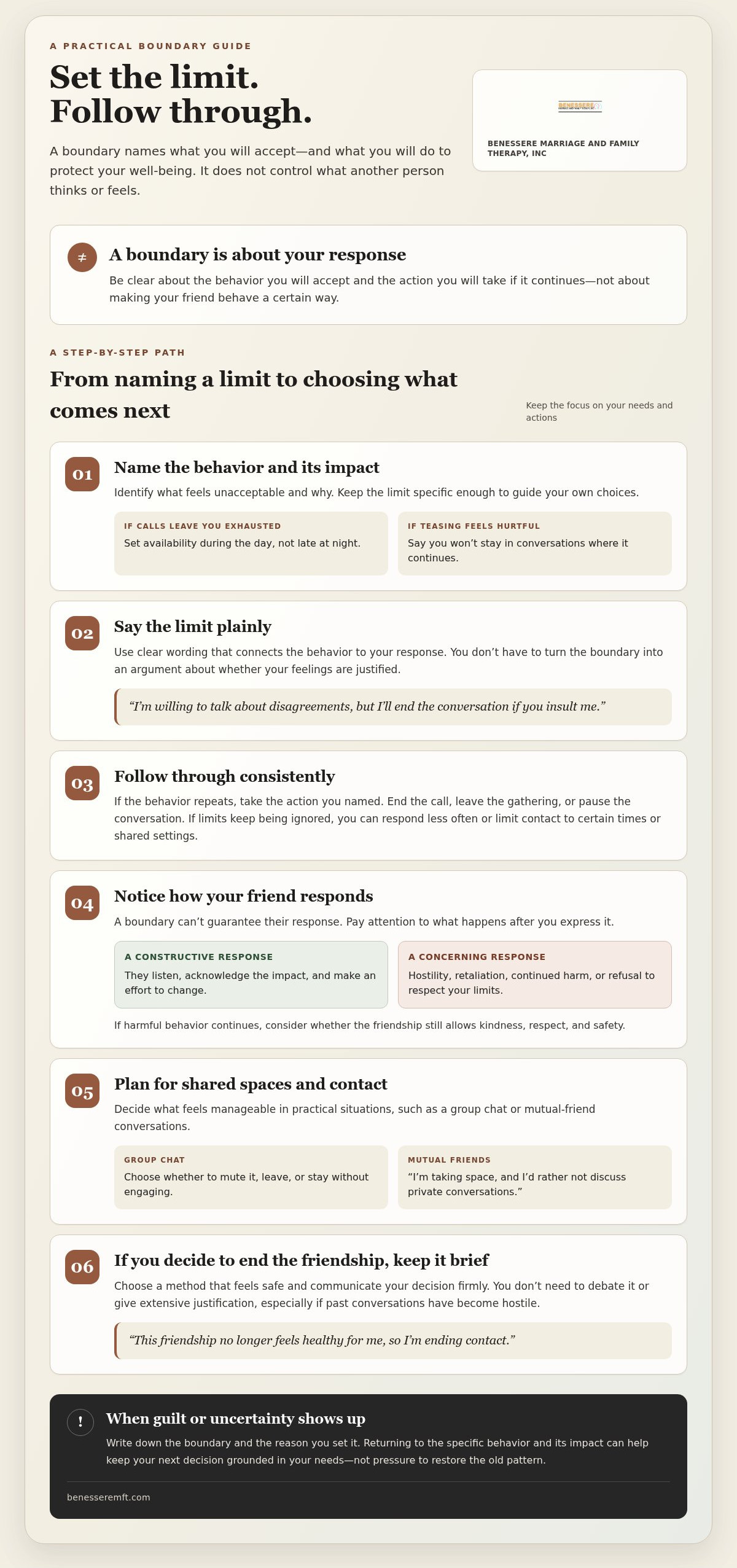
A boundary describes what you will accept and what you will do to protect your well-being. It isn’t a way to control another person. For example, you can tell a friend, “I’m willing to talk about disagreements, but I’ll end the conversation if you insult me.” The limit names the behavior and your response, rather than demanding that your friend feel or think differently.
Make the boundary specific enough to guide your actions. If late-night calls leave you exhausted, say you’re available during the day, not late at night. If teasing about your appearance feels hurtful, state that you won’t stay in conversations where it continues. Clear wording helps you communicate your feelings without turning the limit into an argument about whether they’re justified.
Then follow through consistently. If a friend repeats the behavior, calmly end the call, leave the gathering, or pause the conversation. When someone repeatedly ignores boundaries, creating distance may also mean responding less often to texts or calls. You can limit contact to certain times or shared settings while deciding what level of connection feels manageable.
A boundary describes your choice; it cannot guarantee how a friend will respond. Notice what happens after you express it. A friend may listen, acknowledge the impact, and make an effort to change. If they respond with hostility or retaliation, continue harmful behavior, or refuse to respect your limits, consider whether the friendship still allows kindness, respect, and safety.
How do you end a toxic friendship safely and respectfully? Choose a method that feels safe, then communicate briefly and firmly: “This friendship no longer feels healthy for me, so I’m ending contact.” You don’t need to debate your decision or provide extensive justification, particularly if past conversations have become hostile.
Prepare for practical situations that can weaken a boundary. If you share a group chat, decide whether to mute it, leave, or stay without engaging. If mutual friends ask for details, use a simple response such as, “I’m taking space, and I’d rather not discuss private conversations.” These choices help you move forward without drawing others into the conflict.
When guilt or uncertainty arises, write down the boundary and the reason you set it. For instance: “I asked for no personal insults because repeated comments made conversations feel unsafe.” Returning to that specific record can keep your next decision grounded in your needs, rather than pressure to restore the old pattern. If it would help to work through difficult feelings around boundaries, you can explore support for personal growth.
3. Signs of a toxic friendship
A repeated pattern matters more than one difficult conversation. For example, a friend may criticize your choices, dismiss your concerns, or bring persistent negativity into nearly every interaction. Notice whether you can disagree without being mocked, share good news without being belittled, and express a need without being punished. These everyday moments reveal whether the relationship includes respect.
Look at how the friendship affects your choices and emotional state. Do you regularly cancel plans you enjoy to avoid your friend’s disapproval? Do you leave conversations feeling tense after being judged or pressured? One stressful exchange may have an understandable cause, but repeated anxiety, self-doubt, or diminished confidence deserve attention.
Constant criticism: Your friend repeatedly comments negatively on your appearance, decisions, or abilities, even after you ask them to stop.
Lack of respect: They disregard your time, privacy, or stated preferences, such as sharing a confidence you asked them to keep private.
Persistent negativity: Conversations repeatedly focus on complaints or blame, leaving little room for encouragement, shared enjoyment, or mutual support.
Pressure against recovery: A friend urges you to drink or use drugs after you’ve said you’re avoiding those situations, showing disregard for your recovery.
Compare the friendship’s recurring pattern with what you value in supportive relationships. Think of a recent moment when you needed encouragement. Did your friend listen and respond with care, or turn the conversation into criticism? Consider whether misunderstandings are discussed openly or keep returning without repair. The contrast between occasional conflict and ongoing disrespect can clarify what the relationship offers.
How can you tell whether a friendship can be repaired or should end? Repair may be possible when both people can discuss specific harm, take responsibility, and show changed behavior over time. Consider ending or distancing yourself if the friend is abusive, retaliates when you set limits, refuses to change, or the relationship significantly harms your mental health.
Focus on actions rather than promises. If a friend apologizes for sharing private information, observe whether they protect your confidence afterward. If they agree to stop mocking your choices, notice whether the comments actually stop. Consistency can distinguish meaningful repair from a brief effort that fades when the conflict passes.
Don’t let positive memories erase the friendship’s current pattern. A friend may have supported you during a difficult period and still behave hurtfully now. Write down examples of both care and harm, then ask whether respect, trust, and encouragement are present in your interactions today. That reflection can help you decide how to move forward.
4. Self-care during a friendship breakup
A friendship ending can bring sadness, anger, relief, guilt, or loneliness. Instead of judging these reactions, name what you feel and give each emotion room. For example, write, “I miss our conversations, and I feel relieved that the criticism has stopped.” Both feelings can be true. Honest reflection can help you see that grief doesn’t mean your decision was wrong.
Choose a contained way to reflect, such as journaling for a short time or talking with someone you trust. Describe what happened and what you need now, rather than replaying every message for hidden meanings. If your thoughts return to a painful detail, note it, then shift your attention to a practical task, such as making dinner or preparing for tomorrow.
A steady routine can make difficult days more manageable. Use a planner to map out the week, including meals, movement, rest, and an activity you enjoy. Each night, prepare one thing for the next day, such as setting out clothes or writing a short task list. These small actions provide structure when the friendship’s absence leaves space in your schedule.
Support your body: Aim for balanced meals, regular exercise, and enough sleep as part of everyday self-care.
Reduce reminders: Take a break from social media if seeing your former friend’s posts makes it harder to process the breakup.
Reconnect with interests: Make time for reading, dancing, travel, fitness, or another activity that feels meaningful to you.
Stay present: Notice what you can see and hear around you during a walk, meal, or familiar daily task.
Choose supportive company carefully. You might tell a trusted family member, sober friend, mentor, or support group what you’re experiencing. Ask for a specific form of help, such as company during a difficult evening or a check-in after a shared social event. If you’re a teenager, a trusted parent, teacher, or counselor can offer a steady place to talk.
Try to focus conversations on your feelings and supportive relationships, rather than repeatedly criticizing your former friend. For example, tell someone you trust, “I’m lonely today; could we take a walk?” This gives them a clear way to be present and keeps your attention on what you need now.
Self-forgiveness can also be part of recovery. You may wish you had noticed a pattern sooner or spoken up earlier, but you couldn’t control another person’s choices. Write down one lesson you want to carry forward, such as recognizing when you feel pressured, then choose a hobby or supportive connection to nurture this week.
5. Taking new friendships slowly
After a painful friendship ends, a new connection can bring hope alongside sadness and caution. You don’t need to decide immediately whether someone will become a close friend. Let shared conversations, ordinary plans, and consistent respect show you how the relationship feels over time. A pleasant first meeting can be enjoyable without becoming a promise of lifelong closeness.
Start with low-pressure opportunities to connect. You might invite a new acquaintance for coffee after a shared activity, then notice whether conversation feels balanced. Does each person ask questions and listen? Can you express a different opinion without feeling judged? These small interactions offer useful information without requiring you to share personal experiences before you’re ready.
Share gradually. Begin with everyday details, such as a hobby or a book you’re enjoying, and see whether the person responds with interest and care. With time, decide whether to discuss more private experiences. If you feel exposed after sharing, pause and consider what you’d prefer to keep private for now. Your pace can change as trust develops.
How do you rebuild trust and confidence after a toxic friendship? Practice trusting your observations in new interactions, then compare a person’s actions with their words. For example, notice whether they respect a declined invitation or keep a confidence you shared. Confidence grows through choices that honor your comfort, not by forcing yourself to trust quickly.
Keep your routines: Maintain plans with supportive friends and activities you enjoy, even as you make room for someone new.
Notice reciprocity: Look for mutual interest, respect for limits, and effort from both people, such as each taking a turn suggesting plans.
Allow space: A delayed reply or a quiet week doesn’t define a new friendship; observe the broader pattern instead.
Stay open without rushing: Let positive moments matter while giving the relationship time to show consistency.
You can miss your former friend while enjoying a new connection. Those feelings can coexist. If you compare every new person with the past, gently return to what is happening now: how they listen, respond, and treat your boundaries. The goal isn’t to find an identical replacement, but to learn which qualities help you feel respected and at ease.
Friendships can grow naturally without every new acquaintance becoming a closest friend. If fear from a previous relationship makes it difficult to connect, support can help you explore those reactions at a manageable pace. Explore support for rebuilding trust as you practice forming relationships that feel steady and respectful.
Benessere Marriage and Family Therapy, Inc: Individual Psychotherapy
Benessere Marriage and Family Therapy, Inc offers Individual Therapy for people processing the effects of a painful friendship. If grief, self-doubt, or difficulty trusting new relationships continues to affect daily life, therapy can provide space to explore those experiences and identify helpful ways forward. Treatment is tailored to each person’s story and needs, with evidence-based care and psychoeducation supporting reflection and coping. You can work on recognizing relationship patterns, understanding emotional responses, and strengthening boundaries at a manageable pace. Seeking support can be a considered step toward understanding what happened and caring for your well-being. To discuss Individual Therapy in Roseville, contact Benessere Marriage and Family Therapy, Inc.
Build Relationships at a Pace That Feels Right
Healing from a toxic friendship doesn’t require you to become guarded or to trust every new person immediately. You can let experience inform your choices while staying open to connection. Notice what helps you feel grounded, and give yourself permission to take the next step gradually. A healthy sense of trust can develop through repeated experiences of mutual care, not pressure to move faster than feels comfortable.
If the effects of a past friendship continue to shape your well-being or relationships, support can help you explore what you need next. Benessere Marriage and Family Therapy, Inc offers Individual Therapy, Family Therapy, and Couples Therapy in Roseville, creating different paths for working through personal or relationship concerns. Choose support that fits the questions you’re carrying and the changes you want to make.
When you’re ready, contact Benessere Marriage and Family Therapy, Inc to take a thoughtful next step. You can move toward relationships that feel more respectful, steady, and true to who you are.
Frequently Asked Questions
What Makes a Friendship Toxic?
A friendship may be toxic when a recurring pattern leaves you feeling diminished, unsafe, or unable to be yourself. Look beyond one disagreement: ask whether concerns can be discussed without ridicule, whether apologies lead to changed behavior, and whether the relationship allows mutual care. If you regularly hide ordinary choices to avoid a friend’s reaction, that restriction is meaningful information about how the friendship affects you.
Why Do Friendship Breakups Happen?
Friendships can end because circumstances, interests, or priorities change, or because unresolved conflict makes closeness difficult. A move, a new caregiving responsibility, or different expectations about contact may gradually create distance. Sometimes one person decides the relationship no longer feels healthy. An ending doesn’t always mean the friendship was false; it may mean the relationship no longer fits either person’s needs.
What are the signs of a toxic friendship?
Notice whether the friendship feels consistently one-sided or requires you to earn basic care. For instance, a friend may expect you to be available but show little interest when you need support, or use private information to embarrass you later. Repeatedly feeling responsible for managing their reactions can also be a warning sign. Consider the ongoing pattern, not just one disappointing interaction.
How do you set boundaries with a toxic friend?
State what you’re comfortable discussing, then decide what you’ll do if the conversation crosses that limit. For example, you might say, “I’m not discussing my dating life,” and change the subject or end the conversation if the friend persists. Keep your wording direct and consistent. A boundary is about your choices, so focus on actions you can take rather than demands you can’t control.
How do you cope with grief after ending a friendship?
Give grief a meaningful outlet without making every day revolve around the loss. You could create a private goodbye ritual, such as putting shared keepsakes away or writing an unsent letter about what you valued and what hurt. If you miss a particular routine, replace it with a new plan, like joining a weekly class. Missing someone can coexist with knowing distance was right for you.
How can a toxic friendship affect mental health and self-esteem?
Repeated criticism or pressure can lead someone to question their judgment, anticipate conflict, or withdraw from other relationships. For example, you might stop sharing good news because you expect it to be dismissed, or second-guess a reasonable decision after repeated blame. These responses can add stress and weaken confidence. Notice whether the friendship’s influence is affecting sleep, concentration, or your willingness to connect with others.
When should you seek therapy or professional support after a toxic friendship?
Consider professional support if distress continues to interfere with sleep, concentration, daily responsibilities, or your ability to feel safe in relationships. Individual Therapy can help you examine the experience and work through its emotional effects. In Roseville, Benessere Marriage and Family Therapy, Inc offers individualized, evidence-based psychotherapy and psychoeducation. Support can provide a structured space to understand your reactions and consider what you need next.



Comments