
In-Person Therapy for Perfectionists in Roseville

A first therapy appointment is a chance to describe what brings you in, how perfectionism affects your life, and what you hope might change. Therapy for recovering perfectionists in Roseville can help you understand patterns such as harsh self-criticism or fear of mistakes while building a more compassionate relationship with yourself.
High standards can support meaningful goals, but pressure to get everything right may make it hard to rest, take risks, or feel satisfied with what you’ve done. If you’re a high-achieving woman caught between accomplishment and exhaustion, you’re not alone in wanting a healthier balance.
This article explains how perfectionism can show up, what to expect at an initial appointment, and how therapy may help you practise self-compassion without abandoning your values. Individual psychotherapy can create space to explore the expectations and fears beneath perfectionism at a pace that respects your experience.
Table of Contents
Common signs and experiences of perfectionism
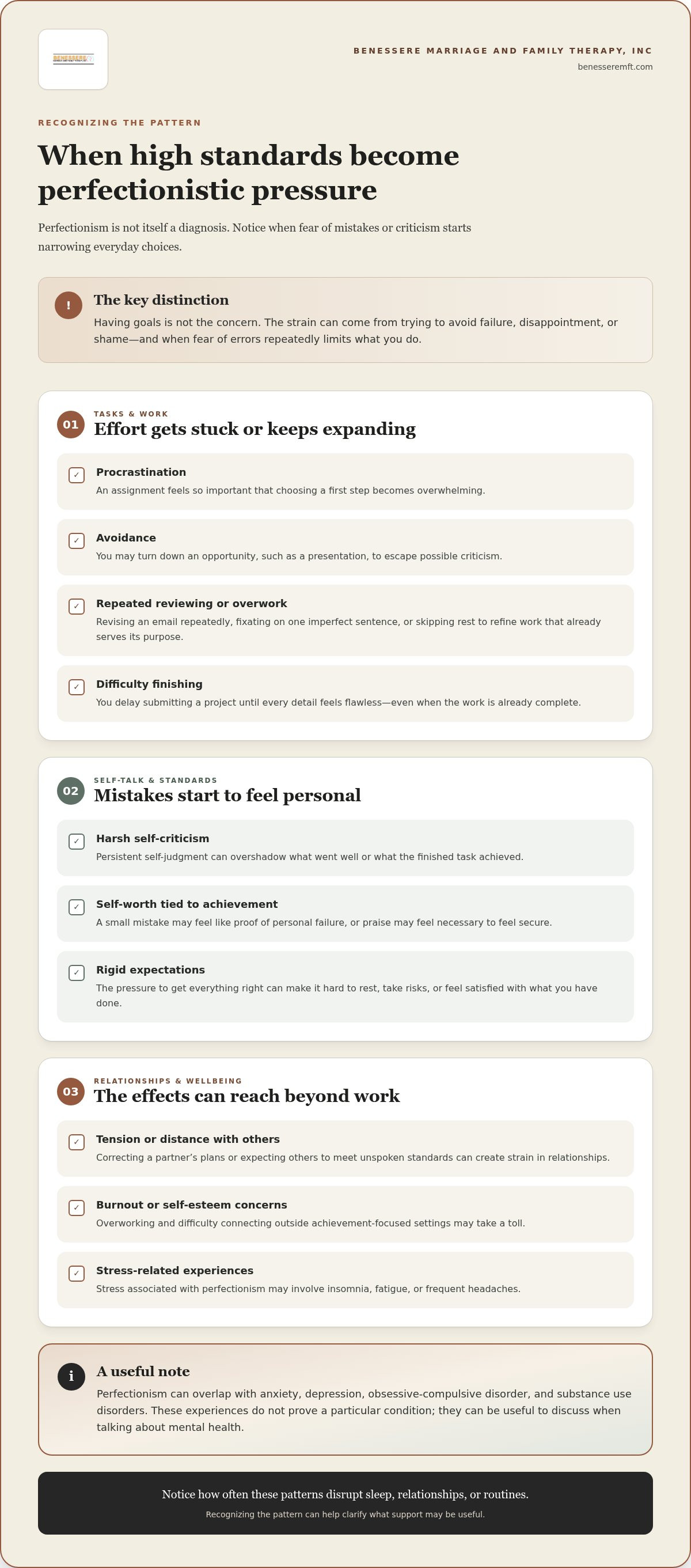
Perfectionism is not itself a diagnosis. It can involve overcontrol, rigid expectations, and persistent self-criticism. For example, someone might revise a work email repeatedly, then focus on one imperfect sentence instead of the completed task. The strain may come from trying to avoid failure, disappointment, or shame, rather than simply wanting to do good work.
In everyday life, high standards can make it difficult to start or finish tasks. Someone might delay submitting a project until every detail feels flawless, or avoid an opportunity because others could judge the result. Overworking and skipping breaks are other possible signs. After staying late to correct minor details, someone may feel exhausted yet still believe the work is not good enough.
Procrastination: An assignment feels so important that choosing a first step becomes overwhelming.
Avoidance: Someone turns down a presentation to escape possible criticism.
Overwork: A person skips rest to keep refining work that already meets its purpose.
Self-worth tied to achievement: A small mistake feels like proof of personal failure.
These patterns can affect relationships as well as work. Correcting a partner’s plans or expecting others to meet unspoken standards can create tension and distance. Perfectionism may also contribute to burnout, self-esteem concerns, and difficulty connecting with people outside achievement-focused settings. The concern is not having goals, but when fear of errors repeatedly narrows daily choices.
Stress associated with perfectionism may involve insomnia, fatigue, or frequent headaches. Perfectionism can also overlap with anxiety, depression, obsessive-compulsive disorder, and substance use disorders. These experiences do not prove a particular condition, but they can be useful to discuss when talking about mental health. In Roseville, California, noticing how often these patterns disrupt sleep, relationships, or routines can help clarify what support may be useful.
In-person therapy in Roseville
Therapy for perfectionism in Roseville, CA can provide a structured place to examine how high standards affect daily decisions. At a first appointment, you can describe your concerns, discuss goals, and consider whether in-person sessions feel comfortable and focused. Therapy for recovering perfectionists in Roseville can also help you identify what you want to change, such as spending less time reviewing routine tasks.
Choosing a Perfectionism Therapist
Look for a therapist whose credentials, specialties, and experience align with your needs. In a first conversation, describe a specific situation, such as feeling unable to delegate a work task, and notice whether the therapist explores its context without judgment. Therapists in Roseville who address perfectionism may describe how they approach self-criticism, stress, and treatment planning. Ask how your goals will shape sessions and how progress will be discussed.
In-person and virtual therapy are different ways to meet; availability varies among practices. Consider which setting helps you speak openly, manage travel, and protect time for sessions. A personalized plan should connect your concerns with practical goals. For example, if fear of mistakes leads you to avoid leadership tasks, a goal might be identifying the thoughts and feelings that arise before taking one manageable step.
CBT for Perfectionism
CBT for perfectionism near Roseville can focus on how thoughts, emotions, and actions reinforce one another. A therapist might help you notice a rule such as “I must get every detail right,” examine its effects, then consider a more flexible response. In treatment, you could practise testing that response through a manageable task, such as sharing a draft before extensive revisions. Ask how CBT would be tailored to your priorities and what you would practise between sessions.
Healing doesn’t require lowering every standard. It can mean choosing where effort matters and where “good enough” serves the goal. If you’re considering therapy for recovering perfectionists in Roseville, reflect on the kind of support and treatment approach that would help you take a first step.
Self-compassion
Self-compassion offers a way to meet mistakes with understanding rather than punishment. It can begin with noticing your inner response after a missed deadline or difficult conversation.
Self-Worth and External Validation
Perfectionism can tie self-worth to achievement, making praise feel necessary for emotional security. After positive feedback on a presentation, for example, someone may focus on one hesitant sentence and discount the rest. Notice whether a finished task feels valuable only after someone approves it. Separating personal worth from performance can make room for goals chosen from interest, not just a need for validation.
Quieting the Inner Critic
The inner critic may turn one error into a sweeping judgment: “I made a mistake” becomes “I always fail.” A compassionate response names the specific event, then considers what you’d say to a colleague facing the same challenge. This doesn’t erase responsibility. It can replace self-attack with a useful next step, such as correcting a missed detail and moving on without replaying it all evening.
Realistic Expectations
Realistic expectations preserve effort while allowing for limits. Before starting a report, define what it needs to accomplish, which details matter most, and when you’ll stop revising. That boundary gives the task a clear endpoint instead of letting anxiety set an unreachable standard. Practising “good enough” on a low-stakes task, such as choosing a meal, can build flexibility for more meaningful challenges.
Anxiety, Shame, and Self-Criticism
Anxiety and shame can reinforce perfectionism when a possible mistake feels like a threat to belonging or respect. After forgetting a commitment, you might feel an urge to hide, over-apologize, or promise never to slip again. Pause and identify the feeling, the event, and one proportionate response. Acknowledging harm and repairing it can bring relief without treating one difficult moment as a verdict on your character.
Therapy for perfectionism and high-achieving women
High achievement can conceal the strain of perfectionism. A manager may meet every deadline yet feel unable to stop reviewing work, even after colleagues approve it. Perfectionism isn’t itself a diagnosis, but it has been linked with anxiety, depression, eating disorders, and obsessive-compulsive disorder. A clinical conversation can explore whether demanding patterns affect health, relationships, or daily functioning.
At an appointment, bring a recent example, such as avoiding a promotion because you fear criticism. Describe what you expected, what you felt, and what you did next. Therapy can help identify the patterns beneath that response and clarify a goal, such as taking on a manageable challenge without requiring certainty first. If past trauma shapes how mistakes or approval feel, that context may also matter in treatment.
Therapy may help when fear of failure or criticism keeps you from moving forward. For example, a high-achieving woman might repeatedly postpone submitting a proposal despite meeting its requirements. With a therapist, she can explore the cost of that pattern and practise aiming for excellence rather than perfection. Learning when work is “good enough” can make room for rest, relationships, and goals beyond achievement.
Perfectionism can contribute to burnout, relationship problems, depression, or substance misuse when left untreated. That doesn’t mean these outcomes are inevitable; it means persistent pressure deserves attention, especially when work success comes with growing exhaustion or conflict at home. Notice whether your standards guide meaningful effort or demand constant proof of worth. If fear is narrowing your choices, take a step toward individual therapy and explore support for changing these patterns.
Benessere Marriage and Family Therapy: Individual Psychotherapy
Benessere Marriage and Family Therapy, Inc offers Individual Psychotherapy for people seeking support to understand perfectionism and its effects. Therapy provides space to explore how self-criticism, pressure, or fear of mistakes shapes work, relationships, and emotional well-being. Treatment is tailored to each person’s story and needs, using evidence-based care and psychoeducation to make patterns easier to understand.
Consider reaching out when perfectionistic expectations feel difficult to shift alone, interfere with daily life, or contribute to ongoing distress. In sessions, you can discuss what you hope will change and work collaboratively toward practical goals, such as responding to setbacks with greater flexibility. If perfectionism affects a relationship or connects with trauma, those experiences can inform your therapy.
Contact Benessere Marriage and Family Therapy, Inc in Roseville to discuss Individual Psychotherapy and take a supportive next step.
Take the Next Step at Your Own Pace
You don’t need a complete explanation for every expectation you carry before seeking support. Start with one question: what would feel different if your effort no longer depended on getting everything exactly right? Let the answer guide a small, honest next step rather than become another standard to meet.
If you’re considering therapy for recovering perfectionists in Roseville, Benessere Marriage and Family Therapy offers Individual Psychotherapy, Family Therapy, and Couples Therapy. The right starting point is the support that fits what you’re experiencing and the changes you hope to make.
Reach out when you’re ready to explore that possibility. Contact Benessere Marriage and Family Therapy to take a thoughtful first step toward greater flexibility and self-understanding. Change can begin without perfection.
Frequently Asked Questions
What Can I Expect at My First Therapy Appointment?
Your first appointment is an opportunity to explain what prompted you to seek support and what you’d like to change. You might describe a recent situation, such as spending hours revising a task, and how it affected your day. Sharing questions, preferences, and relevant personal context can shape a collaborative conversation about goals and a useful direction for care.
Breaking Free: What can perfectionism look like?
Perfectionism can appear in small decisions as well as major goals. You might rewrite a brief message several times, seek repeated reassurance before choosing, or dismiss praise because one detail was imperfect. These responses can reflect pressure to meet rigid expectations. Noticing when they occur and what you fear might happen if you stop can help you understand the pattern.
What can I expect in sessions?
Sessions can give you time to examine a specific concern and decide what you want to work toward. You might explore why delegating a task feels uncomfortable, then identify a manageable way to practise sharing responsibility. Benessere Marriage and Family Therapy, Inc provides personalized psychotherapy and psychoeducation, helping clients explore concerns and develop goals suited to their individual needs.
What can perfectionism affect?
Perfectionism can affect emotional well-being, work choices, and relationships. Avoiding a challenging assignment may limit opportunities, while expecting a partner to follow exact standards can create conflict. Perfectionism has also been linked with anxiety, depression, eating disorders, and obsessive-compulsive disorder. These connections do not mean perfectionism itself is a diagnosis; they point to areas worth discussing if they affect your life.
How can I find therapists for recovering perfectionists in Roseville, California?
For therapy in Roseville, California, consider whether the approach fits the concerns you want to address. You can describe a concrete example, such as delaying a decision because you fear making the wrong choice, and discuss what you hope to work on. Benessere Marriage and Family Therapy, Inc provides psychotherapy for individuals, couples, and families in the local area.
Signs perfectionism may benefit from therapy
Therapy may be worth considering when fear of failure or criticism repeatedly prevents you from moving forward. You might turn down a meaningful opportunity, delay decisions until they feel risk-free, or find that pressure strains important relationships. Consider whether these patterns are narrowing your choices or causing distress. A therapist can help explore what sustains them and identify goals that fit your needs.
Therapist credentials and specialties for perfectionism in Roseville
Look for a therapist whose credentials, specialties, and experience fit your needs. Heather Aller-Stamps, LMFT, has more than 20 years of experience and a master’s degree in marriage and family therapy; her clinical work draws on DBT-informed skills and family systems.



Comments