
PTSD Treatment in Roseville, CA: A Restorative Path to Resilience

In 2023, California recorded the highest number of positive PTSD cases in the nation, a statistic that underscores the silent struggle many individuals face every day. For those seeking PTSD treatment Roseville CA, the reality of living with debilitating flashbacks and high-intensity anxiety can make even the most familiar streets of Placer County feel unpredictable. It's common to feel that your nervous system is stuck in a cycle of survival, making it difficult to maintain the deep, meaningful connections you value with your family and friends.
We understand the fear that therapy might feel too overwhelming or that revisiting the past could cause more harm than good. However, healing doesn't require you to be re-traumatized. Instead, it involves a methodical and compassionate approach to processing your experiences. In this article, you'll discover how specialized, trauma-informed clinical care can help you reclaim your sense of safety and provide the emotional regulation you've been seeking. We will explore the diverse, evidence-based modalities available in our community and explain the "why" behind your symptoms to help you build a restorative path toward mental wellness.
Table of Contents
Defining PTSD and Its Impact on Roseville Residents
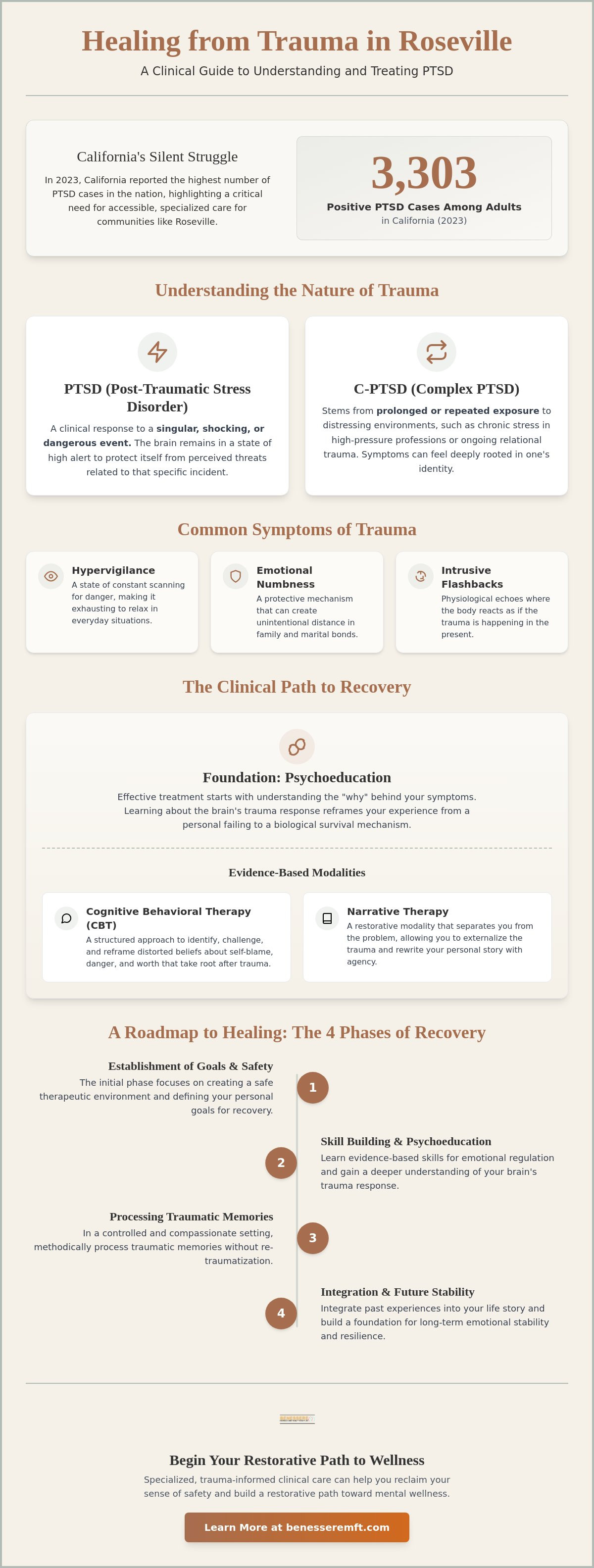
To begin the journey toward recovery, we must first address a foundational question: What is PTSD? At its core, Post-Traumatic Stress Disorder is a clinical response to shocking, scary, or dangerous events. It isn't a sign of personal weakness or a character flaw. It's a physiological adaptation where the brain remains in a state of high alert to protect itself from perceived threats. While many associate trauma with singular, acute events, clinicians also recognize complex PTSD (C-PTSD), which stems from prolonged or repeated exposure to distressing environments. Distinguishing between these two helps clarify why your symptoms might feel so deeply rooted in your daily identity.
Roseville is home to many professionals in high-stress sectors, including medical staff at major healthcare hubs and first responders serving Placer County. These roles often involve exposure to chronic traumatic stress, which can accumulate over time without a proper outlet for processing. With California reporting 3,303 positive PTSD cases among adults in 2023, the need for specialized PTSD treatment Roseville CA has never been more apparent. Normalizing the act of seeking help is the first step toward building clinical resilience. It transforms the narrative from one of "suffering" to one of "restoration."
Common Symptoms Observed in Trauma Survivors
Trauma manifests in ways that can feel unpredictable, yet these symptoms follow a logical biological pattern. Hypervigilance is one of the most taxing experiences; it's a state of constant scanning for danger that makes relaxing at a local park or driving on I-80 feel exhausting. This persistent "on" switch often leads to emotional numbness, a protective mechanism that inadvertently creates distance in marriages and family bonds. You might also experience intrusive thoughts or flashbacks, which are not just "bad memories" but physiological echoes where the body reacts as if the trauma is happening in the present moment.
Why Local Specialized Care Matters
Seeking PTSD treatment Roseville CA offers more than just convenience. It provides access to therapists who understand the specific cultural and professional dynamics of our community. In-person therapy creates a tangible sense of safety, allowing for a shared physical space where a practitioner can monitor subtle non-verbal cues that are often lost over a screen. This level of trauma-informed care is the local standard for those who want to move beyond surface-level coping. It emphasizes a collaborative environment where your story is respected and your pace is honored, ensuring that the therapeutic process remains restorative rather than overwhelming.
Evidence-Based Clinical Modalities for Trauma Recovery
Recovery from trauma is a methodical process that relies on the clinical application of proven strategies. When seeking PTSD treatment Roseville CA, it's vital to engage with modalities that address both the cognitive and physiological aspects of your experience. Effective care begins with psychoeducation, which helps you understand the "why" behind your brain's trauma response. By learning how the amygdala and prefrontal cortex interact during a trigger, you can begin to view your symptoms as biological survival mechanisms rather than personal failings. This clarity is foundational for the integration of your life experiences into a cohesive, forward-looking recovery plan.
The National Institute of Mental Health highlights several Evidence-Based Clinical Modalities that have been rigorously tested for their efficacy in trauma work. These frameworks provide a structured environment where complex emotions are handled with scientific precision. Cognitive Behavioral Therapy (CBT) is particularly effective in this regard, as it allows you to identify and reframe the distorted beliefs that often take root after a traumatic event. Whether you're struggling with self-blame or a pervasive sense of danger, these clinical tools help you build a new, more accurate perspective on your safety and worth.
Narrative Therapy: Rewriting Your Story
One profound approach is narrative therapy, which views the person as separate from the problem. This modality is restorative because it allows you to externalize the trauma, treating it as an outside force rather than an inherent part of your identity. In a collaborative setting, you and your therapist work to reclaim your personal agency by identifying "unique outcomes" or moments of strength that the trauma may have obscured. Rewriting your story isn't about changing the facts of the past; it's about shifting your relationship with those facts to foster resilience and hope.
Trauma-Informed CBT and Skill Building
Trauma-informed CBT focuses heavily on safety and stabilization before any deep processing occurs. It's essential that you feel grounded in the present moment before revisiting difficult memories. This phase of treatment involves developing emotional regulation skillsets, such as grounding techniques and distress tolerance. These practical tools empower you to manage anxiety and hypervigilance in real-time, ensuring that your path toward health is sustainable and unhurried. If you feel ready to move toward a life defined by stability rather than survival, professional trauma support can provide the clinical guidance necessary to navigate this transition safely.
Key Considerations for Choosing a PTSD Therapist in Roseville
Selecting a provider for PTSD treatment Roseville CA is a deeply personal decision that requires both clinical scrutiny and emotional intuition. You aren't just looking for a practitioner; you're looking for a partner in your restoration. It's essential to verify that a therapist holds recognized credentials, such as an LMFT or LCSW designation. These titles ensure the professional has met rigorous state standards for education and supervised clinical practice. Beyond the letters after their name, inquire about their specific history with your type of trauma. A therapist who primarily treats general life transitions may not have the advanced training required to navigate the complexities of a nervous system stuck in a trauma loop.
The process of Navigating the Path to Recovery often starts with an assessment of the clinical environment. Does the space feel physically and emotionally secure? A trauma-informed setting should offer a sense of professional warmth that lowers your defenses rather than heightening them. During your initial consultation, observe whether the therapist adopts a collaborative and non-judgmental stance. You should feel like an active participant in your treatment planning, not a passive recipient of a diagnosis. It's your story, and you deserve a guide who respects your pace and your autonomy.
The Importance of Therapeutic Fit
Safety is the non-negotiable foundation of all trauma work. If you don't feel a sense of security with your therapist, the deeper work of processing memories cannot safely begin. A restorative approach differs from purely medical models by viewing you as a whole person rather than a collection of symptoms. This perspective prioritizes the relationship between the practitioner and the client as a primary tool for healing. While clinical data is important, don't ignore your intuition. If a consultation feels rushed or cold, it's okay to keep searching for a professional who resonates with your specific needs.
Clinical Expertise vs. General Counseling
There's a significant distinction between general support and specialized trauma therapy Roseville. While general counseling can be helpful for daily stressors, treating complex PTSD requires an advanced skillset rooted in neurobiology and somatic awareness. Specialized therapists often engage in ongoing mentorship and advanced training to stay current with the latest therapeutic breakthroughs. This commitment to expertise ensures that your care is grounded in the most effective, science-backed methods available today. When the stakes involve your long-term mental wellness, choosing a specialist is a vital investment in your future stability.
Navigating the Path to Recovery: What Clinical Treatment Looks Like
Clinical recovery for trauma is a structured journey that honors your individual pace. It begins with a comprehensive assessment phase where we prioritize safety above all else. This initial stage is dedicated to establishing clear therapeutic goals and identifying the specific triggers that disrupt your daily life. One common misconception is that PTSD treatment Roseville CA must be an inherently re-traumatizing experience. In a professional setting, we ensure that you aren't simply "reliving" the past; rather, you're processing it from a position of current strength and clinical support.
Once a foundation of safety exists, the middle phase of treatment involves the careful processing of traumatic memories. This isn't a rushed endeavor. We use evidence-based interventions to help the brain re-categorize these events so they no longer feel like active, present-day threats. Finally, the integration phase focuses on solidifying your new narratives and skillsets. You'll learn to view your history through a lens of resilience, ensuring that the progress you make in the therapy room translates into lasting stability in your personal and professional life.
Establishing Emotional Safety
In the early stages of care, we focus on equipping you with grounding techniques designed to manage immediate physiological symptoms. These tools allow you to stay present when your nervous system tries to pull you into a state of panic or shut-down. By creating what clinicians call a "secure base," your therapist provides a reliable environment where difficult emotional work can occur without overwhelming your capacity to cope. This unhurried pace is a hallmark of effective clinical trauma recovery, as it ensures that each step forward is built on a stable, secure foundation.
Building Resilience and Agency
As treatment progresses, the focus shifts toward reclaiming your personal agency. Through narrative work and specialized individual psychotherapy Roseville, you begin to move from the identity of a "victim" to that of a "survivor" and, eventually, a "thriver." This transition is fostered by restorative mental health practices that emphasize growth and holistic wellness. The long-term benefits of this work extend far beyond symptom reduction; they include a deeper understanding of yourself and an increased capacity for joy and connection. If you're ready to begin this methodical process, you can schedule a clinical consultation to explore how our trauma-informed approach can support your unique story.
Restorative Care at Benessere Marriage and Family Therapy
Benessere Marriage and Family Therapy serves as a dedicated center for sophisticated, evidence-based trauma care. We recognize that effective PTSD treatment Roseville CA requires more than a standard clinical protocol; it necessitates a deep respect for each client's unique story. Our office environment is intentionally designed to be a safe, professional space where you can step away from the stressors of Placer County and focus entirely on your restoration. By prioritizing both scientific precision and human warmth, we create a setting where complex emotions are handled with the seriousness and care they deserve.
Our commitment to collaborative mental health means that you're never a passive recipient of care. We emphasize psychoeducation throughout the therapeutic process, ensuring you understand the mechanics of your recovery and the "why" behind your symptoms. This transparency builds trust and empowers you to take an active role in your healing journey. Whether we're addressing acute trauma or long-term, complex stressors, our interventions are meticulously tailored to align with your personal goals and values.
Our Clinical Philosophy
The heart of our practice lies in a blend of clinical authority and deep-seated empathy. We believe that normalizing human struggles is a vital part of the therapeutic process. It's common for trauma to be accompanied by other challenges, which is why we also provide specialized depression counseling Roseville. Addressing these co-occurring needs ensures a holistic approach to your wellness, allowing for a more comprehensive integration of your life experiences. Our restorative therapy focuses on the inherent possibility of growth, moving beyond mere symptom management toward true, lasting resilience.
Start Your Healing Journey in Roseville
Taking the first step toward recovery can feel daunting, yet it's the most significant move you can make for your future self. Resilience isn't a fixed trait; it's a capacity that can be nurtured and strengthened with the right professional support. We invite you to reach out for a professional clinical consultation to discuss your needs and explore how our services can assist you. Growth is possible even after the most difficult experiences. By choosing specialized PTSD treatment Roseville CA, you're embarking on a methodical path toward reclaiming your sense of safety and stability. Your story didn't end with the trauma, and we're here to help you write the next chapter.
Reclaiming Your Future Through Restorative Care
Moving beyond the weight of traumatic experiences requires a delicate balance of specialized knowledge and deep human compassion. We've explored how understanding your brain's physiological response to stress can lower the burden of self-blame; this clarity is the first step toward reclaiming your sense of safety. Choosing the right path for PTSD treatment Roseville CA is fundamentally about finding a space where you feel seen, secure, and respected. It's about transitioning from a state of constant survival to a life defined by stability and personal agency.
At Benessere Marriage and Family Therapy, our trauma-informed LMFT and LCSW staff provide the authoritative guidance and empathy necessary for this restoration. We utilize evidence-based clinical skillsets within our convenient Roseville location for in-person care, ensuring you have a physical "secure base" to do the work of healing. You don't have to navigate these complex emotions alone. With the right clinical support, the inherent possibility of growth is always within reach. Begin your restorative healing journey with Benessere MFT today. We're here to help you integrate your experiences and step into a more peaceful, resilient future.
Frequently Asked Questions
Is PTSD treatment effective for trauma that happened years ago?
Yes, clinical trauma care is effective regardless of how much time has passed. The brain's neuroplasticity allows for the reprocessing of older memories, helping the nervous system move out of a chronic state of alert. Many clients seeking PTSD treatment Roseville CA find that addressing long-standing patterns leads to profound relief and a renewed sense of identity. This process focuses on the current impact of the past rather than just the events themselves.
How long does PTSD therapy typically take to see results?
The duration of treatment varies significantly based on the complexity of the trauma and individual goals. While some clients experience a reduction in acute symptoms within a few months, deeper restorative work often requires a longer commitment to ensure lasting stability. We prioritize a methodical pace that respects your capacity to integrate new insights without feeling rushed. This approach ensures that progress is sustainable and deeply rooted in your daily life.
Can PTSD be treated without the use of psychiatric medication?
Yes, many individuals successfully process trauma through psychotherapy alone. While medication can sometimes assist with symptom management, evidence-based modalities like CBT and Narrative Therapy focus on the underlying neurological and emotional roots of the condition. We focus on providing clinical skillsets that empower you to regulate your nervous system naturally. Our goal is to help you build internal resources that support long-term mental wellness without relying solely on external interventions.
What is the difference between normal stress and clinical PTSD?
Normal stress typically dissipates once a situation resolves; clinical PTSD involves persistent, intrusive symptoms that interfere with daily functioning. PTSD is characterized by specific biological markers, such as hypervigilance and flashbacks, that indicate the brain is still reacting to a past threat as if it were present. This physiological "stuckness" is what distinguishes clinical trauma from general life pressure. Understanding this difference is a key part of the psychoeducation we provide during treatment.
Will I have to talk about my trauma in detail during the first session?
No, the initial session is focused on establishing safety and building a therapeutic alliance. You aren't required to disclose every detail of your history right away. Instead, we prioritize creating a secure environment and discussing your current symptoms and goals. This unhurried approach ensures that you feel in control of the narrative from the very beginning. We believe that your comfort and sense of agency are foundational to the success of the clinical process.
How do I know if a Roseville therapist is truly trauma-informed?
A truly trauma-informed practitioner will prioritize your sense of safety and agency above all else. They often hold specific credentials like LMFT or LCSW and can clearly explain the evidence-based modalities they use to provide PTSD treatment Roseville CA. You should feel that your pace is respected and that the therapist handles your story with scientific precision. A safe environment and a collaborative approach are the hallmarks of quality clinical trauma care.
Does family therapy help when one member has PTSD?
Family therapy is a vital component of recovery because trauma impacts the entire household dynamic. It provides a structured space to improve communication and help loved ones understand the "why" behind a survivor's symptoms. By involving the family unit, we can create a more supportive home environment that fosters collective resilience. This collaborative work helps to repair strained bonds and builds a foundation of stability that benefits every member of the family.
What should I do if I feel overwhelmed during a therapy session?
If you feel overwhelmed, it's essential to communicate this to your therapist immediately. We use specific grounding techniques to help you return to the present moment and regulate your emotional state. Slowing down or pausing the work is a standard part of the clinical process; it ensures that the therapeutic experience remains restorative rather than re-traumatizing. Your safety is our highest priority, and we always work within your window of tolerance to foster healing.
Comments