
Therapy for Adult Children of Emotionally Immature Parents

Therapy for adult children of emotionally immature parents can help you understand how early family dynamics shape present-day relationships, emotional responses, and personal goals. It offers space to recognize patterns, strengthen coping skills, and practice healthier ways of relating. The aim isn’t to assign blame or dictate whether you should remain close to a parent. It’s to help you make choices grounded in your needs and values.
If you’ve learned to suppress your feelings, keep the peace, or brace for unpredictable reactions, those responses may have helped you manage family life. They can also feel limiting in adulthood. Therapy can support self-understanding, emotional regulation, boundaries, and family interactions, while making room to grieve what you needed but didn’t receive. Therapy goals can honor the complexity of your history without assuming that distance or reconciliation is right for everyone.
Table of Contents
Building healthier, more emotionally connected relationships
Early family experiences can shape how adults manage closeness, conflict, and emotional needs. Therapy can help clarify learned responses and support healthier relationships.
Early Experiences and Adult Relationships
Emotional immaturity describes difficulty regulating feelings, showing empathy, or considering another person’s perspective. When a parent responds unpredictably or centers their own needs, a child may learn to hide feelings or closely monitor others. Those adaptations can follow someone into adulthood, making trust, emotional expression, and mutual support difficult. Recognizing the pattern helps separate past survival strategies from the responses a person wants to develop now.
Relational Wounds and Self-Worth
Relational wounds are lasting effects of unmet emotional needs or repeated disconnection in close relationships. An adult may doubt their worth, feel responsible for a partner’s emotions, or struggle to identify what they need. Some may fear rejection; others may withdraw when intimacy feels unsafe. These patterns can influence partner choices and communication, but they don’t define a person’s capacity for empathy or healthy connection. Therapy can help examine those beliefs without reducing a whole life to childhood experiences.
Validation in the Therapeutic Relationship
A therapeutic relationship offers a consistent setting to describe experiences and have feelings taken seriously. When choosing a therapist for parent-related trauma or emotional neglect, look for experience with family-of-origin issues, trauma, and relational patterns, alongside an approach that feels respectful and collaborative. In the United States, seek a therapist whose stated focus includes these concerns, then discuss your goals and their way of working. Validation doesn’t mean automatically agreeing with every interpretation; it means exploring your experience without dismissing or shaming you.
Therapy Approaches for Family-Related Issues
Different approaches offer different ways to understand and work with family-related difficulties. CBT examines how thoughts and behaviors reinforce distress; psychodynamic therapy explores how earlier relationships shape current patterns. IFS considers how different inner “parts” respond to emotional experiences, while trauma-focused therapy addresses trauma-related reactions. The best fit depends on your concerns, preferences, and goals. Therapy costs depend on the circumstances and are provided after a quote request; insurance coverage depends on plan benefits and network terms.
Self-help exercises and coping strategies
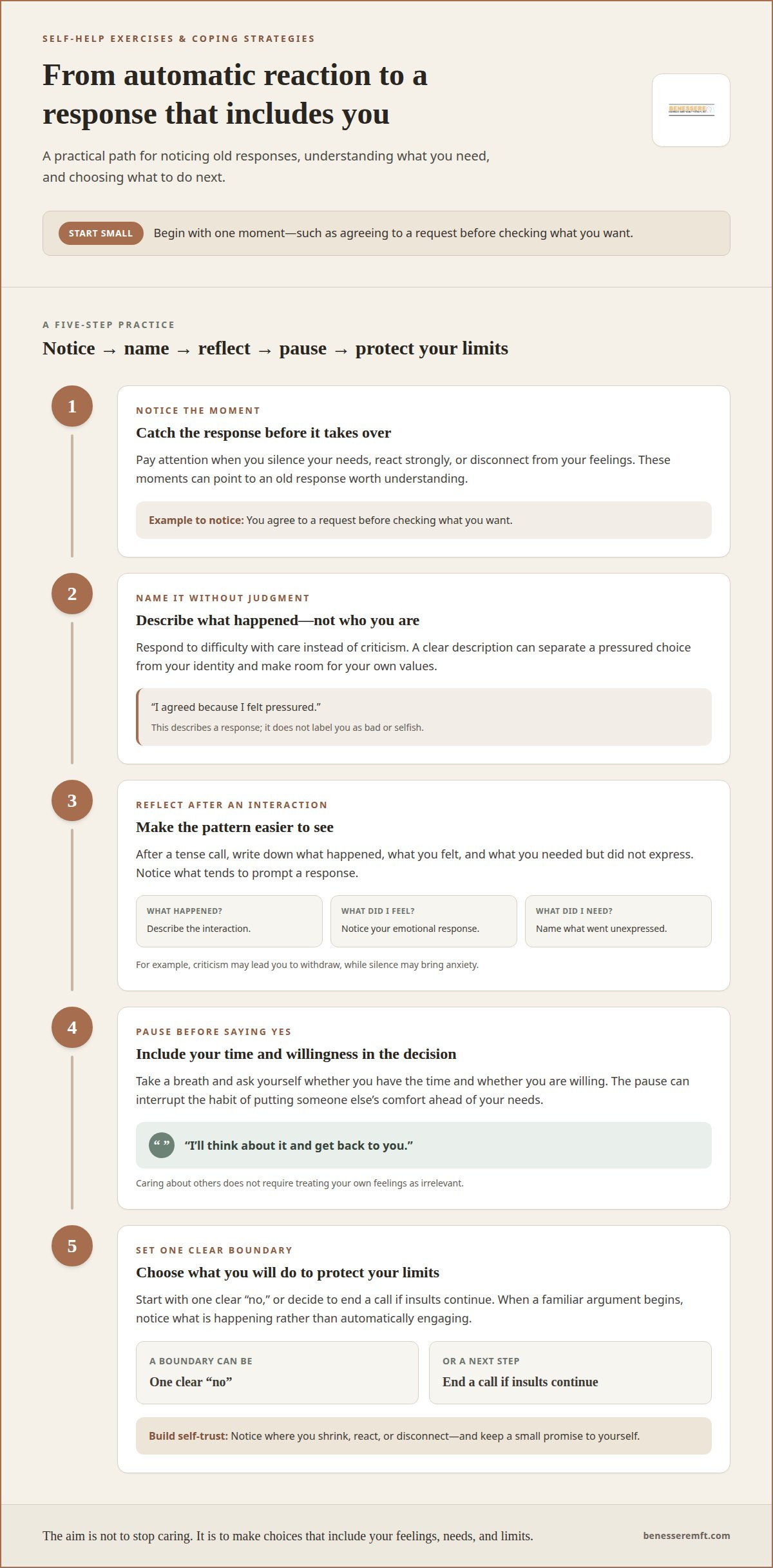
Small practices can help you notice old responses and choose how to act. Start with one moment, such as agreeing to a request before checking what you want.
Self-Compassion and Identity Development
Self-compassion means responding to your own difficulties with care instead of criticism. It matters because harsh self-judgment can make it harder to understand who you are beyond family roles. When you notice a mistake, try naming what happened without labeling yourself as bad or selfish. For example, “I agreed because I felt pressured” describes a response, not your identity. That distinction creates room to develop values and choices that feel like your own.
Self-Understanding and Emotional Growth
Self-understanding grows through observing feelings, behaviors, and the situations that prompt them. After a tense call, note what happened, what you felt, and what you needed but didn’t express. You might notice that criticism leads you to withdraw, while silence brings anxiety. This reflection can help you see patterns and identify a more helpful response. Lindsay Gibson’s work may offer language for family dynamics, but book checklists aren’t validated assessment tools.
People-Pleasing and Self-Abandonment
People-pleasing becomes self-abandonment when keeping someone else comfortable repeatedly overrides your own needs. A practical pause can interrupt the pattern: before saying yes, take a breath and ask whether you have the time and willingness. If you need space, try, “I’ll think about it and get back to you.” The goal isn’t to stop caring about others. It’s to include your feelings in decisions rather than treating them as irrelevant.
Boundaries and Self-Trust
A boundary clarifies what you will do to protect your emotional limits. Begin with one clear “no,” or decide to end a call if insults continue. Notice where you shrink, react, or disconnect; those moments can show where a boundary may help. Then observe rather than engage in a familiar argument. Keeping a small promise to yourself can strengthen self-trust. Individual Psychotherapy can provide space to explore these patterns with support.
Managing family interactions and coercive tactics
Family contact can feel difficult when pressure, guilt, or shifting expectations shape conversations. A clinical focus on specific interaction patterns can help you decide what you want from each exchange and how to respond.
Lindsay Gibson’s framework describes two responses adult children may develop: internalizing and externalizing. Internalizers often silence needs, suppress feelings, and work hard to keep the peace or appear perfect. Externalizers may respond with blame, outbursts, emotional shutdowns, or relationship difficulties. These are patterns, not fixed identities. Recognizing your tendency with compassion can clarify what you need before a conversation becomes overwhelming.
An internalizer may have learned that disagreeing invites conflict, so they agree automatically or overexplain a decision. An externalizer may respond to pressure with anger or withdraw without explaining why. Neither response makes someone a bad person. Notice the sequence: what was said, what you felt, and what you did next. That observation can help you choose a deliberate response instead of repeating a familiar reaction.
Set a clear goal before contact. For example, decide that a phone call is for arranging a family visit, not resolving every past disagreement. Keep the topic narrow, choose an endpoint, and return to your goal if the conversation shifts. If a parent uses guilt or repeatedly challenges your decision, avoid debating your motives and restate the practical boundary. The aim is to manage the interaction, not force emotional understanding.
Therapy can help if you live with or depend financially on your parents. Sessions can focus on coping with current interactions, identifying safer limits within your circumstances, and planning toward greater independence without demanding an abrupt confrontation. Family Therapy may also help when relatives are willing to work on communication together; Individual Therapy can focus on your own choices and needs.
Therapy goals for adult children of emotionally immature parents
Therapy goals focus on what you want to change, not on proving a parent is at fault. For example, you might aim to notice when guilt drives a decision, express a need without apologizing, or grieve a parent’s limitations while preserving the contact that feels right. This shifts attention toward your wellbeing rather than waiting for a parent to change.
Approaches can include Cognitive Behavioral Therapy, psychodynamic therapy, Internal Family Systems, and trauma-focused therapy. Cognitive Behavioral Therapy examines links between thoughts and actions; psychodynamic work explores how earlier relationships influence current responses. Internal Family Systems considers different inner parts, while trauma-focused therapy addresses trauma-related experiences. The approach is chosen around your concerns and goals, not a label alone.
In therapy for adult children of emotionally immature parents, you and your therapist can identify a specific pattern, explore its history, and practice a new response. For instance, if criticism leads you to withdraw, sessions may examine what you believe in that moment and how you want to respond. Psychology offers ways to understand these reactions, while learning to treat them with curiosity can support insight and recovery. Therapy can also make space for grief without scripting estrangement or reconciliation.
Signs of progress may include naming feelings more clearly, pausing before agreeing, or recovering more steadily after a difficult family interaction. There is no fixed timeline; the pace reflects your goals, history, and the work involved. Review progress by returning to the changes you hoped to make and noticing what feels different in daily life.
If trauma-related reactions are part of your goals, explore trauma and PTSD treatment as a supportive path for working through those experiences.
This work can make room for grief about a parent’s limitations without requiring a particular decision about contact. Therapy may help you hold uncertainty rather than treating estrangement or reconciliation as a predetermined outcome, while keeping your attention on what feels right for you.
Benessere Marriage and Family Therapy: Individual Psychotherapy
Benessere Marriage and Family Therapy, Inc offers Individual Therapy for adults who want support understanding family-of-origin patterns and working toward personal goals. Therapy can help you explore how past experiences affect current relationships, strengthen coping skills, and consider what boundaries or family contact feel right for you. You can bring specific concerns, such as feeling overwhelmed after conversations with a parent or struggling to express your needs. Treatment is tailored to your story and needs, using evidence-based approaches and psychoeducation.
When family relationships are part of the concern, Family Therapy or Couples Therapy may also be relevant. Trauma and PTSD Treatment can address trauma-related concerns. To discuss support for your circumstances, contact Benessere Marriage and Family Therapy, Inc or visit benesseremft.com.
Choose a next step that feels possible
You don’t need to resolve every question about your family before beginning therapy. A useful next step is to identify one change you want to work toward, such as expressing a need more clearly or feeling less unsettled after a difficult interaction. That intention can give therapy for adult children of emotionally immature parents a meaningful starting point, while leaving room for your goals to develop over time.
Your history may feel complicated, especially when care and hurt exist together. You can approach that complexity at a pace that respects your readiness, focusing first on what would help you feel more grounded in daily life. Progress can begin with an honest conversation about what you’re carrying and what you hope might change.
If you’re ready to explore support, reach out to start a conversation. Your next step can be small, considered, and centered on the life you want to build.
Frequently Asked Questions
How can adults set boundaries with emotionally immature parents?
Set boundaries by naming what you will participate in and following through consistently. For example, you might say, “I’m keeping my medical information private,” then change the subject if pressed. A boundary describes your response, not a demand that your parent agree. Choose a limit that fits your circumstances, including shared family events or messages, and decide beforehand how you’ll respond if it’s ignored.
What are risks or limitations of confronting an emotionally immature parent?
Confrontation may lead to denial, blame, or an argument that leaves your concerns unheard. It can also intensify stress, particularly if you rely on the parent for housing or financial support. Before raising a painful issue, consider what you hope to achieve and whether a direct conversation is likely to serve that goal. You can process the impact privately or with therapeutic support without confronting them.



Comments