
Therapy for Highly Sensitive People in Roseville

High sensitivity isn’t a flaw to overcome. A Roseville therapist for highly sensitive people (HSP) can help you understand how this trait affects daily life and develop ways to manage overstimulation, emotional overwhelm, anxiety, overthinking, and anticipatory worry. The goal isn’t to erase your sensitivity, but to help you respond with greater clarity and self-compassion.
If noise, strong emotions, or thoughts about what might go wrong leave you depleted, that experience is real, not a personal failing. It can be hard to tell where sensitivity ends and distress begins, especially after years of trying to adapt without support.
Learn what high sensitivity means, how it can shape emotional and sensory experiences, and how therapy may help you understand your patterns, build practical coping strategies, and feel more grounded in everyday life.
Table of Contents
Managing overstimulation and emotional overwhelm
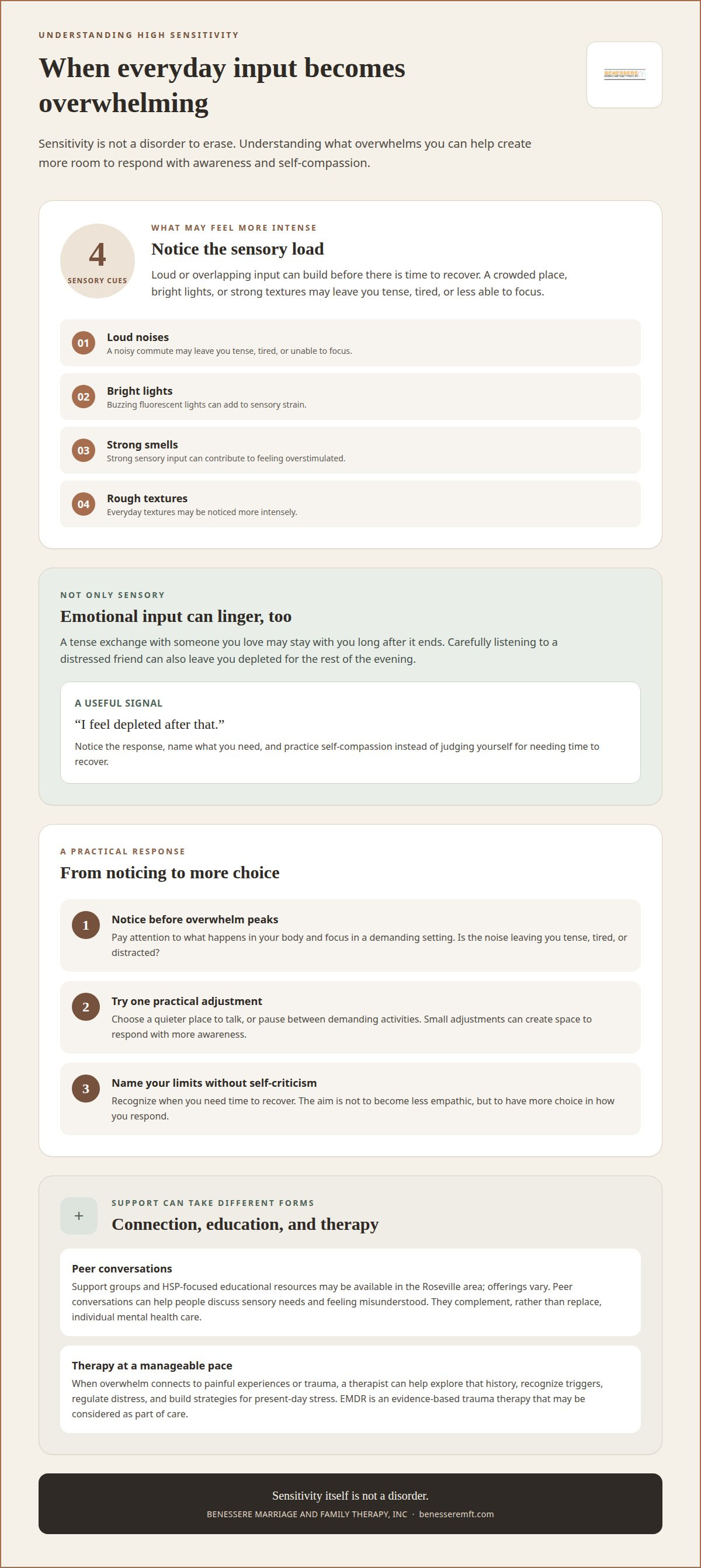
Highly sensitive people may notice loud noises, bright lights, strong smells, and rough textures more intensely. A crowded store, buzzing fluorescent lights, or overlapping conversations can become overstimulating before there’s time to recover. Emotional input matters, too: a tense exchange with a loved one may linger long after it ends. These HSP traits can affect stress, relationships, and mental health, but sensitivity itself is not a disorder.
Start by noticing what happens before overwhelm peaks. For example, does a noisy commute leave you tense, tired, or unable to focus? Consider one practical adjustment, such as choosing a quieter place to talk or pausing between demanding activities. These steps won’t remove sensitivity, but they can create space to respond with more awareness and less self-criticism.
Empathy can deepen connection, but absorbing another person’s distress may make it harder to recognize your limits. You might listen carefully to a friend and then feel depleted for the rest of the evening. Emotional resilience can grow by noticing that response, naming your needs, and practicing self-compassion instead of judging yourself for needing time to recover.
Support groups and HSP-focused educational resources may be available in the Roseville area, though offerings vary. Peer conversations can help people discuss sensory needs and feeling misunderstood; they complement, rather than replace, individual mental health care.
When emotional overwhelm connects to painful experiences or trauma, a therapist can help you explore that history at a manageable pace. Eye Movement Desensitization and Reprocessing (EMDR) is an evidence-based trauma therapy that may be considered as part of care. Trauma and PTSD treatment can address the effects of painful experiences while building strategies for present-day stress. Therapy may involve recognizing triggers, regulating distress, and approaching difficult memories with support. The aim is not to become less empathic, but to have more choice in how you respond.
Why Do Highly Sensitive People (HSPs) & Empaths Seek Therapy?
Some highly sensitive people seek therapy because everyday interactions can feel deeply affecting. A brief criticism at work, a tense family dinner, or a partner’s silence may occupy their thoughts long after the moment passes. In demanding environments, you may stay alert to subtle shifts in tone. Perfectionism can add pressure, making one small mistake feel like proof of failure rather than a normal part of learning.
Feeling misunderstood can make boundaries difficult. You might agree to a social plan despite feeling drained, then struggle to explain why you need quiet afterward. Try noticing the situation, naming your limit, and communicating it clearly: “I can talk after I’ve had time to decompress.” Assertiveness doesn’t require withdrawing empathy; it can protect your energy while preserving connection.
You can verify a therapist’s California license by matching their name and license type through the state’s official licensing lookup. License status and appointment availability are separate. When seeking HSP-focused support in Roseville, consider whether the therapist’s approach addresses your concerns, such as sensitivity, emotional regulation, or relationship patterns. A good fit is reflected in how therapy explores your specific struggles, not just in a label.
Insurance acceptance and coverage depend on the therapist and the details of your plan. Review the practice’s billing information alongside your plan’s mental health benefits, including network status and applicable cost sharing, before choosing care.
In-person, online, and hybrid sessions each have different sensory considerations. A quiet office may feel supportive for one person, while a private online session may reduce travel-related stress. The available format depends on each practice’s arrangements, so consider which setting best supports privacy and focus.
When sensitivity contributes to recurring conflict, therapy can help people express needs and listen without escalating tension. Couples therapy may support partners working through communication and boundaries; family therapy can address patterns affecting the wider household. These approaches focus on shared interactions while respecting each person’s experience.
Anxiety, overthinking, and anticipatory worry
A sensitive person may think carefully before acting, then keep reviewing each possible outcome. Before a work meeting, you might rehearse answers, imagine criticism, and worry about a question nobody has asked. This preparation can feel protective, but repeatedly predicting problems may intensify anxiety and make ordinary decisions exhausting. Start by separating what you know from what you fear: write down the immediate concern, then identify one action you can take now.
Sensory strain can make stress harder to manage. After a loud commute or demanding day, you may have less energy for uncertainty, conversation, or problem-solving. Burnout can involve persistent exhaustion and reduced capacity, but it should not be assumed to result from sensitivity alone. Autism and high sensitivity are not interchangeable labels. If you want clarity, discuss your sensory experiences, daily functioning, and personal history with a qualified mental health professional.
Conflict and criticism may trigger intense self-questioning. After a colleague says, “We need to talk,” you might interpret it as proof of failure before learning the context. Pause, name the thought, and ask what evidence supports it. This creates room to respond rather than react. Anxiety and depression can affect concentration, sleep, motivation, or mood, so persistent changes deserve careful assessment rather than self-diagnosis.
When worry is connected to trauma, healing may involve understanding how past experiences shape present expectations. Therapy can help you explore triggers, practice grounding, and develop more balanced ways to evaluate feared outcomes. For example, a therapist might help you prepare for a difficult conversation by clarifying its purpose and rehearsing a direct, realistic response. The aim isn’t to stop thoughtful reflection, but to keep it from taking over your choices, relationships, and rest.
Therapy for highly sensitive people
Therapy for a highly sensitive person should address their challenges, not treat sensitivity as a defect. High sensitivity is a personality trait, not a mental health diagnosis. Sessions can explore how heightened responses affect work, relationships, rest, and decision-making. You might identify which situations leave you mentally depleted and consider changes that could make them more manageable. The goal is practical support that respects your individual experience.
A useful starting point is a shared understanding of your goals. You might want to prepare for difficult conversations, reduce anxiety around change, or recognize early signs of overload. Therapy can then draw on evidence-based approaches tailored to your experiences. Somatic approaches can help you notice physical cues, such as muscle tension or shallow breathing, and practice responding with greater awareness.
A Roseville therapist for highly sensitive people (HSP) can help you explore how sensory processing sensitivity or emotional sensitivity affects daily life. A helpful fit is someone who listens to your specific concerns, whether they involve lingering emotional responses, difficulty recovering after demanding days, or feeling unsettled by change. High sensitivity itself doesn’t establish a diagnosis, but therapy can address related mental health concerns and practical needs.
You and your therapist can review progress through changes in ordinary situations. Perhaps you recover more easily after a challenging meeting or express a limit with less self-criticism. These observations can help you assess whether therapy supports your goals. Choosing a Roseville therapist for highly sensitive people (HSP) also means finding someone you can talk with about pacing and adjustments if an approach feels overwhelming.
Support should respect both your sensitivity and your capacity for growth. If you’re ready to explore how therapy could address your personal challenges, take the next step toward therapy.
Benessere Marriage and Family Therapy, Inc: Family Therapy
Benessere Marriage and Family Therapy, Inc can help when sensitivity affects communication or connection at home. In family therapy, members can explore how different sensory needs, emotional responses, and communication styles shape shared experiences. The work can support clearer conversations and greater understanding of each person’s perspective.
If your concerns are more personal, individual psychotherapy offers space to address anxiety, overwhelm, or related mental health challenges. Couples therapy can help partners work through recurring misunderstandings, while trauma and PTSD treatment can address the effects of painful experiences. Care is collaborative, with an approach shaped around your needs.
Contact Benessere Marriage and Family Therapy, Inc to discuss a next step toward support in Roseville.
Make room for a more sustainable way forward
Your sensitivity is part of how you experience the world, but it doesn’t have to dictate every choice. Working with a Roseville therapist for highly sensitive people (HSP) can help you consider what support feels useful, identify changes you want to make, and approach them at a pace that respects your needs. Start by naming one situation that has felt difficult lately and what you hope could feel different.
Therapy is a collaborative space to explore your priorities and build a path that reflects your experiences. You don’t need to have everything resolved before starting a conversation. A first step can simply be sharing what has been weighing on you and deciding what kind of support you’re seeking.
Contact Benessere Marriage and Family Therapy, Inc to discuss a next step. Moving toward support can begin with a thoughtful conversation, and your experiences deserve to be met with care.
Frequently Asked Questions
What does it really mean to be a highly sensitive person?
The term describes a person who tends to process sensory and emotional information deeply. Elaine Aron coined the phrase “Highly Sensitive Person,” and the trait is also called sensory processing sensitivity. It isn’t a diagnosis or a complete description of someone’s personality. Two people may both identify as highly sensitive yet respond differently to busy settings, feedback, or change.
Who benefits from HSP therapy?
Therapy may help when sensitivity makes everyday responsibilities or relationships harder to manage. You might benefit if you frequently replay conversations, feel depleted after routine demands, or find it difficult to express your needs at work or home. You don’t need to prove that you’re highly sensitive before seeking support. Therapy can focus on a specific concern, such as stress, anxiety, or communication.
Why choose Benessere Marriage and Family Therapy, Inc for HSP support?
Benessere Marriage and Family Therapy, Inc provides psychotherapy tailored to each person’s story and needs. Its approach includes evidence-based treatment and psychoeducation to help you understand a concern and develop relevant skills. Sessions might explore how anxiety affects a work decision or how family conflict shapes your emotional well-being. Care is collaborative and shaped around the difficulties you want to address.
Will I have to change my sensitivity to thrive?
No. Therapy doesn’t require you to become less sensitive. Instead, it can help you choose how to respond when sensitivity affects a decision or interaction. You might learn to pause before agreeing to a commitment, then consider whether it aligns with your priorities. The aim is to build flexibility and self-understanding while honoring qualities that matter to you.
What are the credentials and therapeutic approaches of HSP therapists in Roseville?
Benessere Marriage and Family Therapy, Inc’s therapists are trained and mentored in evidence-based approaches. Methods used across the practice include Cognitive Behavioral Therapy, Dialectical Behavioral Therapy, Internal Family Systems, and Eye Movement Desensitization and Reprocessing (EMDR). These approaches address different concerns, so treatment is tailored to each person’s needs. EMDR is an evidence-based approach to trauma therapy.
How can I tell whether a Roseville therapist is a good fit for a highly sensitive person?
A good fit is someone who listens closely, takes your concerns seriously, and works with you collaboratively. Notice whether you can explain a sensory or emotional concern without feeling judged, and whether the therapist connects it to your goals. You should also feel able to ask questions, say when an approach doesn’t feel right, and discuss adjustments together.



Comments