
How to Start Overcoming Fear of Intimacy with Therapy in Roseville

Around 17% of people are estimated to experience fear of intimacy. It can make emotional or physical closeness feel difficult, even when connection matters to you; overcoming fear of intimacy therapy in Roseville can help you understand what may be driving that response and begin working with it. Childhood experiences can shape how safe it feels to trust, depend on someone, or share vulnerable feelings.
If closeness brings tension, withdrawal, or uncertainty, that response deserves understanding, not judgment. This article explains how early experiences and attachment patterns may shape intimacy, how fear can affect relationships, and how small steps toward openness can support change. You’ll also learn how individual or couples therapy in Roseville can offer a respectful space to explore these concerns while honoring your boundaries and pace.
Table of Contents
Childhood experiences and attachment theory
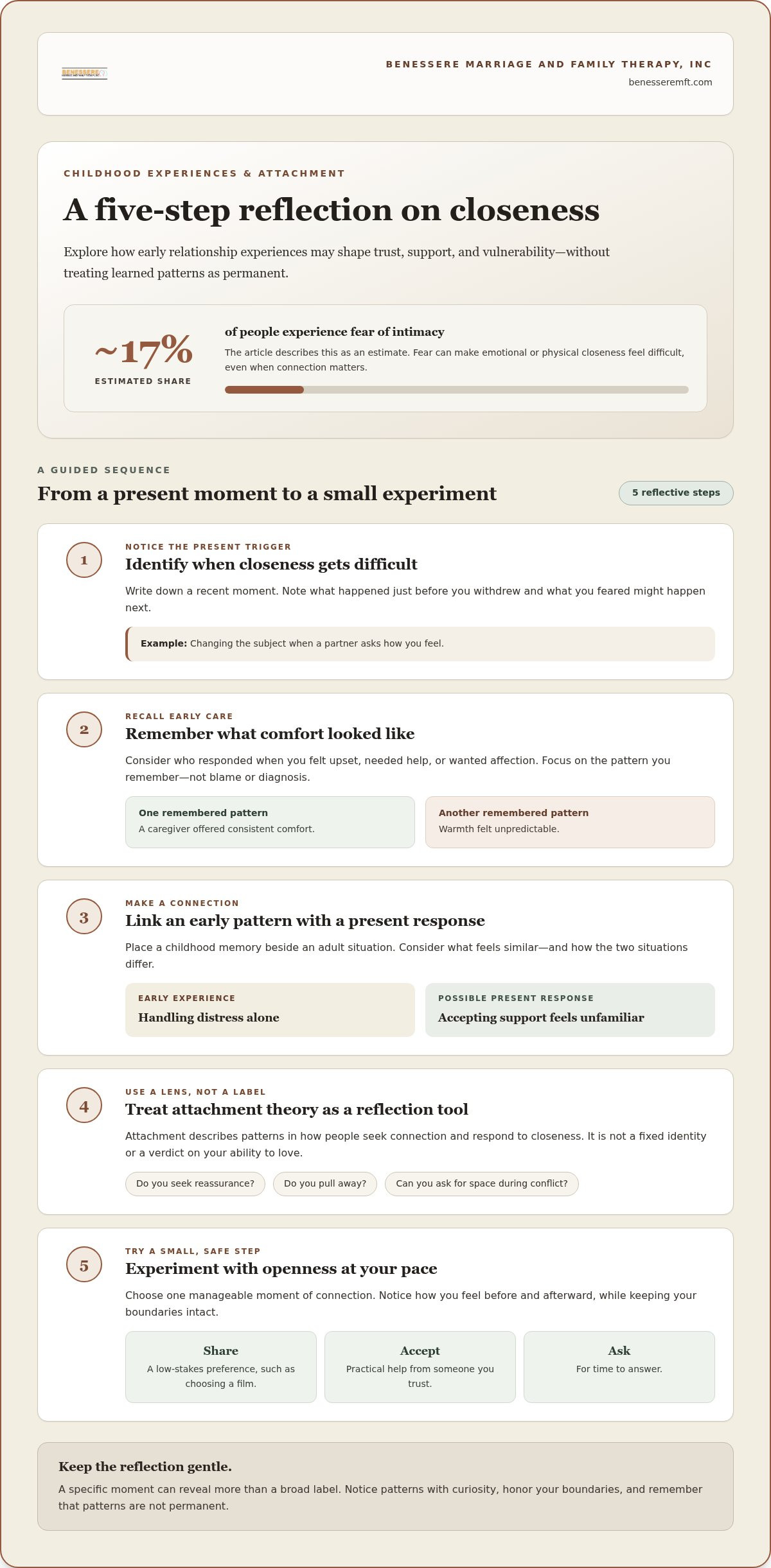
Around 17% of people are estimated to experience fear of intimacy. Reflecting on early relationships can help you notice patterns without treating them as permanent.
Identify the situations that make closeness difficult. Write down a recent example, such as changing the subject when a partner asks how you feel. Note what happened just before you withdrew and what you feared might happen next. A specific moment can reveal more than a broad label like “bad at relationships.”
Recall what care and comfort looked like in childhood. Consider who responded when you felt upset, needed help, or wanted affection. For example, a caregiver may have offered consistent comfort, or warmth may have felt unpredictable. Focus on the pattern you remember, rather than assigning blame or diagnosing anyone.
Connect an early pattern with a present response. If you learned to handle distress alone, accepting support now may feel unfamiliar. If closeness once came with criticism, sharing a personal concern might bring tension. Write the childhood memory beside the adult situation, then note how the two differ.
Use attachment theory as a reflection tool. Attachment describes patterns in how people seek connection and respond to closeness. It isn’t a fixed identity or a verdict on your ability to love. For instance, notice whether you seek reassurance, pull away, or feel comfortable asking for space during conflict.
Choose one small experiment in safe connection. Share a low-stakes preference, such as choosing a film, and notice how you feel before and afterward. You might also accept practical help or tell someone you need time to answer. These small steps let you explore vulnerability gradually while keeping your boundaries intact.
Effects on emotional, physical, and sexual intimacy
Fear can affect many kinds of closeness, not only sexual contact. Someone may avoid personal conversations, tense up during affection, or struggle to express desire.
Notice how emotional closeness changes your conversations. Track moments when you withhold an opinion or change the subject. For instance, you might say “I’m fine” after a difficult day, even though you want support. Naming the moment can help you see how avoidance affects communication.
Observe your responses to physical affection. Notice whether a hug, hand-holding, or sitting close feels welcome or uncomfortable, or depends on the situation. These observations can help you distinguish your preferences from fear-driven withdrawal while keeping your boundaries clear.
Talk about sexual intimacy without assigning blame. Intimacy concerns can involve reduced sexual desire, communication difficulties, or less harmony in a couple’s sexual relationship. Describe your experience with a specific example, such as feeling pressured when affection seems expected to lead to sex.
Compare Roseville therapists by their approach to intimacy concerns. Look for profiles that discuss relationships, trauma, or attachment, and consider whether the approach respects your boundaries. In an initial conversation, describe one concern and notice whether you feel heard rather than judged.
Understand the usual steps in therapy. You identify goals, explore triggers and relationship patterns, then practice different responses. For example, you might rehearse naming discomfort or asking for reassurance. The pace and focus depend on your concerns and what feels manageable.
Search for relevant experience and consider practical fit. Look for Roseville therapist profiles that explicitly mention intimacy or relationship concerns. Insurance acceptance varies by clinician and plan, while coverage depends on your benefits and how care is billed. Online therapy is another format to explore; privacy and comfort matter.
Seek professional support when fear disrupts daily life or relationships. Repeated withdrawal, conflict, or distress around closeness can be a reason to discuss the pattern with a mental health professional. There’s no fixed therapy duration; goals, history, and progress shape the work. For ongoing couple conflict, explore support for relationship concerns.
Relationship counseling
Choose the setting that addresses your main concern. Couples therapy can help partners discuss how fear affects communication and closeness. Individual therapy offers space to explore personal reactions privately. Either format can focus on relationship patterns without treating one partner as the problem. For couples seeking therapy in Roseville to overcome fear of intimacy, the choice may depend on whether they want to work together or individually.
Ask how sessions will make room for both perspectives. A psychodynamic approach can give couples a supportive setting to express themselves and explore patterns. For example, partners might examine what happens when one seeks reassurance and the other withdraws. The goal is clearer understanding, not assigning blame.
Begin with one manageable moment of vulnerability. Share a feeling about an everyday situation, such as feeling overlooked when plans change. The Couples Center recommends small steps like this. A specific, low-pressure conversation can feel more approachable than trying to disclose everything at once.
Practice listening before responding. One partner can describe an experience while the other reflects what they heard. For example, “You felt alone when I changed the subject.” Then switch roles. This exercise can help each person notice whether they understood the meaning, not just the words.
Build the relationship qualities you want to experience. Trust, mindfulness, mutual respect, and communication contribute to a satisfying relationship. Choose one quality to practice during a disagreement. A brief pause before replying, for instance, can make room for a more considered response.
Bring recurring fear or past trauma into professional support. The Couples Center recommends seeking professional help for fear of intimacy, particularly when it connects with past experiences or trauma. Describe the situations that trigger distress, such as avoiding difficult conversations or feeling unsafe with closeness. Therapy in Roseville can support people seeking help with overcoming fear of intimacy in a respectful, collaborative setting.
Agree on a small practice between conversations. Choose one action together, such as sharing a daily feeling or asking directly for reassurance. Keep it specific and respect each partner’s limits. At your next discussion, notice what felt easier, what felt difficult, and what each person needs.
Supporting a partner while respecting boundaries
Support is most useful when it makes room for choice rather than pressure. These steps can help protect trust while strengthening everyday connection.
Respect Your Partner’s Boundaries
Ask your partner what feels comfortable before starting a vulnerable conversation or initiating physical affection. Respect their boundaries and let them open up when they’re ready. If they decline, accept the answer without asking repeatedly or treating it as rejection. You could say, “Would you rather talk now or another time?” That offers choice without demanding disclosure. Notice whether your partner welcomes a check-in, prefers space, or asks you to stop. Follow what they say, and don’t assume a boundary has changed just because you’ve discussed it before. A calm, consistent response makes respect visible in everyday moments.
Build Emotional Intimacy Between Sessions
Choose a brief, low-pressure moment to connect, such as sharing what felt meaningful about the day. Ask, “Would you like me to listen, or help think through it?” Then give your partner time to answer without filling the silence. This offers a practical way to show interest while respecting their pace. You can also share one feeling about an everyday event, then invite your partner to share only if they wish. Keep the exchange focused on understanding, not fixing or persuading. If either of you feels overwhelmed, pause and agree on when to return to the conversation. Between therapy sessions, these small, willing exchanges can help build emotional intimacy. At your next session, mention what felt connecting and what felt difficult; those details can help guide your work.
If you’d like support translating these practices into your relationship, explore relationship support as a next step. Bring a specific example, such as a boundary conversation that became tense, so you can discuss what each partner needs and how to approach it with care.
When deciding how to respond, keep the invitation open and let your partner set the pace. A gentle offer to talk can remain available without becoming a demand. If they are not ready, leave room for them to choose whether and when to return to it.
Benessere Marriage and Family Therapy, Inc: Individual Psychotherapy
Benessere Marriage and Family Therapy, Inc provides Individual Therapy for people who want to understand fears of intimacy and their effects on relationships. If past experiences, trauma, or patterns of withdrawal make closeness difficult, therapy offers space to explore your concerns and identify manageable steps. The practice uses evidence-based treatment and psychoeducation, tailoring interventions to each person’s story and needs.
Individual therapy may suit you when you want to focus on your own feelings, boundaries, and responses before involving a partner. Couples Therapy can support partners who want to work together on communication and connection. If trauma or PTSD is part of your experience, Trauma and PTSD Treatment may also be relevant. The next step can be a conversation about which concern you’d like support with. Visit benesseremft.com to learn more or contact Benessere Marriage and Family Therapy, Inc.
Take a Gentle Step Toward Greater Connection
Change can begin by noticing one moment when you want connection but feel yourself pulling away. Rather than demanding immediate openness, consider what would help you feel safe enough to stay present: more time, clearer boundaries, or a direct conversation about what you need. That reflection can be a useful starting point for overcoming fear of intimacy through therapy in Roseville.
Support can help you explore these reactions at a pace that respects your experiences and relationships. Benessere Marriage and Family Therapy, Inc offers Individual Therapy, Couples Therapy, and Family Therapy, providing options for personal exploration or shared relationship work. You don’t need to have every concern neatly explained before taking a first step. A simple description of what feels difficult can begin the conversation.
Contact Benessere Marriage and Family Therapy, Inc to discuss support for your next step. You can move toward closeness with care, one considered choice at a time.
Frequently Asked Questions
Fear of Intimacy: What Is It?
Fear of intimacy is persistent unease with emotional closeness, vulnerability, or depending on another person. It can arise even when someone wants a relationship, such as feeling compelled to end things as commitment deepens or deflecting personal questions with humor. It isn’t the same as preferring privacy or moving slowly. The key distinction is whether fear repeatedly limits the connection you want.
What Causes Fear of Intimacy and What Are Common Signs?
Fear of intimacy can be associated with painful relationship experiences, trauma, or expectations that closeness will lead to rejection or loss of control. Signs may include keeping relationships superficial, feeling uneasy when someone offers care, or finding reasons to withdraw as trust grows. For example, someone might cancel plans after a meaningful conversation. Noticing when the pattern appears can clarify what support may help.



Comments