
Beyond Burnout: Managing Chronic Stress Through Specialized Therapy

What if the exhaustion you feel isn't just a lack of sleep, but a biological debt your body is no longer able to pay? Many high-achievers experience a persistent fatigue that rest cannot touch, often feeling "wired but tired" while their irritability begins to strain the very family relationships they work so hard to protect. It's a heavy burden to carry, yet it is a predictable physiological response to prolonged pressure. When you reach this point, managing chronic stress therapy becomes more than a recommendation for self-care; it is a necessary clinical path toward restoring your nervous system.
You likely already know that your current pace isn't sustainable, and you're looking for a way to reclaim the agency you've lost to constant overwhelm. This article provides a restorative look at how specialized therapeutic modalities address the biological roots of your stress rather than just the symptoms. We will explore the science of the stress response and how working with a Roseville therapist can help you move beyond simple survival. By understanding the mechanics of your experience, you can begin a methodical journey toward lasting resilience and emotional clarity.
Table of Contents
Defining the Biological Debt: What Is Chronic Stress?
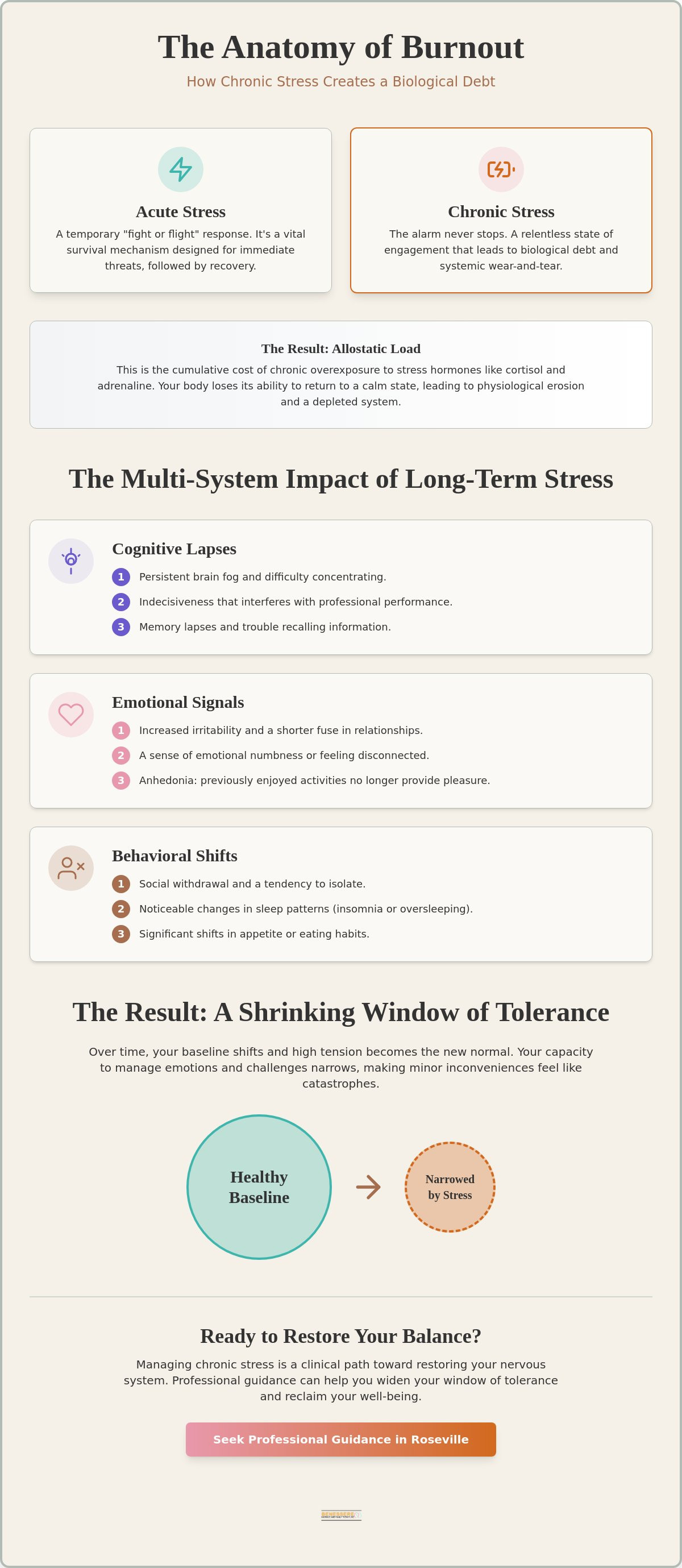
Stress is often misunderstood as a series of unfortunate events, but in a clinical context, it's more accurately described as a physiological environment. While acute stress serves as a vital survival mechanism, helping us respond to immediate threats, chronic stress represents a biological debt that the body cannot easily repay. When the pressure doesn't let up, the systems meant to protect you begin to create a wear-and-tear effect on your internal landscape. Understanding What is Chronic Stress? requires looking past your calendar and into your nervous system.
Your body is designed to handle "fight or flight" as a temporary state. Once a threat passes, the parasympathetic nervous system should ideally take over, initiating a "rest and digest" phase. However, many people find themselves in a loop where the alarm never stops ringing. This persistent state is distinct from clinical anxiety, which often involves a fear of future events, or depression, which may manifest as a withdrawal from life. Chronic stress is a relentless engagement with the present that leaves no room for recovery. For many, managing chronic stress therapy is the only way to signal to the brain that the danger has finally passed.
The Mechanism of Allostatic Load
The concept of allostatic load provides a scientific framework for why you feel so depleted. Allostatic load is the cumulative cost of chronic overexposure to neural or neuroendocrine responses. When your body is constantly flooded with cortisol and adrenaline, it loses its ability to return to a calm state. You cannot simply "will" your way out of this dysregulation. Willpower is a cognitive function, but a stuck nervous system operates at a much deeper, primal level. Clinical intervention is often necessary to recalibrate these involuntary responses and stop the physiological erosion before it leads to systemic health issues.
Identifying Your Personal Stress Baseline
Over time, high-stress individuals often lose sight of what it feels like to be truly relaxed. Your "baseline" shifts, and a state of high tension becomes your new normal. This often leads to a shrinking "window of tolerance," a psychological term for the space where you can effectively manage your emotions and challenges. When this window narrows, even minor inconveniences feel like catastrophes. Professional mental health guidance is essential for identifying these baseline shifts. By engaging in managing chronic stress therapy, you can map out your current state with precision and begin the methodical work of widening your window of tolerance once again. This process isn't about avoiding stress entirely, but about restoring your capacity to move through it without becoming trapped.
Recognizing the Multi-System Impact of Long-Term Stress
When stress becomes chronic, it stops being a localized mental state and begins to permeate every physiological system. This biological debt manifests in ways that often feel disconnected from their source. You might struggle with persistent tension headaches or sudden digestive disruptions without realizing they are the body’s way of signaling that its resources are depleted. Recognizing these symptoms is the first step, but managing chronic stress therapy provides the clinical structure needed to reverse their effects on your daily life.
The impact of long-term pressure is rarely confined to a single area of health. It typically presents as a cluster of multi-system symptoms that can include:
Cognitive lapses: Persistent brain fog, indecisiveness, and memory lapses that interfere with professional performance.
Emotional signals: Increased irritability, a sense of emotional numbness, or anhedonia, where previously enjoyed activities no longer provide pleasure.
Behavioral shifts: A natural tendency toward social withdrawal and noticeable changes in sleep patterns or appetite.
These shifts are not signs of personal failure. They are the body’s attempt to conserve energy in the face of a perceived constant threat. When the brain stays in survival mode, the prefrontal cortex is bypassed, making complex decision-making and emotional regulation much more difficult.
The Connection Between Stress and Physical Health
Chronic cortisol elevation creates a cascade of physical effects that can weaken the immune system and strain cardiovascular health over time. This isn't a one-way street; physical pain often exacerbates mental distress, creating a feedback loop that feels impossible to break on your own. Engaging in individual psychotherapy Roseville allows patients to address these dual impacts in a safe, clinical environment. By treating the mind and body as an integrated system, we can begin to untangle the knots of long-term tension and restore your physical vitality.
Impact on Relationships and Family Dynamics
The burden of chronic stress rarely stays contained within the individual. It often leaks into the home environment, manifesting as sudden irritability or emotional withdrawal that confuses partners and children. What begins as a personal struggle with managing chronic stress therapy needs can quickly evolve into a pattern of family conflict. When we view stress through a systemic lens, we see that restoring the individual often requires looking at the broader family dynamics. Research into Integrative Treatments for Stress suggests that combining clinical therapy with holistic awareness provides the most sustainable path to relational harmony. If you notice these patterns taking hold, reaching out for professional therapeutic support can be the first step in reclaiming your well-being and protecting your most important relationships.
Clinical Approaches: Comparing Therapy Modalities for Stress Management
While lifestyle adjustments provide temporary relief, clinical intervention offers a structured framework to dismantle the deep-seated patterns of chronic tension. Practitioners specializing in managing chronic stress therapy utilize specific, evidence-based modalities to address both the cognitive and biological aspects of the stress response. These approaches aren't merely coping mechanisms; they are restorative tools designed to help you reclaim your sense of agency and emotional stability. By understanding the differences between these modalities, you can better appreciate how a tailored treatment plan supports long-term healing.
The integration of psychoeducation is a fundamental component of this process. When you understand the biological mechanics of how your brain processes pressure, the symptoms of stress become less frightening and more manageable. This collaborative approach empowers you with the knowledge to identify triggers before they escalate into a full-scale physiological debt.
CBT and Anxiety Management
Cognitive Behavioral Therapy (CBT) focuses on the intricate relationship between your thoughts, feelings, and behaviors. When stress becomes a persistent state, it often fuels a cycle of "catastrophizing," where every minor challenge feels like an impending disaster. By utilizing specific anxiety management techniques within a CBT framework, you can learn to replace these distorted thought patterns with evidence-based reality testing. This process isn't about forced positivity; it's about developing a toolkit of skills for immediate relief and long-term cognitive resilience. You learn to challenge the validity of stress-inducing thoughts and develop more adaptive ways of responding to external pressures.
Narrative Therapy: Rewriting the Stress Story
Another powerful modality is narrative therapy, which helps you externalize the stress rather than internalizing it as a personal flaw. Instead of viewing yourself as "a stressed person," you begin to see stress as an external force that has moved into your life. This distancing allows you to identify "unique outcomes"—specific moments where you successfully resisted the demands of stress—and begin reclaiming your unique story. By rewriting the narrative of your life, you move from a position of victimhood to one of active participation, ensuring that the overwhelming demands of life no longer define your identity.
For many individuals, the stress response is deeply rooted in past experiences that have sensitized the nervous system. Trauma-informed care addresses the underlying "why" behind your specific reactions, ensuring that the therapeutic process remains safe and supportive. Research into evidence-based stress management techniques confirms that addressing these biological and psychological roots is essential for sustainable recovery. This multi-faceted approach ensures that you aren't just managing symptoms but are building a foundation for a more resilient future.
Developing a Restorative Practice: Beyond Surface-Level Coping
Many people view self-care as an occasional indulgence, such as a spa day or a brief walk. While these activities offer temporary relief, they don't address the underlying dysregulation of a stressed system. A truly restorative practice involves a shift toward long-term healing through structured clinical intervention. In the context of managing chronic stress therapy, this means moving beyond surface-level coping and building a sustainable framework for mental wellness. Developing these skills through managing chronic stress therapy ensures that you're not just reacting to triggers but proactively shielding your well-being.
One of the most critical components of this framework is the establishment of boundaries. In a high-pressure environment, boundaries are often treated as a luxury, but from a clinical perspective, they are a survival necessity. They serve as the protective barrier that allows your nervous system to down-regulate. This prevents the constant influx of external demands from overtaxing your internal resources and creates the space needed for your biological systems to recover from the toll of chronic pressure.
Building Emotional Regulation Skills
Emotional regulation is the ability to monitor and manage your internal state effectively. When the stress response is triggered, grounding techniques, such as sensory awareness or controlled breathing, can help anchor you in the present moment. It's also vital to learn how to "listen" to your body’s early warning signals, such as jaw tension or shallow breathing, before they escalate into a full crisis. Practicing these skills within the safety of clinical psychotherapy provides a controlled environment to experiment with what works best for your unique physiology. It's a methodical way to reclaim control.
Psychoeducation: Understanding Your Brain
Understanding the mechanics of your brain is a powerful tool for de-escalating the stress response. When you learn how the amygdala, the brain's alarm system, can override the prefrontal cortex, which is the center for logic and decision-making, it reduces the self-blame often associated with feeling "out of control." It's helpful to remember that psychoeducation is a core pillar of mental health counseling Roseville CA, providing you with the biological literacy needed to navigate your emotions with compassion. This knowledge acts as a stabilizer during times of high tension.
By implementing mindfulness-based stress reduction within a therapeutic context, you can bridge the gap between knowing what to do and actually doing it. This integration of knowledge and practice is what prevents future burnout. If you're ready to move toward a more sustainable way of living, consider exploring how individual therapy sessions can help you build these essential restorative skills.
Professional Mental Health Guidance in Roseville: Your Path to Resilience
Recognizing when self-management has reached its limit is a sign of high emotional intelligence, not a failure of will. Many residents in the Roseville area lead high-performance lifestyles where the pressure to succeed can mask the early warning signs of a system in distress. When the fatigue no longer responds to rest and your irritability begins to create a distance between you and your loved ones, it's time to consider a more structured clinical approach. Unlike generic stress management tips found online, managing chronic stress therapy at a specialized clinic provides a targeted intervention that respects your unique biological history and current circumstances.
Seeking a therapist who understands the specific cultural and professional landscape of Roseville and the broader Placer County area offers a distinct advantage. Local practitioners are familiar with the common stressors prevalent in our community, from the demands of the tech and healthcare sectors to the complexities of modern family life in our growing suburbs. This local context allows for a more nuanced therapeutic alliance, where your experiences are validated within the framework of your actual daily environment. At Benessere Marriage and Family Therapy, Inc, we prioritize this collaborative process, ensuring that your path to recovery is both scientifically grounded and deeply personal.
Navigating Therapy Options in Placer County
Choosing the right path toward recovery involves identifying whether your stress is primarily internal or if it has begun to impact your domestic life. A trauma-informed perspective is essential here, as it helps distinguish between temporary situational pressure and a deeply rooted physiological response. At Benessere Marriage and Family Therapy, Inc, we offer various modalities to suit these needs:
Individual Psychotherapy: For deep, focused work on nervous system regulation and personal resilience.
Couples Therapy: To address the relational strain and communication breakdowns caused by chronic pressure.
Family Therapy: For restoring balance when stress has permeated the entire household dynamic.
It is also vital to recognize that depression counseling Roseville is often intertwined with stress recovery. When a system remains in a state of high alert for too long, it can eventually move into a depressive state as a form of biological preservation. Addressing these overlapping conditions requires a sophisticated understanding of the mind-body connection.
Taking the First Step Toward Restoration
There is often a lingering stigma around seeking help for "just stress," yet the physiological reality of chronic tension is as significant as any physical ailment. Your first session is designed to be a collaborative and unhurried process. We focus on identifying your specific baseline and establishing a clear, methodical path toward restoration. This isn't a lecture; it's a partnership where your story is handled with scientific precision and human warmth. Growth is always possible, and with the right clinical support, you can move beyond survival and back into a life of agency and purpose.
Reclaiming Your Agency and Vitality
Chronic stress is far more than a mental state; it is a profound physiological condition that requires a methodical approach to resolve. We have explored how the accumulation of biological debt impacts every system in the body, from cognitive clarity to relational stability. Moving toward health requires a shift from temporary coping to the establishment of long-term restorative practices. By engaging in managing chronic stress therapy, you can utilize evidence-based clinical skillsets to recalibrate a nervous system that has been trapped in survival mode for too long.
Our team at Benessere Marriage and Family Therapy, Inc is specialized in trauma-informed and restorative care, serving the Roseville and Placer County community with a blend of scientific precision and deep-seated empathy. We understand the specific pressures of your environment and offer a safe, clinical space to rebuild your resilience. If you are ready to move beyond the cycle of exhaustion, contact Benessere Marriage and Family Therapy, Inc today to schedule a session with a compassionate expert. You don't have to navigate this path alone. A future characterized by emotional clarity and physical well-being is not just a possibility; it is a goal we can achieve together through a collaborative therapeutic process.
Frequently Asked Questions
How do I know if my stress has become chronic?
Stress is considered chronic when it persists for several weeks or months and begins to feel like a permanent state of being rather than a temporary reaction to a specific event. You might notice that even after a major deadline passes or a conflict is resolved, your body remains in a state of high alert. Physical indicators often include persistent tension headaches, digestive disruptions, and a sense of being "wired but tired" that sleep cannot resolve.
Can therapy really help with work-related stress?
Clinical psychotherapy provides a methodical framework to address the cognitive and systemic roots of professional pressure. It moves beyond generic advice by helping you identify the internal narratives and boundary-setting challenges that exacerbate your work environment. By working with a professional, you can develop sophisticated emotional regulation skills that protect your internal resources without requiring you to compromise your professional goals or integrity.
What is the difference between stress management and stress therapy?
Stress management typically focuses on surface-level coping mechanisms, such as exercise or relaxation techniques, to provide temporary relief from symptoms. In contrast, managing chronic stress therapy involves a deeper clinical investigation into the biological and psychological patterns that keep your nervous system in a state of dysregulation. Therapy seeks to address the underlying causes of your stress response, offering a path toward long-term restoration rather than just a momentary pause in tension.
How long does it typically take to see results from managing chronic stress therapy?
The timeline for recovery is unique to each individual, though many clients begin to experience a greater sense of agency and clarity within the first few sessions. Achieving a sustainable recalibration of your nervous system's baseline generally requires several months of consistent work. This unhurried, methodical approach ensures that you are building genuine resilience and lasting skills for managing chronic stress therapy outcomes that persist well after your sessions conclude.
Is chronic stress the same as burnout?
Chronic stress is the physiological state of persistent pressure, while burnout is the eventual consequence of that state remaining unaddressed over a long period. Burnout is characterized by a total depletion of emotional and physical resources, often leading to a sense of cynicism or a loss of personal identity. Therapy is effective at any point in this progression, whether you are experiencing the early signs of biological debt or have already reached a state of total exhaustion.
What should I look for in a stress therapist in Roseville?
You should seek a licensed practitioner who utilizes evidence-based, trauma-informed modalities and understands the specific lifestyle demands of the Roseville and Placer County community. It's important to find a therapist who balances clinical authority with deep empathy, creating a safe space for you to explore complex emotions. A provider who offers personalized care rather than a one-size-fits-all approach will be best equipped to help you navigate your unique path to resilience.
Can chronic stress lead to other mental health disorders like anxiety or depression?
Persistent stress is a significant risk factor for the development of clinical anxiety and depression because it eventually exhausts the brain's capacity for emotional regulation. When your system remains in a state of biological debt for too long, it can lead to the constant worry associated with anxiety or the profound hopelessness of depression. Early intervention through specialized therapy helps prevent this progression by restoring your system's natural ability to return to a state of balance and calm.



Comments