
How to find a therapist for your concerns and preferences

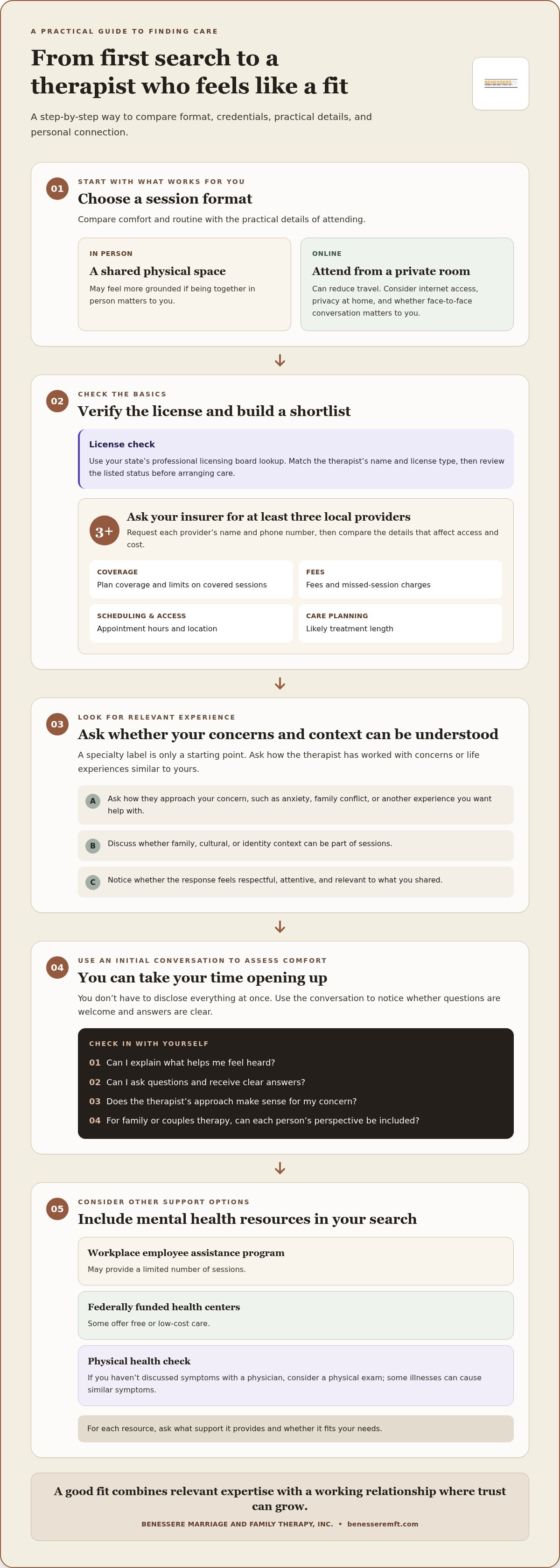
You can look for a therapist who meets online or in person, then narrow your options by experience, approach, and practical fit. Finding a therapist who gets me begins with identifying what you want help with and what would help you feel comfortable opening up. If you have health insurance, ask your insurer for at least three local provider names and phone numbers.
It’s understandable to want someone who can make sense of your experiences without reducing them to a label. A good fit combines relevant expertise with a working relationship where trust can grow. This guide explains how to compare therapy formats, ask about a therapist’s experience and approach, and decide what to do if the connection doesn’t feel right. Whether you’re seeking support for stress, anxiety, depression, trauma, or relationship concerns, take each step at a pace that feels manageable.
Table of Contents
Can I find an online or in-person therapist?
Yes. You can look for therapy online or in person, then compare fit, access, and practical details. To verify a therapist’s license, use your state’s professional licensing board lookup and match the therapist’s name and license type. Review the listed status before arranging care.
Choose the format that works with your comfort and routine. In-person sessions may feel more grounded if you value sharing a physical space. Online therapy can reduce travel and make it easier to attend from a private room. Consider your internet access, privacy at home, and whether face-to-face conversation matters to you.
Ask your health insurer for at least three local provider names and phone numbers. For each therapist, ask whether your plan covers their services and limits covered sessions. Clarify fees, missed-session charges, appointment hours, location, and likely treatment length before deciding. These details help you compare options without losing sight of therapeutic fit.
Cultural understanding can help you feel safe enough to speak openly. Ask a prospective therapist about their experience with concerns or life experiences similar to yours and how they approach them. For example, discuss whether your family, cultural, or identity context can be part of sessions. Notice whether the response feels respectful and attentive.
Use an initial conversation to assess comfort; you don’t have to disclose everything at once. Ask how the therapist approaches anxiety, family conflict, or another concern, and explain what helps you feel heard. Notice whether you can ask questions and receive clear answers. If you’re considering Family Therapy or Couples Therapy, discuss how each person’s perspective can be included.
Include mental health resources in your search. A workplace employee assistance program may provide a limited number of sessions, while some federally funded health centers offer free or low-cost care. Ask what support each resource provides and whether it fits your needs. If you haven’t discussed your symptoms with a physician, consider a physical exam, since physical health and stress are deeply interconnected. For managing physical discomfort and tension alongside mental well-being, practices such as Adjusted Chiropractic Studios highlight how spinal and musculoskeletal care can support your body's overall wellness.
Continuing the search if a provider is not a good fit
A first appointment can help clarify what you need and what felt supportive or difficult. If trust or connection isn’t developing, use what you learned to guide your next search.
Search Therapist DirectoriesUse the American Psychological Association’s Psychologist Locator or the National Register to find potential psychologists. Search by location, then read profiles for details about experience and areas of focus. Treat a directory listing as a starting point, not a complete picture. Compare the profile with your first appointment and note which qualities you want more or less of.
Filter for a Suitable TherapistUse filters that reflect your priorities, such as specialty, session format, location, or insurance. Start with the concern you want help addressing, then narrow results by practical needs. For example, someone seeking anxiety support might look for therapists who list anxiety as a specialty. Don’t rely on a single filter: a strong match also depends on the therapist’s approach and your personal connection.
Search by Location or NameSearch Google using a therapist type, your concern, and a nearby city, such as “psychologist anxiety Roseville.” If someone recommended a provider, search their name and review their professional profile. Look for clear information about licensure and areas of practice. Compare those details with your needs rather than assuming a nearby result will automatically be the right fit.
Use What You Learned to Choose AgainAfter your first appointment, consider trying a few sessions to assess whether the therapist feels like a good fit. Notice whether you feel heard, can raise concerns, and understand how sessions relate to your goals. If trust or a solid connection still isn’t taking shape, it’s reasonable to seek someone else. Keep a short list of qualities you want in your next therapeutic relationship.
Therapist specialties, approaches, and personal fit
Write down the concern you most want therapy to address. A broad goal like “feel better” can be difficult to compare with therapist profiles. Name a specific experience instead, such as anxiety that disrupts sleep, grief, trauma, or recurring relationship conflict. Then look for therapists who identify relevant specialties and experience. A focused search can help connect your needs with a therapist’s background.
Ask how the therapist has worked with concerns like yours and for how long. A specialty label alone doesn’t explain how sessions might address your situation. You could ask, “What experience do you have supporting people dealing with anxiety?” or “How might therapy help with trauma-related concerns?” Finding a therapist who gets me can include exploring whether their experience feels relevant. Listen for a response that is clear and respectful.
Discuss the therapist’s approach and whether it fits your expectations. Ask what treatment they use for your concern and whether it’s evidence-based. Evidence-based treatments draw on published research from controlled studies that meet acceptable criteria. Ask how the approach connects to your goals and what participation may involve. Finding a therapist who gets me also means understanding whether their approach suits what you want from therapy.
Notice how the working relationship feels as you talk. Trust and confidence that a therapist can help are meaningful parts of personal fit. Consider whether you can speak honestly, ask questions, and discuss disagreements without feeling dismissed. Some people prefer structured guidance; others want more room to reflect. Tell the therapist what helps you engage, then consider whether their response makes room for your preferences and lived experience.
Compare fit across specialty, approach, and connection rather than relying on a single factor. A therapist may have relevant expertise, yet their way of working may not suit your needs. Use your priorities to guide the decision and bring questions about treatment into the conversation. The aim is a therapeutic relationship where your concerns are understood and the work connects to what you hope to change.
Finding help for stress, anxiety, depression, and relationship issues
To find support, describe the concern you want to address, then search for relevant therapist experience. Finding a therapist who gets me can start with connecting a specific challenge to the kind of support you want.
Identify the Main ConcernWrite down how the concern affects your daily life. For example, note whether anxiety disrupts sleep, depression makes work harder, or repeated disagreements strain a relationship. Often, chronic stress also manifests physically through muscular tension or postural strain, where care from providers like Golden Bay Chiropractic Works can help support physical relief alongside emotional healing. You don’t need a diagnosis to explain what’s troubling you. Finding a therapist who gets me may feel more purposeful when you can describe what you hope will change, even if your goals are still taking shape.
Find a Therapist Who Specializes in That ConcernSearch profiles using terms connected to your needs, such as anxiety, trauma, depression, or relationship issues. Look for therapists who identify relevant experience, then ask how they approach that concern. For trauma-related needs, explore experience with trauma and PTSD. For relationship difficulties, consider whether you want individual support, couples work, or help with family dynamics. A specialty can guide your search; a conversation can help you understand the fit.
Ask your primary doctor, friends, or family for recommendations if you feel comfortable. You can also search Google using a therapist type, concern, and nearby city, such as “therapist anxiety Roseville.” Local university counseling centers that serve the public may be another resource. Compare profiles for relevant experience, not just proximity. If a broad search brings up too many options, adding your specific concern can make the results more focused.
Ask a prospective therapist how they would help with your concern and what approach they use. If you can’t wait weeks or months for mental health care, seek support from your primary care doctor while waiting. In an emergency, go immediately to a hospital emergency room. For relationship concerns, take a next step toward relationship support.
Benessere Marriage and Family Therapy: Individual Psychotherapy
Benessere Marriage and Family Therapy, Inc. offers Individual Psychotherapy for people seeking support with concerns such as anxiety, depression, or trauma. Treatment uses evidence-based approaches and psychoeducation, tailored to each person’s story and needs. If your concern affects a relationship or family dynamic, Couples Therapy or Family Therapy may be relevant; Trauma and PTSD Treatment addresses trauma-related concerns.
When you’re ready to explore support that reflects your experiences and goals, contact Benessere Marriage and Family Therapy, Inc. in Roseville. Share what you’d like to address and ask about the therapy options that fit your concerns while finding a therapist who gets me.
Contact Benessere Marriage and Family Therapy, Inc. to take the next step at your own pace.
Take the Next Step at Your Own Pace
Choosing a therapist isn’t a test you need to pass before asking for support. Finding a therapist who gets me can begin with a simple intention: making room to understand what you’re carrying and what kind of help feels meaningful. Your needs may shift as you learn more about them, so keep your goals in view as therapy develops.
Benessere Marriage and Family Therapy, Inc offers Individual Therapy, Family Therapy, and Couples Therapy in Roseville. These options can support people working through individual concerns or challenges affecting family and partner relationships. Explore which type of support aligns with what you’d like to address, then contact the practice to take the next step.
Contact Benessere Marriage and Family Therapy to discuss a starting point for your needs. Seeking support is a thoughtful act of care, and you can approach it at a pace that feels right.
Frequently Asked Questions
How Do I Know if a Therapist is Right For Me?
A therapist may be a good fit if you can speak openly, feel respected, and understand how the work relates to your goals. Notice how you feel after sessions: do you feel listened to, or leave uncertain whether your concerns were understood? You don’t need to agree on everything. What matters is being able to discuss differences and shape the work together.
Is my information private?
Your therapist should explain how they handle privacy and its limits before you share sensitive details. Ask who can access your records, how messages are handled, and what happens if you share information about immediate safety concerns. If you’re attending remotely, choose a private space and consider who might overhear. Clear answers can help you decide what you feel comfortable discussing.
What Questions Should I Ask a New Therapist?
Ask how you’ll set goals, review progress, and raise concerns if something isn’t working. You might also ask what happens if you need to pause therapy or miss a session. If speaking during appointments feels difficult, ask how the therapist can help you feel more at ease. Their responses can clarify how communication and collaboration may work.
What Should I Expect in My First Therapy Session?
Your first session is usually a chance to describe what brought you to therapy and begin discussing what you hope will change. Share only what feels manageable; you don’t need to tell your whole story at once. The therapist may ask about your current concerns, relevant background, and priorities. Bring a short note with the topics you want to remember.
What should I look for when choosing a therapist?
Look for a professional whose communication feels clear and respectful, and whose way of working makes sense to you. Consider whether they invite your perspective, explain unfamiliar terms, and make room for questions. Practical needs matter too: a session format you can attend consistently may make it easier to stay engaged. Think about what helps you participate.
How can I find a therapist who understands my identity, culture, and experiences?
Ask prospective therapists how they make room for cultural background, identity, and family experiences in therapy. You might say, “I want to discuss how my community’s expectations affect this concern.” Notice whether the response shows curiosity rather than assumptions. In Roseville, search profiles using relevant terms, then ask how the therapist approaches experiences that matter to you.



Comments